• Fri frakt över 249 kr
  • •
  • Snabba leveranser
  • •
  • Billiga böcker
Kundservice

Du är på sajten för privatpersoner.

Företag, bibliotek eller offentlig verksamhet?

Du handlar på classic.bokus.com, där alla dina funktioner finns intakta.
Till classic.bokus.com
Bokus logotyp. Gå till startsidan.
  • Erbjudanden
  • Nyheter
  • Student
  • Topplistor
  • Barn & ungdom
  • Bokus Play
  • E-böcker
  • Pocketböcker
  • Spel & pussel

10% rabatt på allt med kod: NYSTART10 →

Sidfot

Mina sidor

    Hjälp

    • Kundservice
    • Vanliga frågor och svar
    • Frakt och leverans
    • Retur vid ångerrätt
    • Reklamera vara
    • Betalning
    • Köpvillkor
    • Allmänna villkor
    • Information om webbplatsens tillgänglighet

    Om Bokus

    • Om oss
    • Pressrum
    • För studenter
    • För företag
    • För bibliotek och offentlig verksamhet
    • För leverantörer
    • Hållbarhet

    Populärt

    • Aktuella erbjudanden
    • Presentkort
    • Studentlitteratur
    • Nya böcker
    • Topplistor
    • Signerade böcker
    • Engelska böcker

    Inspiration

    • Boktips
    • BookTok
    • Populära bokserier
    • Barnbokskaraktärer
    • Populära författare
    Logotyp för Bokus
    Följ oss på Facebook (extern länk)Följ oss på Instagram (extern länk)Följ oss på YouTube (extern länk)Följ oss på TikTok (extern länk)
    bokus @ CookiesAnpassa cookiesIntegritetspolicyKöpvillkor
    Till Citymail hemsida (extern länk)Till Budbee hemsida (extern länk)Till Postnord hemsida (extern länk)Till Schenker hemsida (extern länk)Till Early Bird hemsida (extern länk)Till Walleys hemsida (extern länk)
    1. Juridik
    2. Rättsvetenskap
    3. Juridik: metod och teori

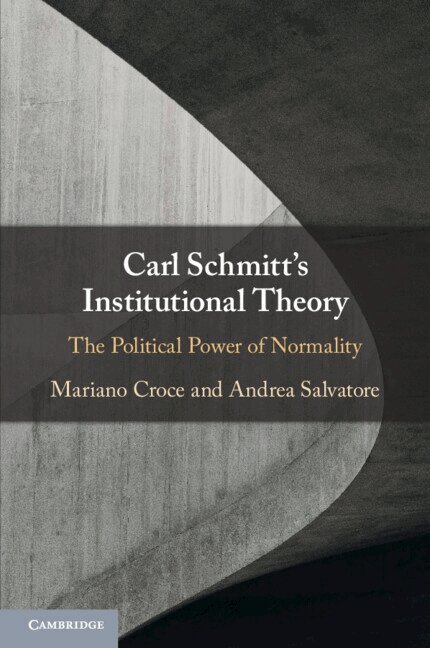
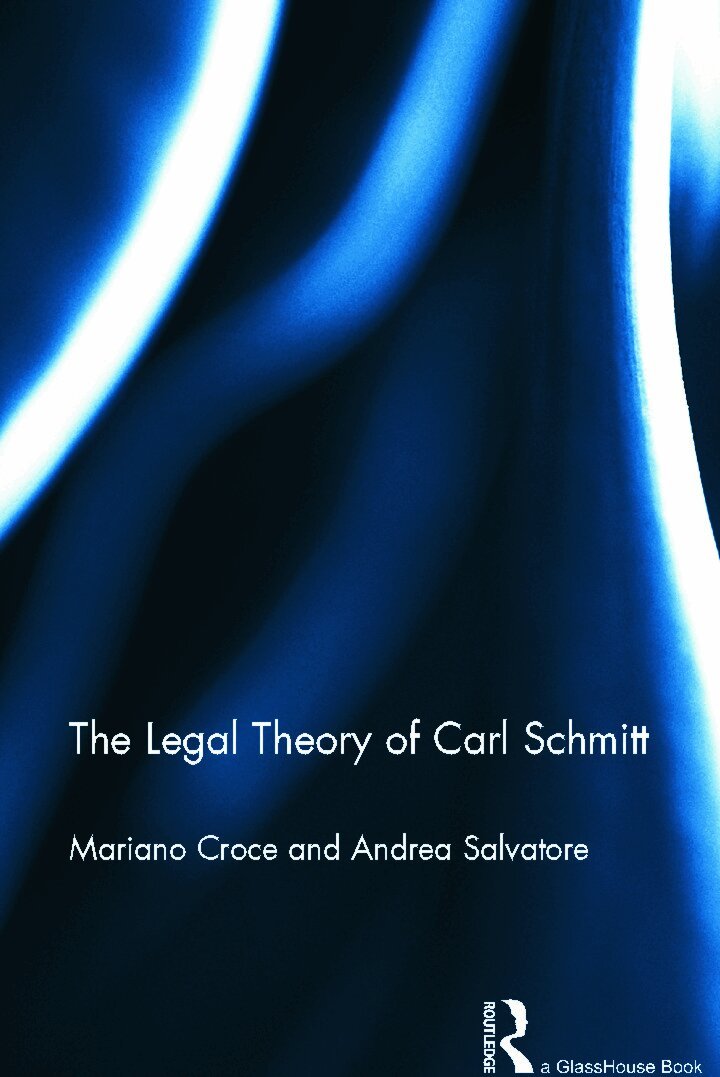
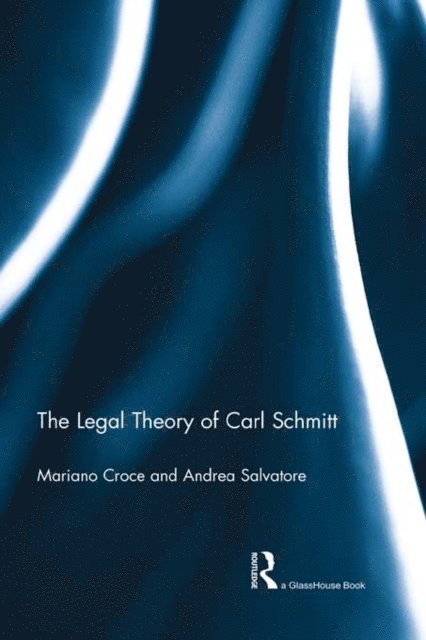
    Legal Theory of Carl Schmitt

    AvMariano Croce,Andrea Salvatore

    Häftad, Engelska, 2014

    807 kr

    Beställningsvara. Skickas inom 10-15 vardagar. Fri frakt över 249 kr.

    Fler format och utgåvor

    Inbunden

    2 227 kr

    Beskrivning

    The Legal Theory of Carl Schmitt provides a detailed analysis of Schmitt’s institutional theory of law, mainly developed in the books published between the end of the 1920s and the beginning of the 1930s. By reading Schmitt’s overall work through the lens of his institutional turn, the authors offer a strikingly different interpretation of Schmitt’s theory of politics, law and the relation between these two domains. The book argues that Schmitt’s adhesion to legal institutionalism was a key theoretical achievement, based on serious reconsideration of the main flaws of his own decisionist paradigm, in the light of the French and Italian institutional theories of law. In so doing, the authors elucidate how Schmitt was able to unravel many of the impasses that affected his previous conceptual framework. The authors also make comparisons between Schmitt and other leading legal theorists (H. Kelsen, M. Hauriou, S. Romano and C. Mortati) and explain why the current legal debate should take into serious account his legacy.

    Produktinformation

    • Utgivningsdatum:2014-03-28
    • Mått:156 x 234 x 12 mm
    • Vikt:317 g
    • Format:Häftad
    • Språk:Engelska
    • Antal sidor:216
    • Förlag:Taylor & Francis Ltd
    • ISBN:9781138780842

    Utforska kategorier

    • Juridik: metod och teori inom Juridik
    • Komparativ rätt inom Juridik
    • Författningsrätt och förvaltningsrätt inom Juridik

    Mer om författaren

    Mariano Croce is Post-Doctoral Research Fellow at SOAS, University of London, and Adjunct Professor of Legal Philosophy at Sapienza – University of Rome. His research includes legal theory, socio-legal studies, legal pluralism, political philosophy, democratic theoryAndrea Salvatore is Research Fellow at Sapienza – University of Rome. His research interests lie in the areas of political theory, international relations, history of ideas, and the philosophy of war and peace

    Recensioner i media

    Carl Schmitt is the most influential but for political reasons also most controversial German political theorist of the twentieth century. His influence reaches far beyond national borders and the field of jurisprudence. The literature on his work is endless. By now the political implications, all the way to the political theology, as well as the historical and biographical context have come under increasing attention. Thus, this book is a healthy provocation, since the authors understand Schmitt primarily as a theoretician of law. The core of his theory – contrary to the usual reduction on "decisionism" – is seen in his institutionalism and his concept of the concrete order. The attempt to view Schmitt’s entire work ‘through the lens of his institutional theory’ is a novelty. The authors move it – this is an unconventional view – into the proximity of H.L.A. Hart’s concept of legal standards. Hasso Hofmann, Emeritus Professor of Constitutional Law and Legal Philosophy, Humboldt-Universität, BerlinCarl Schmitt was many things over the course of his long life: political theorist, theologian, intellectual historian, international lawyer, polemicist, opportunist, villain, antisemite, Roman Catholic, Nazi. However, first and foremost, Schmitt was a constitutional jurist. With The Legal Theory of Carl Schmitt, Mariano Croce and Andrea Salvatore present to an English-speaking audience for the first time a comprehensive account of Schmitt legal thinking from across his entire brilliant and controversial career. The authors trace Schmitt’s jurisprudence from its early neo-Kantian origins to its fully developed concrete institutionalism. With clarity and sophistication they examine Schmitt’s basic concepts and outline the many debates he engaged in with other prominent Staatsrecht predecessors and contemporaries. A great achievement and invaluable resource.John P. McCormick, Professor of Political Science, University of Chicago.

    Innehållsförteckning

    • Part 1: Concepts: decision, institutions and concrete order 1. The bumpy road to institutionalism: Schmitt’s way-out of decisionism 2. Exploring Schmitt’s institutionalism: institutions and normality 3. Institutionalist decisionism: law as the shelter of society 4. Institution and identity: reassessing Schmitt’s political theory Part 2: Oppositions: his "enemies" and "friends" 5. Schmitt vs. Kelsen: the social ontology of legal life 6. Schmitt vs. Hauriou: the politicization of institutionalism 7. Schmitt vs. Romano: institutionalism without pluralism? 8. Schmitt vs. Mortati: the concretization of the concrete order Part 3. Implications: Schmitt’s institutionalism and the current legal debate 9. The impossibility of legal indeterminacy 10. The inconceivability of legal pluralism