• Fri frakt över 249 kr
  • •
  • Snabba leveranser
  • •
  • Billiga böcker
Kundservice

Du är på sajten för privatpersoner.

Företag, bibliotek eller offentlig verksamhet?

Du handlar på classic.bokus.com, där alla dina funktioner finns intakta.
Till classic.bokus.com
Bokus logotyp. Gå till startsidan.
  • Erbjudanden
  • Nyheter
  • Student
  • Topplistor
  • Barn & ungdom
  • Bokus Play
  • E-böcker
  • Pocketböcker
  • Spel & pussel

10% rabatt på allt med kod: NYSTART10 →

Sidfot

Mina sidor

    Hjälp

    • Kundservice
    • Vanliga frågor och svar
    • Frakt och leverans
    • Retur vid ångerrätt
    • Reklamera vara
    • Betalning
    • Köpvillkor
    • Allmänna villkor
    • Information om webbplatsens tillgänglighet

    Om Bokus

    • Om oss
    • Pressrum
    • För studenter
    • För företag
    • För bibliotek och offentlig verksamhet
    • För leverantörer
    • Hållbarhet

    Populärt

    • Aktuella erbjudanden
    • Presentkort
    • Studentlitteratur
    • Nya böcker
    • Topplistor
    • Signerade böcker
    • Engelska böcker

    Inspiration

    • Boktips
    • BookTok
    • Populära bokserier
    • Barnbokskaraktärer
    • Populära författare
    Logotyp för Bokus
    Följ oss på Facebook (extern länk)Följ oss på Instagram (extern länk)Följ oss på YouTube (extern länk)Följ oss på TikTok (extern länk)
    bokus @ CookiesAnpassa cookiesIntegritetspolicyKöpvillkor
    Till Citymail hemsida (extern länk)Till Budbee hemsida (extern länk)Till Postnord hemsida (extern länk)Till Schenker hemsida (extern länk)Till Early Bird hemsida (extern länk)Till Walleys hemsida (extern länk)
    1. Samhälle och politik
    2. Social välfärd och brottslighet
    3. Brottslighet och kriminologi
    4. Kriminalvård och straff

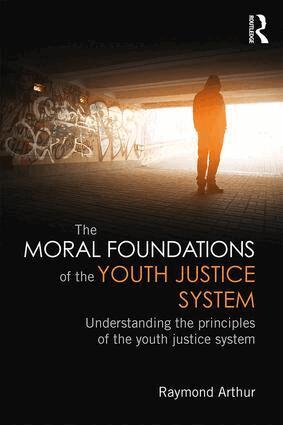
    Moral Foundations of the Youth Justice System

    Understanding the principles of the youth justice system

    AvRaymond Arthur

    Häftad, Engelska, 2016

    574 kr

    Beställningsvara. Skickas inom 10-15 vardagar. Fri frakt över 249 kr.

    Fler format och utgåvor

    Inbunden

    2 227 kr

    E-bok

    679 kr

    E-bok

    679 kr

    Beskrivning

    When is it fair to hold young people criminally responsible? If young people lack the capacity to make a meaningful choice and to control their impulses, should they be held criminally culpable for their behaviour? In what ways is the immaturity of young offenders relevant to their blameworthiness? Should youth offending behaviour be proscribed by criminal law? These are just some of the questions asked in this thoughtful and provocative book.In The Moral Foundations of the Youth Justice System, Raymond Arthur explores international and historical evidence on how societies regulate criminal behaviour by young people, and undertakes a careful examination of the developmental capacities and processes that are relevant to young people’s criminal choices. He argues that the youth justice response needs to be reconceptualised in a context where one of the central objectives of institutions regulating children and young people’s behaviour is to support the interests and welfare of those children.This timely book advocates a revolutionary transformation of the structure and process of contemporary youth justice law: a synthesised and integrated approach that is clearly distinct from that used for dealing with adults. This book is a key resource for students, academics and practitioners across fields including criminal law, youth justice, probation and social work.

    Produktinformation

    • Utgivningsdatum:2016-12-23
    • Mått:156 x 234 x 8 mm
    • Vikt:220 g
    • Format:Häftad
    • Språk:Engelska
    • Antal sidor:122
    • Förlag:Taylor & Francis Ltd
    • ISBN:9781138781672

    Utforska kategorier

    • Kriminalvård och straff inom Samhälle och politik
    • Straffrätt: lagar inom Juridik

    Mer om författaren

    Raymond Arthur is Reader in Law at Northumbria University, UK, and the author of Young Offenders and the Law (Routledge, 2010). He has collaborated with researchers, practitioners, non-governmental organisations (NGOs) and charities to develop new approaches to responding to youth offending.

    Recensioner i media

    'This text makes a valuable contribution to contemporary youth justice with its thoroughgoing analysis of a much neglected issue. Arthur offers an informed, insightful and welcome exposition of the moral foundations of responses to youth offending; one that supplements and extrapolates the existing literature.'Stephen Case, Professor of Criminology in the Department of Social Sciences, Loughborough University, UK

    Innehållsförteckning

    • 1. Introduction 2. The origins of childhood and the youth justice system2.1 Development of the concept of Childhood 2.2 Parens patriae 2.3 Statutory protection of childhood 2.4 Development of a separate youth criminal justice system 2.5 The decline of welfarism, re Gault and the rise of individual active citizens 2.6 Conclusions3. New Labour, new youth justice, new century 3.1 Age of criminal responsibility 3.2 Welfare of the child 3.3 Restorative justice 3.4 Punishing parents 3.5 Net widening 3.6 Custodial sanctions 3.7 Youth justice 2010-2015: coalition government and the Big Society 3.8 Conclusions 4. The impact of international law 4.1 Historical development of international law on children’s rights 4.2 United Nations Convention on the Rights of the Child 4.3 Protect the best interests of the child 4.4 Support families and involve communities 4.5 Age-appropriate treatment 4.6 Diversion 4.7 Child’s voice must be heard 4.8 Conditions in custody 4.9 Application of the United Nations Convention on the Rights of the Child 4.10 Conclusions 5. Young people who offend 5.1 Young offenders and their family life 5.2 Teenage Parents 5.3 Poverty 5.4 Experience of school 5.5 Mental Health 5.6 Addiction issues 5.7 Cognitive functioning and decision making 5.8 Children in care 5.9 Conclusions 6. Impact of criminalisation 6.1 Education and employment 6.2 Restorative justice 6.3 Custody 6.4 Conditions in custodial institutions 6.5 What works in preventing offenders re-offending 6.6 Public opinion 6.7 Conclusions 7. Young people, the youth court and the right to a fair trial7.1 Young people’s experiences 7.2 The European Convention on Human Rights 7.3 The Mental Health Act 1983 7.4 Stay of proceedings 7.5 Fitness to plead 7.6 Conclusions 8. The youth justice system and theories of punishment 8.1 Youth criminal law as retribution 8.2 Deterrence/Prevention 8.3 Public Censure/ Restorative justice 8.4 Conclusions9. Conclusions