• Fri frakt över 249 kr
  • •
  • Snabba leveranser
  • •
  • Billiga böcker
Kundservice

Du är på sajten för privatpersoner.

Företag, bibliotek eller offentlig verksamhet?

Du handlar på classic.bokus.com, där alla dina funktioner finns intakta.
Till classic.bokus.com
Bokus logotyp. Gå till startsidan.
  • Erbjudanden
  • Student
  • Topplistor
  • Barn & ungdom
  • Bokus Play
  • E-böcker
  • Ljudböcker
  • Pocketböcker
  • Spel och pussel

5% studentrabatt – använd koden KURSBOK27 →

Sidfot

Mina sidor

    Hjälp

    • Kundservice
    • Vanliga frågor och svar
    • Frakt och leverans
    • Retur vid ångerrätt
    • Reklamera vara
    • Betalning
    • Köpvillkor
    • Allmänna villkor
    • Information om webbplatsens tillgänglighet

    Om Bokus

    • Om oss
    • Pressrum
    • För studenter
    • För företag
    • För bibliotek och offentlig verksamhet
    • För leverantörer
    • Hållbarhet

    Populärt

    • Aktuella erbjudanden
    • Presentkort
    • Studentlitteratur
    • Nya böcker
    • Topplistor
    • Signerade böcker
    • Engelska böcker

    Inspiration

    • Boktips
    • BookTok
    • Barnbokskaraktärer
    • Populära författare
    Logotyp för Bokus
    Följ oss på Facebook (extern länk)Följ oss på Instagram (extern länk)Följ oss på YouTube (extern länk)Följ oss på TikTok (extern länk)
    bokus @ CookiesAnpassa cookiesIntegritetspolicyKöpvillkor
    Till Citymail hemsida (extern länk)Till Budbee hemsida (extern länk)Till Postnord hemsida (extern länk)Till Schenker hemsida (extern länk)Till Early Bird hemsida (extern länk)Till Walleys hemsida (extern länk)
    1. Naturvetenskap och teknik
    2. Teknik och industri
    3. Energiteknik

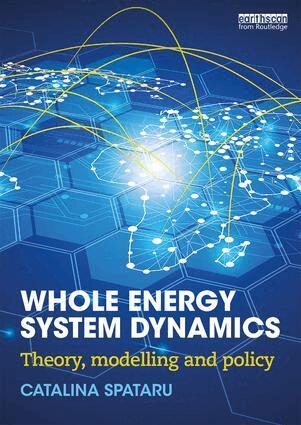
    Whole Energy System Dynamics

    Theory, modelling and policy

    AvCatalina Spataru

    Häftad, Engelska, 2017

    663 kr

    Beställningsvara. Skickas inom 10-15 vardagar. Fri frakt över 249 kr.

    Fler format och utgåvor

    Inbunden

    2 633 kr

    E-bok

    790 kr

    E-bok

    788 kr

    Beskrivning

    In order to address the twenty-first-century challenges of decarbonisation, energy security and cost-effectiveness it is essential to understand whole energy systems and the interconnection and interaction between different components. An integrated language is therefore needed to assist energy policymakers and to help industrial stakeholders assess future energy systems and infrastructure and make realistic technical and economic decisions. Whole Energy System Dynamics provides an interdisciplinary approach to whole energy systems; providing insights and understanding of it in the context of challenges, opportunities and solutions at different levels and time steps. It discusses approaches across disciplinary boundaries as well as existing issues within three main themes: theory, modelling and policy, and their interlinkage with geopolitics, markets and practice. Spataru argues that there is an urgent need for a whole energy system integration. This is necessary for effective analysis, design and control of the interactions and interdependencies involved in the technical, economic, regulatory and social dimensions of the energy system. This book is essential reading for students interested in the area of energy systems, policy and modelling. It is also a valuable read for policymakers, professionals, researchers, academics, engineers and industrial stakeholders.

    Produktinformation

    • Utgivningsdatum:2017-02-21
    • Mått:174 x 246 x 24 mm
    • Vikt:450 g
    • Format:Häftad
    • Språk:Engelska
    • Antal sidor:224
    • Förlag:Taylor & Francis Ltd
    • ISBN:9781138799905

    Utforska kategorier

    • Energiteknik inom Naturvetenskap och teknik
    • Miljövetenskap och miljöpolitik inom Naturvetenskap och teknik

    Mer om författaren

    Catalina Spataru is a Lecturer in Energy Systems and Networks at UCL Energy Institute in London, UK, Course Director of MRes in Energy Demand Studies at UCL and Group Leader of Energy Space Time Group. Her expertise is in whole energy system dynamics, with great interest for regional interconnections (EU, West Africa, MENA countries, Latin America) and market integration, future energy development in emerging economies, reliability and security of future energy systems and with particular interest in the interaction of water–energy–land nexus to assess water scarcity problems in risky countries like Brazil, Jordan, Egypt. She regularly delivers presentations in academic and professional circles, public engagement events and for the media, recently visited Princeton University and MIT (USA), spoke at Cheltenham Science Festival and was interviewed by the Sunday Telegraph. Currently she teaches Smart Energy Systems for MSc EDE students at UCL, a multidisciplinary module that she proposed and developed in 2013. This multidisciplinary module provides students with an understanding of the methods, concepts and practice of whole energy systems, offering a combination of theory, modelling interactive exercises and case studies. Also she teaches Communication Skills to MRes EDS students and Metrics, Modeling and Visualisation of the Resource Nexus module for the ISR MSc sustainable resources programme. She supervises MSc, MRes and PhD students. She is the regional representative of the IEEE Women in Power (Region 8 – Europe).

    Recensioner i media

    "Whole Energy System Dynamics provides a genuine means of understanding the energy system by identifying three main pillars: the theory of interacting systems, the practice of modelling the whole energy system and the policy that steers its future evolution. The book rises to the challenge of integrating the numerous parts of today’s energy systems while connecting the different disciplines and thus allowing for various perspectives on the complex systems we are all part of." – Andreas Koch, Group Manager Energy Planning and Geosimulation, EIFER I European Institute for Energy Research, Germany"This book comes at a time when there is an urgent need to have a complete rethink of our future energy options. It cuts through the ingrained perceptions hindering our move from fossil fuel to sustainable forms of energy. This book, which integrates theory, practical perspectives, modelling and policy aspects and links traditional engineering ways with the very latest developments, will be a beacon in our quest for a secure and sustainable energy future." – Trevor Letcher, Emeritus Professor of Chemistry at the University of KwaZulu-Natal, Durban, South Africa and a Fellow of the Royal Society of Chemistry. "This book is well written, hugely interesting and an excellent format for discussing new problems, particularly for people working on energy systems and policy. It provides profound analysis and understanding of the energy systems integration from theory, practice/modelling and policy perspectives as a whole. I enjoyed reading it." – Pierluigi Siano, Professor of Electrical Energy Engineering, Electrical Power Systems, University of Salerno, Italy "The book is very timely as whole system energy modelling is one of the hottest research topics at the moment. Research funding agencies in many countries have recognized the need to research and model the energy system as the whole and provided ample funding to support it. This is a relatively new area of research and there are few books available on the subject. This book therefore fills an important gap in the market by covering theory, practice and policy. It will be relevant not only for researchers but also for policy makers." – Janusz Bialek, FIEEE, Director of Skoltech Center for Energy Systems, Russia

    Innehållsförteckning

    • Part I Theory and History1. Global Energy Systems - A Historical Perspective2. Scales and Systems Interactions at All Scales across Multiple Energy Domains 3. Whole Energy Systems Components 4. Brief Overview of Energy Systems Models and Methodologies 5. Discrepancies in Energy System Models: Actual vs. Forecast 6. Drivers and Challenges for Energy Systems Modelling for 20th Century and of Future WES Integration7. Worldwide Conversation about Energy Systems Integration Part II Modelling – Challenges and Discussions 8. Why do Mathematical Modelling? 9. Indicators and Their Role in Models 10. Research Challenges 11. Performance of Multi-Scale Energy Systems 12. Problems/Gaps/Research Questions and IssuesPart III Energy Policy, Markets and Geopolitics13. Energy Policies - What Our Past Teaches Us14. Measures, Practices, and Tools - Utilizing Best Practices to Reduce Air Pollution and Carbon Footprint World Wide15. Energy Policy Simulators & Modelling Approaches 16. Energy Policy Simulators & Energy Modelling Approaches17. Policy Instruments18. Energy Resource Use and Geopolitics of Trade