• Fri frakt över 249 kr
  • •
  • Snabba leveranser
  • •
  • Billiga böcker
Kundservice

Du är på sajten för privatpersoner.

Företag, bibliotek eller offentlig verksamhet?

Du handlar på classic.bokus.com, där alla dina funktioner finns intakta.
Till classic.bokus.com
Bokus logotyp. Gå till startsidan.
  • Erbjudanden
  • Nyheter
  • Student
  • Topplistor
  • Barn & ungdom
  • Bokus Play
  • E-böcker
  • Pocketböcker
  • Spel & pussel

10% rabatt på allt med kod: NYSTART10 →

Sidfot

Mina sidor

    Hjälp

    • Kundservice
    • Vanliga frågor och svar
    • Frakt och leverans
    • Retur vid ångerrätt
    • Reklamera vara
    • Betalning
    • Köpvillkor
    • Allmänna villkor
    • Information om webbplatsens tillgänglighet

    Om Bokus

    • Om oss
    • Pressrum
    • För studenter
    • För företag
    • För bibliotek och offentlig verksamhet
    • För leverantörer
    • Hållbarhet

    Populärt

    • Aktuella erbjudanden
    • Presentkort
    • Studentlitteratur
    • Nya böcker
    • Topplistor
    • Signerade böcker
    • Engelska böcker

    Inspiration

    • Boktips
    • BookTok
    • Populära bokserier
    • Barnbokskaraktärer
    • Populära författare
    Logotyp för Bokus
    Följ oss på Facebook (extern länk)Följ oss på Instagram (extern länk)Följ oss på YouTube (extern länk)Följ oss på TikTok (extern länk)
    bokus @ CookiesAnpassa cookiesIntegritetspolicyKöpvillkor
    Till Citymail hemsida (extern länk)Till Budbee hemsida (extern länk)Till Postnord hemsida (extern länk)Till Schenker hemsida (extern länk)Till Early Bird hemsida (extern länk)Till Walleys hemsida (extern länk)
    1. Skönlitteratur
    2. Litteraturvetenskap
    3. Litteraturvetenskap

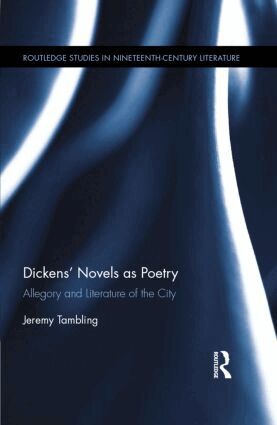
    Dickens' Novels as Poetry

    Allegory and Literature of the City

    AvJeremy Tambling

    Inbunden, Engelska, 2014

    Del i serien Routledge Studies in Nineteenth Century Literature

    2 784 kr

    Beställningsvara. Skickas inom 10-15 vardagar. Fri frakt över 249 kr.

    Fler format och utgåvor

    Häftad

    783 kr

    E-bok

    926 kr

    E-bok

    928 kr

    Beskrivning

    Focusing on the language, style, and poetry of Dickens’ novels, this study breaks new ground in reading Dickens’ novels as a unique form of poetry. Dickens’ writing disallows the statement of single unambiguous truths and shows unconscious processes burrowing within language, disrupting received ideas and modes of living. Arguing that Dickens, within nineteenth-century modernity, sees language as always double, Tambling draws on a wide range of Victorian texts and current critical theory to explore Dickens’ interest in literature and popular song, and what happens in jokes, in caricature, in word-play and punning, and in naming. Working from Dickens’ earliest writings to the latest, deftly combining theory with close analysis of texts, the book examines Dickens’ key novels, such as Pickwick Papers, Martin Chuzzlewit, Dombey and Son, Bleak House, Little Dorrit, Great Expectations, and Our Mutual Friend. It considers Dickens as constructing an urban poetry, alert to language coming from sources beyond the individual, and relating that to the dream-life of characters, who both can and cannot awake to fuller, different consciousness. Drawing on Walter Benjamin, Lacan, and Derrida, Tambling shows how Dickens writes a new and comic poetry of the city, and that the language constitutes an unconscious and secret autobiography. This volume takes Dickens scholarship in exciting new directions and will be of interest to all readers of nineteenth-century literary and cultural studies, and more widely, to all readers of literature.

    Produktinformation

    • Utgivningsdatum:2014-11-24
    • Mått:152 x 229 x 16 mm
    • Vikt:521 g
    • Format:Inbunden
    • Språk:Engelska
    • Serie:Routledge Studies in Nineteenth Century Literature
    • Antal sidor:238
    • Förlag:Taylor & Francis Ltd
    • ISBN:9781138808270

    Utforska kategorier

    • Litteraturvetenskap inom Skönlitteratur
    • Litteraturteori inom Skönlitteratur

    Mer om författaren

    Jeremy Tambling is a writer and critic working on English and European literature and critical theory. He is formerly Professor of Literature at Manchester University, UK and Professor of Comparative Literature at the University of Hong Kong.

    Recensioner i media

    "This provocative study demands readers willing to widen their expectations for 'poetry.'...The organization is topical, and Trembling provides fresh explanations of the theme of stunted growth, techniques of opening chapters, and the emergence of new urban types. Summing Up: Recommended." - S. A. Parker, CHOICE"Dickens' Novels as Poetry reads as a scintillating conversation with a scholar markedly attuned to the peculiar rhythms and unconscious tics that distinguish the Dickens canon. The analysis is dense, sharp, and demanding, and by the end of the book I feel as though, by some brilliant trick, I have just re-read all the novels in the space of two-hundred pages, and with a newly re-ordered attention to their poetics of dissolution." - Leslie S. Simon, Utah Valley University, Dickens Quarterly"Powerful insights detonate on almost every page of this book...I expect to re-visit individual chapters systematically, just before or after re-reading the novels in question. In other words, Tambling assists and inspires further engagement with the primary material." - Dominic Rainsford, Aarhus University, Dickens Quarterly

    Innehållsförteckning

    • Introduction: Urban Writing: Writing Poetry Part I: Writing Styles: Romantic and Baroque I. Dickens’ Reading II. Dickens, Hogarth, and Caricature III. The Old Curiosity Shop Part II: Poetry and the City I. Pickwick Papers: Jingle and Weller II. ‘Bragian Words’: Martin Chuzzlewit III. Stopping Growing: Dombey and Son Part III: Opening Words I. Naming: Dombey and Son to Bleak House II. ‘The Insistence of the Letter’: Bleak House III. Staring in Little Dorrit IV. Novels of the 1860s Part IV: Dickens and the Poetry of Dreams I. The Mask II. The ‘Waking Dream’: Oliver Twist III. ‘The Tempest’ in David Copperfield IV. ‘Scattered Consciousness’: The Mystery of Edwin Drood