• Fri frakt över 249 kr
  • •
  • Snabba leveranser
  • •
  • Billiga böcker
Kundservice

Du är på sajten för privatpersoner.

Företag, bibliotek eller offentlig verksamhet?

Du handlar på classic.bokus.com, där alla dina funktioner finns intakta.
Till classic.bokus.com
Bokus logotyp. Gå till startsidan.
  • Erbjudanden
  • Nyheter
  • Student
  • Topplistor
  • Barn & ungdom
  • Bokus Play
  • E-böcker
  • Pocketböcker
  • Spel & pussel

10% rabatt på allt med kod: NYSTART10 →

Sidfot

Mina sidor

    Hjälp

    • Kundservice
    • Vanliga frågor och svar
    • Frakt och leverans
    • Retur vid ångerrätt
    • Reklamera vara
    • Betalning
    • Köpvillkor
    • Allmänna villkor
    • Information om webbplatsens tillgänglighet

    Om Bokus

    • Om oss
    • Pressrum
    • För studenter
    • För företag
    • För bibliotek och offentlig verksamhet
    • För leverantörer
    • Hållbarhet

    Populärt

    • Aktuella erbjudanden
    • Presentkort
    • Studentlitteratur
    • Nya böcker
    • Topplistor
    • Signerade böcker
    • Engelska böcker

    Inspiration

    • Boktips
    • BookTok
    • Populära bokserier
    • Barnbokskaraktärer
    • Populära författare
    Logotyp för Bokus
    Följ oss på Facebook (extern länk)Följ oss på Instagram (extern länk)Följ oss på YouTube (extern länk)Följ oss på TikTok (extern länk)
    bokus @ CookiesAnpassa cookiesIntegritetspolicyKöpvillkor
    Till Citymail hemsida (extern länk)Till Budbee hemsida (extern länk)Till Postnord hemsida (extern länk)Till Schenker hemsida (extern länk)Till Early Bird hemsida (extern länk)Till Walleys hemsida (extern länk)
    1. Naturvetenskap och teknik
    2. Geovetenskap
    3. Miljövetenskap och miljöpolitik

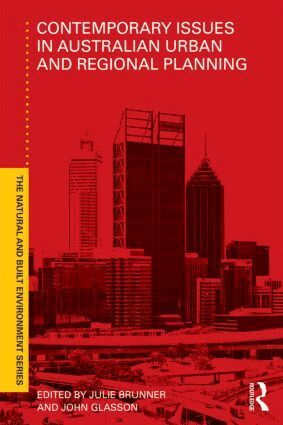
    Contemporary Issues in Australian Urban and Regional Planning

    AvJulie Brunner,John Glasson

    Häftad, Engelska, 2015

    Del i serien Natural and Built Environment Series

    877 kr

    Beställningsvara. Skickas inom 10-15 vardagar. Fri frakt över 249 kr.

    Beskrivning

    Contemporary Issues in Australian Urban and Regional Planning looks at a wide range of planning issues in Australia from the city to the regional scale, covering key topics in sustainable development and planning including economic, social, environmental and governance perspectives. It also covers issues of climate change, population and urbanization trends, economic competitiveness and the Quadruple Bottom Line (QBL) Sustainability agenda.The book is organized around three key elements: Pressures and Principles of development and planning for sustainability Planning Practice and Processes focused on essential topics including cities, regions, rural areas, and social and environmental issues and Future Processes and Prospects for planning practice and education covering the fundamental issues of assessing sustainability, managing risk, effective participation and evolving approaches to planning education. Contemporary Issues in Australian Urban and Regional Planning is an invaluable resource for students and practitioners of planning and related fields and provides a critical perspective on current issues in evolving natural and socio-economic contexts in Australian planning.

    Produktinformation

    • Utgivningsdatum:2015-04-09
    • Mått:156 x 234 x 22 mm
    • Vikt:708 g
    • Format:Häftad
    • Språk:Engelska
    • Serie:Natural and Built Environment Series
    • Antal sidor:418
    • Förlag:Taylor & Francis Ltd
    • ISBN:9781138819252

    Utforska kategorier

    • Miljövetenskap och miljöpolitik inom Naturvetenskap och teknik
    • Regional planering inom Naturvetenskap och teknik

    Mer om författaren

    Julie Brunner has a wide range of experience in both planning practice and planning education in Australia. She has held senior roles, including Head of the Department of Urban and Regional Planning, and in online teaching and learning development, at Curtin University. She pioneered the Open University Australia (OUA) postgraduate planning education course. John Glasson is Professor Emeritus of Environmental Planning at Oxford Brookes University (UK), where he was Head of the School of Planning and Founding Director of the Oxford Institute for Sustainable Development (OISD). He has also had a long-standing role as Visiting Professor at Curtin University. His research interests are in regional planning and impact assessment.

    Innehållsförteckning

    • Introduction Part 1-- Pressures and principles: the changing planning context 1. The evolving framework for planning in Australia – moving towards sustainable governance? 2. The evolving natural environmental context for planning in Australia– biodiversity and climate change 3. The evolving social context for planning in Australia 4. Planning in a sustainable economic context: economic opportunities and determinants of competitive places (economic sustainability) Part 2--- Practice and processes: contemporary planning issues 5. Planning intervention in metropolitan urban form – the 21st century challenge of urban consolidation in Australian capital cities 6. Rural-residential lifestyles: a sustainable lifestyle choice or pure extravagance? A Western Australian review 7. The transformation of the Australian rural landscape: planning to accommodate and facilitate change 8. Regional development and planning challenges in resource rich regions 9. Coastal zone planning and management in the face of climate change 10. Trends in urban design 11. Affordable housing and the planning stumbling block 12. Crime as an unintended consequence: planning for healthy cities and the need to move beyond crime prevention through environmental design (CPTED) 13. Planning for urban open space: reflections and challenges 14. Low impact public transport: complementing active transport through Community Bus Part 3 --- Future processes and prospects 15. Assessing sustainability: testing planning practice 16. Managing risk in residential land development in Australia 17. Democracy and the risk society 18. Planning education: work integrated learning 19. Contemporary planning education--in the online environment Conclusions – towards the future