
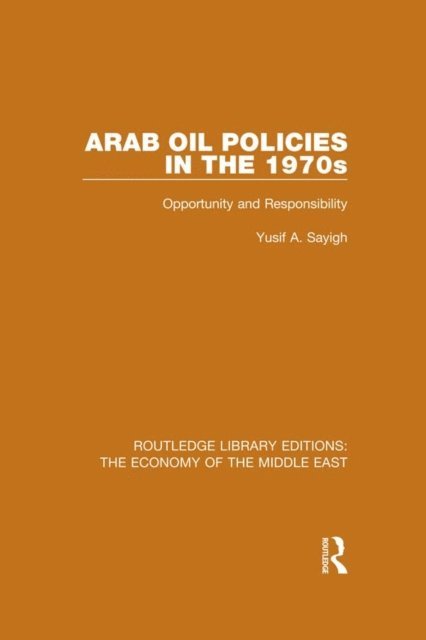
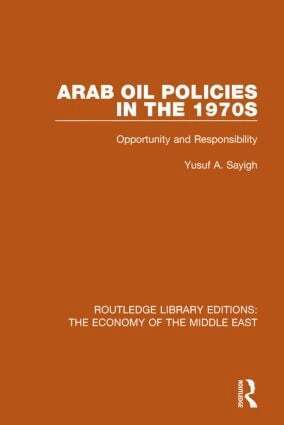
Arab Oil Policies in the 1970s (RLE Economy of Middle East)
Opportunity and Responsibility
Häftad, Engelska, 2018
407 kr
Beställningsvara. Skickas inom 10-15 vardagar. Fri frakt över 249 kr.
Fler format och utgåvor
Beskrivning
Until 1973 few people, either in the advanced, industrial countries or in the developing countries of the Third World, thought seriously on the issues and complexities involved in the production and marketing of the oil on which they relied. It was only with the sudden steep increases in oil prices that the oil industry became a matter of general discussion, and the Organisation of Petroleum Exporting Countries (OPEC) became a front page topic for analysis and comment. However, real understanding of the organisation and its policies did not accompany this rush of interest and much confusion has followed. In particular, the Arab exporters have received the weight of the criticism although they have only a share in the market and not a monopoly. This book attempts to instil a greater mutual understanding between oil exporters and importers, although it is not a wholesale endorsement of Arab policies, by outlining the major policy areas in this field. It looks at new policy options and their implications in exploration, marketing and pricing and at downstream operations such as the petrochemical and gas industries. In conclusion, this study identifies the wide-ranging opportunities that the new oil policies have opened up for the Arab countries, in the national, regional and international context, and assesses and clarifies the responsibilities which accompany this success.First published in 1983.
Produktinformation
Utforska kategorier
Innehållsförteckning
Hoppa över listan
Mer från samma serie
Determinants of Arab Economic Development (RLE Economy of Middle East)
Yusuf Sayigh
Inbunden, 2014
2 065 kr
Economic Case for Palestine (RLE Economy of Middle East)
Elias Tuma, Haim Darin-Drabkin
Inbunden, 2014
2 158 kr
Economic Development of the Yemen Arab Republic (RLE Economy of Middle East)
Ragaei el Mallakh
Inbunden, 2014
1 539 kr
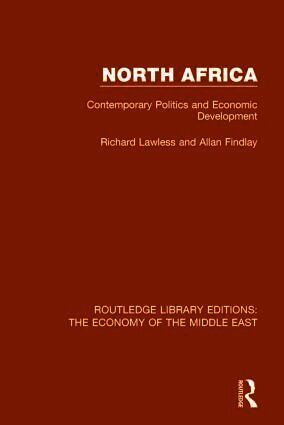
North Africa (RLE Economy of the Middle East)
Allan MacKay Findlay, Richard Lawless, Richard Lawless, Allan Findlay
Inbunden, 2014
2 541 kr
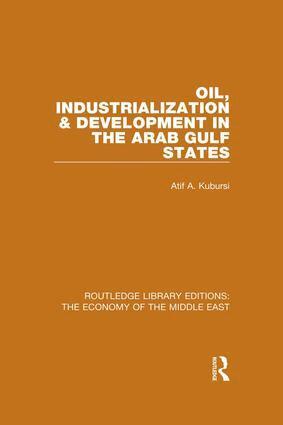
Oil, Industrialization & Development in the Arab Gulf States (RLE Economy of Middle East)
Atif Kubursi
Inbunden, 2014
2 158 kr
Hoppa över listan

Du kanske också är intresserad av
- 10% rabatt på allt
Libya: Agriculture and Economic Development (RLE Economy of Middle East)
J.A. Allan, K.S. McLachlan, Edith Penrose
Inbunden, 2014
2 541 kr
Mobilizing Human Resources in the Arab World (RLE Economy of Middle East)
R. Paul Shaw
Inbunden, 2014
1 494 kr
- -19%
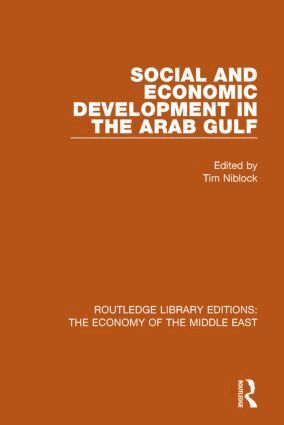
Social and Economic Development in the Arab Gulf (RLE Economy of Middle East)
Tim Niblock, Tim Niblock
Häftad, 2018
655 kr