• Fri frakt över 249 kr
  • •
  • Snabba leveranser
  • •
  • Billiga böcker
Kundservice

Du är på sajten för privatpersoner.

Företag, bibliotek eller offentlig verksamhet?

Du handlar på classic.bokus.com, där alla dina funktioner finns intakta.
Till classic.bokus.com
Bokus logotyp. Gå till startsidan.
  • Erbjudanden
  • Nyheter
  • Student
  • Topplistor
  • Barn & ungdom
  • Bokus Play
  • E-böcker
  • Pocketböcker
  • Spel & pussel

10% rabatt på allt med kod: NYSTART10 →

Sidfot

Mina sidor

    Hjälp

    • Kundservice
    • Vanliga frågor och svar
    • Frakt och leverans
    • Retur vid ångerrätt
    • Reklamera vara
    • Betalning
    • Köpvillkor
    • Allmänna villkor
    • Information om webbplatsens tillgänglighet

    Om Bokus

    • Om oss
    • Pressrum
    • För studenter
    • För företag
    • För bibliotek och offentlig verksamhet
    • För leverantörer
    • Hållbarhet

    Populärt

    • Aktuella erbjudanden
    • Presentkort
    • Studentlitteratur
    • Nya böcker
    • Topplistor
    • Signerade böcker
    • Engelska böcker

    Inspiration

    • Boktips
    • BookTok
    • Populära bokserier
    • Barnbokskaraktärer
    • Populära författare
    Logotyp för Bokus
    Följ oss på Facebook (extern länk)Följ oss på Instagram (extern länk)Följ oss på YouTube (extern länk)Följ oss på TikTok (extern länk)
    bokus @ CookiesAnpassa cookiesIntegritetspolicyKöpvillkor
    Till Citymail hemsida (extern länk)Till Budbee hemsida (extern länk)Till Postnord hemsida (extern länk)Till Schenker hemsida (extern länk)Till Early Bird hemsida (extern länk)Till Walleys hemsida (extern länk)
    1. Ekonomi och Ledarskap
    2. Nationalekonomi
    3. Miljöekonomi

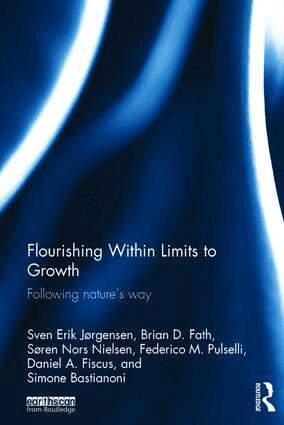
    Flourishing Within Limits to Growth

    Following nature's way

    AvSven Erik Jørgensen,Brian D. Fath

    Inbunden, Engelska, 2015

    2 495 kr

    Beställningsvara. Skickas inom 10-15 vardagar. Fri frakt över 249 kr.

    Fler format och utgåvor

    Häftad

    904 kr

    Beskrivning

    Decades of research and discussion have shown that the human population growth and our increased consumption of natural resources cannot continue – there are limits to growth. This volume demonstrates how we might modify and revise our economic systems using nature as a model. The book describes how nature uses three growth forms: biomass, information, and networks, resulting in improved overall ecosystem functioning and co-development. As biomass growth is limited by available resources, nature uses the two other growth forms to achieve higher resource use efficiency. Through a universal application of the three ‘R’s: reduce, reuse, and recycle, nature thus shows us a way forward towards better solutions. However, our current approach, dominated by short-term economic thinking, inhibits full utilization of the three ‘R’s and other successful approaches from nature. Building on ecological principles, the authors present a global model and futures scenario analyses which show that implementation of the proposed changes will lead to a win-win situation. In other words, we can learn from nature how to develop a society that can flourish within the limits to growth with better conditions for prosperity and well-being.

    Produktinformation

    • Utgivningsdatum:2015-07-30
    • Mått:156 x 234 x 19 mm
    • Vikt:453 g
    • Format:Inbunden
    • Språk:Engelska
    • Antal sidor:222
    • Förlag:Taylor & Francis Ltd
    • ISBN:9781138842526

    Utforska kategorier

    • Miljöekonomi inom Ekonomi och Ledarskap

    Mer om författaren

    Sven Erik Jørgensen is Professor of Environmental Chemistry at the University of Copenhagen, Denmark. He is the founder and President of the International Society of Ecological Modelling and co-author of key books on systems ecology and ecological modelling. He has received several awards, including the Stockholm Water Prize.Brian D. Fath is Professor in the Department of Biological Sciences, Towson University, Maryland, USA, and Research Scholar in the Advanced Systems Analysis Program at the International Institute for Applied Systems Analysis, Laxenburg, Austria. Søren Nors Nielsen is Visiting Professor at the Section for Sustainable Transitions, Department of Planning, Aalborg University - Copenhagen, Denmark. Federico M. Pulselli is Researcher in Environmental and Cultural Heritage Chemistry at the University of Siena, Italy. Daniel A. Fiscus is Lecturer and Sustainability Liaison at Frostburg State University, Maryland, USA, where he teaches in sustainability studies and does sustainable development work on campus and in the local community. Simone Bastianoni is Professor of Environmental and Cultural Heritage Chemistry at the University of Siena, Italy.

    Recensioner i media

    "The Club of Sienna has provided a helpful review, exposition, and extension of the Club of Rome’s systems modeling approach, demonstrating the increasing relevance of the 1972 book The Limits to Growth to problems that continue today. Especially recommended for environmental studies and economics courses." – Herman E. Daly, University of Maryland, USA. "This book creates the intellectual spine for the Club of Siena, walking in the footsteps of the famous Limits to Growth, but turns away from the fears of collapse towards showing that staying within the limits can offer agreeable, pleasant, even wonderful living conditions. An inspiring reading for those who believe in the need to change course." – Marina Fischer-Kowalski, Institute of Social Ecology, Vienna, Austria. "A profound treatise of the fallacies of the growth paradigm. Plus good suggestions for flourishing within the limits. Good tax signals can make us more successful. Bravo!" – Ernst Ulrich von Weizsäcker, Co-President, The Club of Rome, Emmendingen, Germany.

    Innehållsförteckning

    • 1. Introduction 2. Limits to Growth 3. How Nature Flourishes within Limits 4. How to Adopt Nature’s Properties in our Society? 5. Working with a Global Model 6. To Think Like an Ecosystem is Key to Win-win Outcomes for Humans and Environment 7. Ecological Footprint 8. Sustainability 9. Can We Overcome the Obstacles?