• Fri frakt över 249 kr
  • •
  • Snabba leveranser
  • •
  • Billiga böcker
Kundservice

Du är på sajten för privatpersoner.

Företag, bibliotek eller offentlig verksamhet?

Du handlar på classic.bokus.com, där alla dina funktioner finns intakta.
Till classic.bokus.com
Bokus logotyp. Gå till startsidan.
  • Erbjudanden
  • Nyheter
  • Student
  • Topplistor
  • Barn & ungdom
  • Bokus Play
  • E-böcker
  • Pocketböcker
  • Spel & pussel

10% rabatt på allt med kod: NYSTART10 →

Sidfot

Mina sidor

    Hjälp

    • Kundservice
    • Vanliga frågor och svar
    • Frakt och leverans
    • Retur vid ångerrätt
    • Reklamera vara
    • Betalning
    • Köpvillkor
    • Allmänna villkor
    • Information om webbplatsens tillgänglighet

    Om Bokus

    • Om oss
    • Pressrum
    • För studenter
    • För företag
    • För bibliotek och offentlig verksamhet
    • För leverantörer
    • Hållbarhet

    Populärt

    • Aktuella erbjudanden
    • Presentkort
    • Studentlitteratur
    • Nya böcker
    • Topplistor
    • Signerade böcker
    • Engelska böcker

    Inspiration

    • Boktips
    • BookTok
    • Populära bokserier
    • Barnbokskaraktärer
    • Populära författare
    Logotyp för Bokus
    Följ oss på Facebook (extern länk)Följ oss på Instagram (extern länk)Följ oss på YouTube (extern länk)Följ oss på TikTok (extern länk)
    bokus @ CookiesAnpassa cookiesIntegritetspolicyKöpvillkor
    Till Citymail hemsida (extern länk)Till Budbee hemsida (extern länk)Till Postnord hemsida (extern länk)Till Schenker hemsida (extern länk)Till Early Bird hemsida (extern länk)Till Walleys hemsida (extern länk)
    1. Psykologi och pedagogik
    2. Pedagogik
    3. Undervisning i specifika ämnen

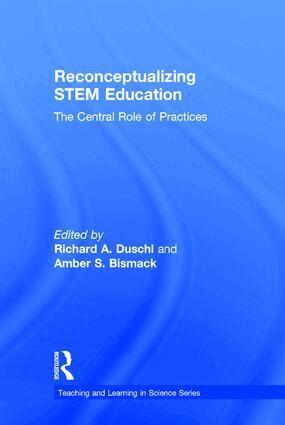
    Reconceptualizing STEM Education

    The Central Role of Practices

    AvRichard A. Duschl,Amber S. Bismack

    Inbunden, Engelska, 2016

    Del i serien Teaching and Learning in Science Series

    1 425 kr

    Beställningsvara. Skickas inom 10-15 vardagar. Fri frakt över 249 kr.

    Beskrivning

    Reconceptualizing STEM Education explores and maps out research and development ideas and issues around five central practice themes: Systems Thinking; Model-Based Reasoning; Quantitative Reasoning; Equity, Epistemic, and Ethical Outcomes; and STEM Communication and Outreach. These themes are aligned with the comprehensive agenda for the reform of science and engineering education set out by the 2015 PISA Framework, the US Next Generation Science Standards and the US National Research Council’s A Framework for K-12 Science Education. The new practice-focused agenda has implications for the redesign of preK-12 education for alignment of curriculum-instruction-assessment; STEM teacher education and professional development; postsecondary, further, and graduate studies; and out-of-school informal education. In each section, experts set out powerful ideas followed by two eminent discussant responses that both respond to and provoke additional ideas from the lead papers. In the associated website < http://waterbury.psu.edu/summit/> highly distinguished, nationally recognized STEM education scholars and policymakers engage in deep conversations and considerations addressing core practices that guide STEM education.

    Produktinformation

    • Utgivningsdatum:2016-01-08
    • Mått:152 x 229 x 24 mm
    • Vikt:635 g
    • Format:Inbunden
    • Språk:Engelska
    • Serie:Teaching and Learning in Science Series
    • Antal sidor:350
    • Förlag:Taylor & Francis Ltd
    • ISBN:9781138901032

    Utforska kategorier

    • Undervisning i specifika ämnen inom Psykologi och pedagogik

    Mer om författaren

    Richard A. Duschl is the Kenneth B. Waterbury Chaired Professor in Secondary Education, Department of Curriculum and Instruction, College of Education, The Pennsylvania State University, USA.Amber S. Bismack is a Ph.D. student, Department of Educational Studies (Science Education), School of Education, The University of Michigan, USA.

    Innehållsförteckning

    • CONTENTS Introduction: Coordinating PreK-16 STEM Education Research and Practices for Advancing and Refining Reform Agendas Richard A. Duschl, Amber S. Bismack, James Greeno and Drew H. GitomerTheme 1: Systems Thinking Thinking about a System and Systems Thinking in EngineeringThomas A. Litzinger Diagnostic Instruction: Toward an Integrated System for Classroom Assessment Jim Minstrell, Ruth Anderson, and Min Li Response 1: Systems Thinking as a Design ProblemMarcela Borge Response 2: Improving Learning about Systems Requires Designing for Change in Educational SystemsWilliam R. PenuelTheme 2: Model-Based Reasoning Modeling Authentic STEM Research: A Systems Thinking Perspective Annmarie R. Ward Meeting the Standards for STEM Educations: Individual and National NeedsSpencer A. Benson Response 1: Model-Based Reasoning in Professional DevelopmentHilda Borko Response 2: "Where is the line?"Brian P. CoppolaTheme 3: Quantitative Reasoning Quantitative Reasoning in Mathematics Education: Directions in Research and PracticeHeather Lynn Johnson Teachers Use of Data, Measurement, and Data Modeling in Quantitative Reasoning Anthony J. Petrosino Response 1: Quantitative Reasoning in STEM DisciplinesRobert Mayes Response 2: Quantitative Reasoning: Capturing a Tension Between Structure and VariabilityRose Mary ZbiekTheme 4: Equity, Epistemic, and Ethical Outcomes Educational and Ethical Dilemmas for STEM Education in Pennsylvania’s Marcellus Shale Gasfield Communities Catharine Biddle & Kai A. Schafft Defining a Knowledge Base for Reasoning in Science: The role of procedural and epistemic knowledgeJonathan Osborne Response 1: Views from Above and Below: Access to Science EducationNancy Brickhouse Response 2: The Values of Science LiteracyNancy TuanaTheme 5: STEM Communication and Policy Outreach Why People Care About Chickens and Other Lessons about Rhetoric, Public Science, and Informal Learning EnvironmentsStacey Pigg, William Hart-Davidson, Jeff Grabill, and Kirsten Ellenbogen New Environments for Professional Development: Situating Science Learning and Teaching in a Framework and NGSS WorldJean Moon Response 1: School-System Contexts for Professional DevelopmentEdward J. Fuller Response 2: Technology-supported Communication in Science: Conjectures on Expertise and EvaluationDrew H. GitomerReflections and Summary Reflections on the Waterbury Summit: STEAM And Systems ThinkingStephanie E. Vasko Summary: Driving Change ForwardAmber S. Bismack, Yann Shiou Ong, Armend Tahirsylaj, and Richard A. DuschlAbout the AuthorsWaterbury Summit Participants