• Fri frakt över 249 kr
  • •
  • Snabba leveranser
  • •
  • Billiga böcker
Kundservice

Du är på sajten för privatpersoner.

Företag, bibliotek eller offentlig verksamhet?

Du handlar på classic.bokus.com, där alla dina funktioner finns intakta.
Till classic.bokus.com
Bokus logotyp. Gå till startsidan.
  • Erbjudanden
  • Nyheter
  • Student
  • Topplistor
  • Barn & ungdom
  • Bokus Play
  • E-böcker
  • Pocketböcker
  • Spel & pussel

10% rabatt på allt med kod: NYSTART10 →

Sidfot

Mina sidor

    Hjälp

    • Kundservice
    • Vanliga frågor och svar
    • Frakt och leverans
    • Retur vid ångerrätt
    • Reklamera vara
    • Betalning
    • Köpvillkor
    • Allmänna villkor
    • Information om webbplatsens tillgänglighet

    Om Bokus

    • Om oss
    • Pressrum
    • För studenter
    • För företag
    • För bibliotek och offentlig verksamhet
    • För leverantörer
    • Hållbarhet

    Populärt

    • Aktuella erbjudanden
    • Presentkort
    • Studentlitteratur
    • Nya böcker
    • Topplistor
    • Signerade böcker
    • Engelska böcker

    Inspiration

    • Boktips
    • BookTok
    • Populära bokserier
    • Barnbokskaraktärer
    • Populära författare
    Logotyp för Bokus
    Följ oss på Facebook (extern länk)Följ oss på Instagram (extern länk)Följ oss på YouTube (extern länk)Följ oss på TikTok (extern länk)
    bokus @ CookiesAnpassa cookiesIntegritetspolicyKöpvillkor
    Till Citymail hemsida (extern länk)Till Budbee hemsida (extern länk)Till Postnord hemsida (extern länk)Till Schenker hemsida (extern länk)Till Early Bird hemsida (extern länk)Till Walleys hemsida (extern länk)
    1. Naturvetenskap och teknik
    2. Geovetenskap
    3. Miljövetenskap och miljöpolitik

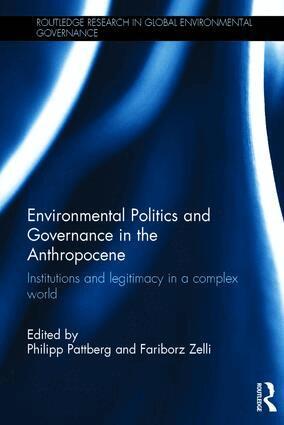
    Environmental Politics and Governance in the Anthropocene

    Institutions and legitimacy in a complex world

    AvPhilipp Pattberg,Fariborz Zelli

    Inbunden, Engelska, 2016

    Del i serien Routledge Research in Global Environmental Governance

    2 421 kr

    Beställningsvara. Skickas inom 10-15 vardagar. Fri frakt över 249 kr.

    Beskrivning

    The term Anthropocene denotes a new geological epoch characterized by the unprecedented impact of human activities on the Earth’s ecosystems. While the natural sciences have advanced their understanding of the drivers and processes of global change considerably over the last two decades, the social sciences lag behind in addressing the fundamental challenge of governance and politics in the Anthropocene. This book attempts to close this crucial research gap, in particular with regards to the following three overarching research themes: (i) the meaning, sense-making and contestations emerging around the concept of the Anthropocene related to the social sciences; (ii) the role and relevance of institutions, both formal and informal as well as international and transnational, for governing in the Anthropocene; and (iii) the role and relevance of accountability and other democratic principles for governing in the Anthropocene. Drawing together a range of key thinkers in the field, this volume provides one of the first authoritative assessments of global environmental politics and governance in the Anthropocene, reflecting on how the planetary scale crisis changes the ways in which humans respond to the challenge.This volume will be of great interest to students and scholars of global environmental politics and governance, and sustainable development.

    Produktinformation

    • Utgivningsdatum:2016-01-15
    • Mått:156 x 234 x 20 mm
    • Vikt:521 g
    • Format:Inbunden
    • Språk:Engelska
    • Serie:Routledge Research in Global Environmental Governance
    • Antal sidor:268
    • Förlag:Taylor & Francis Ltd
    • ISBN:9781138902398

    Utforska kategorier

    • Miljövetenskap och miljöpolitik inom Naturvetenskap och teknik
    • Internationella relationer inom Samhälle och politik

    Mer om författaren

    Philipp Pattberg is Professor of Transnational Environmental Governance at the Institute for Environmental Studies (IVM), Vrije Universiteit Amsterdam, The Netherlands.Fariborz Zelli is an Associate Professor at the Department of Political Science at Lund University, Sweden.

    Recensioner i media

    "I think the book ‘Environmental Politics and Governance in the Anthropocene’, edited by Philipp Pattberg and Fariborz Zelli, is an important scholarly contribution in the field of governance studies, namely for those engaged in global environmental governance issues, but also for urban and regional planners and policy makers in the broad field of urban and regional governance."Carlos Nunes Silva, Institute of Geography and Spatial Planning, Universidade de Lisboa, Lisbon, Portugal,International Journal of E-Planning Research,Volume 6 • Issue 2 • April-June 2017

    Innehållsförteckning

    • 1. Global environmental governance in the Anthropocene: An introduction Part I Making Sense of the Anthropocene 2. The Anthropocene and the body ecologic 3. The sense of an ending? Nature and the Anthropocene 4. Anthropocene: Delusion, celebration and concern 5. A fair distribution within the Anthropocene: A normative conception of sustainable development PART II Institutions in the Anthropocene 6. Mapping institutional complexity in the Anthropocene: A network approach 7. Transnational governance towards sustainable biofuels: Exploring a polycentric view 8. Governing the Artic in the era of the Anthropocene: Does corporate authority matter in Arctic shipping governance? 9. International river governance: Extreme events as a trigger for discursive change in the Rhine river basin PART III Accountability and Legitimacy in the Anthropocene 10. Democratic accountability in the Anthropocene: Toward a non-legislative model 11. Monitoring commitments made under the Kyoto Protocol: An effective tool for accountability in the Anthropocene? 12. The legitimacy and transformation of global climate governance in the Anthropocene: Implications for the global South 13. The practices of lobbying for rights in the Anthropocene era: Local communities, indigenous peoples and international climate negotiations 14. Conclusions: Complexity, responsibility and urgency in the Anthropocene