• Fri frakt över 249 kr
  • •
  • Snabba leveranser
  • •
  • Billiga böcker
Kundservice

Du är på sajten för privatpersoner.

Företag, bibliotek eller offentlig verksamhet?

Du handlar på classic.bokus.com, där alla dina funktioner finns intakta.
Till classic.bokus.com
Bokus logotyp. Gå till startsidan.
  • Erbjudanden
  • Nyheter
  • Student
  • Topplistor
  • Barn & ungdom
  • Bokus Play
  • E-böcker
  • Pocketböcker
  • Spel & pussel

10% rabatt på allt med kod NYSTART10 →

Sidfot

Mina sidor

    Hjälp

    • Kundservice
    • Vanliga frågor och svar
    • Frakt och leverans
    • Retur vid ångerrätt
    • Reklamera vara
    • Betalning
    • Köpvillkor
    • Allmänna villkor
    • Information om webbplatsens tillgänglighet

    Om Bokus

    • Om oss
    • Pressrum
    • För studenter
    • För företag
    • För bibliotek och offentlig verksamhet
    • För leverantörer
    • Hållbarhet

    Populärt

    • Aktuella erbjudanden
    • Presentkort
    • Studentlitteratur
    • Nya böcker
    • Topplistor
    • Signerade böcker
    • Engelska böcker

    Inspiration

    • Boktips
    • BookTok
    • Populära bokserier
    • Barnbokskaraktärer
    • Populära författare
    Logotyp för Bokus
    Följ oss på Facebook (extern länk)Följ oss på Instagram (extern länk)Följ oss på YouTube (extern länk)Följ oss på TikTok (extern länk)
    bokus @ CookiesAnpassa cookiesIntegritetspolicyKöpvillkor
    Till Citymail hemsida (extern länk)Till Budbee hemsida (extern länk)Till Postnord hemsida (extern länk)Till Schenker hemsida (extern länk)Till Early Bird hemsida (extern länk)Till Walleys hemsida (extern länk)
    1. Ekonomi och Ledarskap
    2. Nationalekonomi
    3. Ekonomisk historia

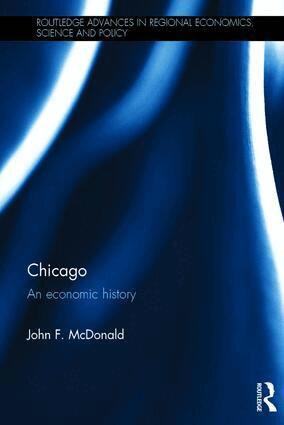
    Chicago

    An economic history

    AvJohn F. McDonald

    Inbunden, Engelska, 2015

    Del i serien Routledge Advances in Regional Economics, Science and Policy

    2 119 kr

    Beställningsvara. Skickas inom 10-15 vardagar. Fri frakt över 249 kr.

    Fler format och utgåvor

    Häftad

    600 kr

    E-bok

    708 kr

    E-bok

    708 kr

    Beskrivning

    Chicago went from nothing in 1830 to become the second-largest city in the nation in 1900, while the Midwest developed to become one of the world’s foremost urban areas. This book is an economic history of the Chicago metropolitan area from the 1820s to the present. It examines the city in its Midwestern region and compares it to the other major cities of the North. This book uses theories of the economics of location and other economic models to explain much of Chicago’s history.Chicago maintained its status as the second-largest city through the first decades of the 20th century, but rapid growth shifted to the Sunbelt following World War II. Since the 1950s the city’s history can be divided into four distinct periods; growth with suburbanization (1950-1970), absence of growth, continued suburbanization, and central city crisis (1970-1990), rebound in the 1990s, and financial crisis and deep recession after 2000. Through it all Chicago has maintained its position as the economic capital of the Midwest. The book is a synthesis of available literature and public data, and stands as an example of using economics to understand much of the history of Chicago.This book is intended for the college classroom, urban scholars, and for those interested in the history of one of world’s foremost urban areas.

    Produktinformation

    • Utgivningsdatum:2015-08-20
    • Mått:156 x 234 x 19 mm
    • Vikt:534 g
    • Format:Inbunden
    • Språk:Engelska
    • Serie:Routledge Advances in Regional Economics, Science and Policy
    • Antal sidor:248
    • Förlag:Taylor & Francis Ltd
    • ISBN:9781138919792

    Utforska kategorier

    • Ekonomisk historia inom Ekonomi och Ledarskap

    Mer om författaren

    John F. McDonald is Emeritus Professor of Economics, University of Illinois at Chicago, and Gerald W. Fogelson Distinguished Chair in Real Estate Emeritus, Roosevelt University, USA

    Recensioner i media

    "Though much of the text is devoted to dry statistical analysis, the author’s account is leavened by personal reflections drawn from his professional experience and a family history entwined with Chicago’s development since the late 19th century. The result is an engaging depiction of Chicago’s rise to prominence as a national transportation hub and manufacturing powerhouse. Populated by waves of immigrants and African American migrants, it was the American "Second City" during the mid-20th century. The last half of the book contends with Chicago’s more problematic recent evolution as population stagnated and the city’s manufacturing economy fell into terminal decline. Despite the city's economic turnaround in the 1990s, the Great Recession and its aftermath leave the author uncertain about Chicago’s future"R. S. Hewett, Drake University, CHOICE

    Innehållsförteckning

    • 1. Some Useful Economic Models in Prose 2. Chicago and the Development of the Old Northwest 3. The Second City: 1900-1930 4. Depression and War 5. Chicago in 1950, and a Look Ahead 6. Postwar Growth and Suburbanization: 1950-1970 7. The Decades of Urban Crisis 8. The Old Century Ends on a High Note, and a New Century Begins