• Fri frakt över 249 kr
  • •
  • Snabba leveranser
  • •
  • Billiga böcker
Kundservice

Du är på sajten för privatpersoner.

Företag, bibliotek eller offentlig verksamhet?

Du handlar på classic.bokus.com, där alla dina funktioner finns intakta.
Till classic.bokus.com
Bokus logotyp. Gå till startsidan.
  • Erbjudanden
  • Nyheter
  • Student
  • Topplistor
  • Barn & ungdom
  • Bokus Play
  • E-böcker
  • Pocketböcker
  • Spel & pussel

10% rabatt på allt med kod: NYSTART10 →

Sidfot

Mina sidor

    Hjälp

    • Kundservice
    • Vanliga frågor och svar
    • Frakt och leverans
    • Retur vid ångerrätt
    • Reklamera vara
    • Betalning
    • Köpvillkor
    • Allmänna villkor
    • Information om webbplatsens tillgänglighet

    Om Bokus

    • Om oss
    • Pressrum
    • För studenter
    • För företag
    • För bibliotek och offentlig verksamhet
    • För leverantörer
    • Hållbarhet

    Populärt

    • Aktuella erbjudanden
    • Presentkort
    • Studentlitteratur
    • Nya böcker
    • Topplistor
    • Signerade böcker
    • Engelska böcker

    Inspiration

    • Boktips
    • BookTok
    • Populära bokserier
    • Barnbokskaraktärer
    • Populära författare
    Logotyp för Bokus
    Följ oss på Facebook (extern länk)Följ oss på Instagram (extern länk)Följ oss på YouTube (extern länk)Följ oss på TikTok (extern länk)
    bokus @ CookiesAnpassa cookiesIntegritetspolicyKöpvillkor
    Till Citymail hemsida (extern länk)Till Budbee hemsida (extern länk)Till Postnord hemsida (extern länk)Till Schenker hemsida (extern länk)Till Early Bird hemsida (extern länk)Till Walleys hemsida (extern länk)
    1. Ekonomi och Ledarskap
    2. Nationalekonomi
    3. Mikroekonomi

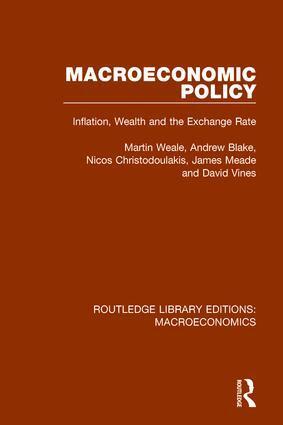
    Macroeconomic Policy

    Inflation, Wealth and the Exchange Rate

    AvMartin Weale,Andrew Blake

    Inbunden, Engelska, 2015

    Del i serien Routledge Library Editions: Macroeconomics

    1 510 kr

    Beställningsvara. Skickas inom 10-15 vardagar. Fri frakt över 249 kr.

    Fler format och utgåvor

    Häftad

    426 kr

    Beskrivning

    This analysis of macroeconomic policy, originally published in 1989, argues that key government objectives, such as reduced inflation, decreased unemployment and an adequate level of national saving can be achieved only by employing both monetary and fiscal policies, in conjunction with supply-side policies expressly designed to improve the workings of the labour market. Part 1 is a comparative analysis showing the effects of monetary and fiscal policy on the economy. Real-wage rigidity in the labour market is shown to have important consequences for the working of both types of policy, because it conditions the economy’s response to tax changes. Part 2 presents an econometric model which combines consistent stock-flow accounts with a full range of expectational effects. Part 3 presents an innovative technique for solving rational expectations models with the need for arbitary terminal conditions.

    Produktinformation

    • Utgivningsdatum:2015-09-15
    • Mått:156 x 234 x 26 mm
    • Vikt:703 g
    • Format:Inbunden
    • Språk:Engelska
    • Serie:Routledge Library Editions: Macroeconomics
    • Antal sidor:396
    • Förlag:Taylor & Francis Ltd
    • ISBN:9781138940017

    Utforska kategorier

    • Mikroekonomi inom Ekonomi och Ledarskap
    • Makroekonomi inom Ekonomi och Ledarskap
    • Finansiering inom Ekonomi och Ledarskap

    Mer om författaren

    Martin Weale, Andrew Blake, Nicos Christodoulakis, James Meade, David Vines

    Innehållsförteckning

    • Part 1: Theory 1. A New Keynesian Framework For Macroeconomic Policy 2. The Linkages Between Financial Weapons and Financial Targets: A Comparative Static Analysis 3. The Dynamics of Price Stabilization 4. Wealth Targets, Stock Instability and Macroeconomic Policy Part 2: Application 5. A Stock-Flow Model with Model-Consistent or Adaptive Expectations 6. Macroeconomic Policy Rule for Economic Stabilization 7. Counterfactual Simulation With Forward-Looking Expectations 8. A Simulation of the Cost-Push Economy 9. The Controlled Economy with Reformed Wages Part 3: Method 10. The Drivation and Use of a Linear Model 11. The Design of Economic Policy Rules Part 4: Conclusion 12. Summary of Results and Conclusions