• Fri frakt över 249 kr
  • •
  • Snabba leveranser
  • •
  • Billiga böcker
Kundservice

Du är på sajten för privatpersoner.

Företag, bibliotek eller offentlig verksamhet?

Du handlar på classic.bokus.com, där alla dina funktioner finns intakta.
Till classic.bokus.com
Bokus logotyp. Gå till startsidan.
  • Erbjudanden
  • Nyheter
  • Student
  • Topplistor
  • Barn & ungdom
  • Bokus Play
  • E-böcker
  • Pocketböcker
  • Spel & pussel

10% rabatt på allt med kod: NYSTART10 →

Sidfot

Mina sidor

    Hjälp

    • Kundservice
    • Vanliga frågor och svar
    • Frakt och leverans
    • Retur vid ångerrätt
    • Reklamera vara
    • Betalning
    • Köpvillkor
    • Allmänna villkor
    • Information om webbplatsens tillgänglighet

    Om Bokus

    • Om oss
    • Pressrum
    • För studenter
    • För företag
    • För bibliotek och offentlig verksamhet
    • För leverantörer
    • Hållbarhet

    Populärt

    • Aktuella erbjudanden
    • Presentkort
    • Studentlitteratur
    • Nya böcker
    • Topplistor
    • Signerade böcker
    • Engelska böcker

    Inspiration

    • Boktips
    • BookTok
    • Populära bokserier
    • Barnbokskaraktärer
    • Populära författare
    Logotyp för Bokus
    Följ oss på Facebook (extern länk)Följ oss på Instagram (extern länk)Följ oss på YouTube (extern länk)Följ oss på TikTok (extern länk)
    bokus @ CookiesAnpassa cookiesIntegritetspolicyKöpvillkor
    Till Citymail hemsida (extern länk)Till Budbee hemsida (extern länk)Till Postnord hemsida (extern länk)Till Schenker hemsida (extern länk)Till Early Bird hemsida (extern länk)Till Walleys hemsida (extern länk)
    1. Historia och arkeologi
    2. Historia
    3. Historia: teori och metod

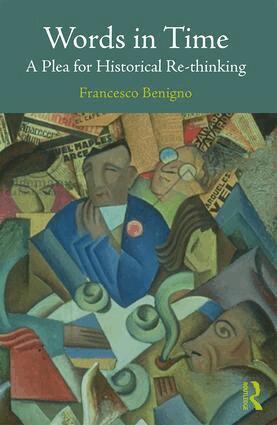
    Words in Time

    A Plea for Historical Re-thinking

    AvFrancesco Benigno

    Häftad, Engelska, 2017

    643 kr

    Beställningsvara. Skickas inom 10-15 vardagar. Fri frakt över 249 kr.

    Fler format och utgåvor

    Inbunden

    2 493 kr

    E-bok

    740 kr

    E-bok

    738 kr

    Beskrivning

    Through questions such as ‘What is power?’, ‘How are revolutions generated?’, ‘Does public opinion really exist?’, ‘What does terrorism mean?’ and ‘When are generations created?’, Words in Time scrutinizes the fundamental concepts by which we confer meaning to the historical and social world and what they actually signify, analysing their formation and use in modern thought within both history and the social sciences. In this volume, Francesco Benigno examines the origins and development of the words we use, critiquing the ways in which they have traditionally been employed in historical thinking and examining their potential usefulness today. Rather than being a general inventory or a specialized dictionary, this book analyses a selection of words particularly relevant not only in the idiom and jargon of the social sciences and history, but also in the discourse of ordinary people. Exploring new trends in the historical field of reflection and representing a call for a new, more conscious, historical approach to the social world, this is valuable reading for all students of historical theory and method.

    Produktinformation

    • Utgivningsdatum:2017-04-27
    • Mått:156 x 234 x 21 mm
    • Vikt:380 g
    • Format:Häftad
    • Språk:Engelska
    • Antal sidor:198
    • Förlag:Taylor & Francis Ltd
    • ISBN:9781138943759

    Utforska kategorier

    • Historia: teori och metod inom Historia och arkeologi

    Mer om författaren

    Francesco Benigno is Professor of History at Teramo University, Italy, and the author of several books, including Mirrors of Revolution: Conflict and Political Identity in Early Modern Europe (Brepols, 2010).

    Recensioner i media

    "Francesco Benigno offers a panoramic overview of methodological issues in contemporary historical writing. Like many historiographers in our times, he provides a perspective on the proposition that we have crossed from a modern into a postmodern age.[...]His message seems to be that historiography, when viewed from the perspective of actual historians at work, is a dynamic process that mimics the speed of communication in our times."-Patrick Hutton, University of Vermont, Journal of Modern History

    Innehållsförteckning

    • AcknowledgementsIntroduction: writing history at a time of memory0.1 The distancing of modern0.2 The challenge of memory0.3 Traditional history vs memorial history?0.4 Conclusion: a plea for critical historyPart I Rethinking Early Modern EuropeChapter 1 ViolenceRites of violence?Different from usLosing one’s headConclusions: violence as judgementChapter 2 Popular culture2.1 The standard historiographical understanding of popular culture2.2 A thousand Menocchio2.3 The hermeneutical turn2.4 Folklore and reflexive anthropology2.5 Inventing the people2.6 Conclusions: rethinking the concept of popularChapter 3 Public opinion3.1 Critique as the matrix of the crisis3.2 An utopia of communication3.3 A deformed ancien régime3.4 Possible pluralisms3.5 Conclusions: counterposed rhetoricsChapter 4 Revolutions4.1 After the revisionisms4.2 The mother of all revolutions4.3 Revolutions before "the Revolution"4.4 Conclusions: revolutions and public memoryPart II Rethinking ModernityChapter 5 Identity5.1 There was once a thing called class5.2 Between radical individualism and representations5.3 The discovery of identity5.4 New types of subjectivity5.5 The modernity we have lost5.6 The liquified world5.7 Simul stabunt simul cadent: nation, class and identitary divisions5.8 Conclusions: coming in terms with lost innocenceChapter 6 Power6.1 The time of Grand Theories6.2 The anti-positivistic reaction6.3 Foucault6.4 Power in social organizations6.5 Power, institutions, identity6.6 Conclusions: the communicative dimension of powerChapter 7 Generations7.1 Wave on wave7.2 Grounding the concept of generation7.3 Historians and the concept of generation7.4 Generational memory and constructing of an event7.5 Conclusions: the generation callChapter 8 Terrorism8.1 Improbable definitions and unbelievable genealogies8.2 Revolutionary terrorism8.3 Insurgency and counter-insurgency8.4 The evil scourge8.5 Conclusions: terrorism on the stageIndex