• Fri frakt över 249 kr
  • •
  • Snabba leveranser
  • •
  • Billiga böcker
Kundservice

Du är på sajten för privatpersoner.

Företag, bibliotek eller offentlig verksamhet?

Du handlar på classic.bokus.com, där alla dina funktioner finns intakta.
Till classic.bokus.com
Bokus logotyp. Gå till startsidan.
  • Erbjudanden
  • Nyheter
  • Student
  • Topplistor
  • Barn & ungdom
  • Bokus Play
  • E-böcker
  • Pocketböcker
  • Spel & pussel

10% rabatt på allt med kod NYSTART10 →

Sidfot

Mina sidor

    Hjälp

    • Kundservice
    • Vanliga frågor och svar
    • Frakt och leverans
    • Retur vid ångerrätt
    • Reklamera vara
    • Betalning
    • Köpvillkor
    • Allmänna villkor
    • Information om webbplatsens tillgänglighet

    Om Bokus

    • Om oss
    • Pressrum
    • För studenter
    • För företag
    • För bibliotek och offentlig verksamhet
    • För leverantörer
    • Hållbarhet

    Populärt

    • Aktuella erbjudanden
    • Presentkort
    • Studentlitteratur
    • Nya böcker
    • Topplistor
    • Signerade böcker
    • Engelska böcker

    Inspiration

    • Boktips
    • BookTok
    • Populära bokserier
    • Barnbokskaraktärer
    • Populära författare
    Logotyp för Bokus
    Följ oss på Facebook (extern länk)Följ oss på Instagram (extern länk)Följ oss på YouTube (extern länk)Följ oss på TikTok (extern länk)
    bokus @ CookiesAnpassa cookiesIntegritetspolicyKöpvillkor
    Till Citymail hemsida (extern länk)Till Budbee hemsida (extern länk)Till Postnord hemsida (extern länk)Till Schenker hemsida (extern länk)Till Early Bird hemsida (extern länk)Till Walleys hemsida (extern länk)
    1. Psykologi och pedagogik
    2. Psykologi
    3. Socialpsykologi och gruppsykologi

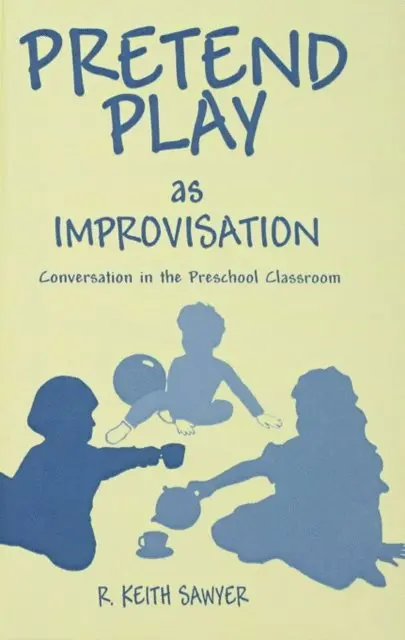
    Pretend Play As Improvisation

    Conversation in the Preschool Classroom

    AvR. Keith Sawyer

    Häftad, Engelska, 2016

    912 kr

    Beställningsvara. Skickas inom 10-15 vardagar. Fri frakt över 249 kr.

    Fler format och utgåvor

    Inbunden

    2 354 kr

    E-bok

    967 kr

    E-bok

    967 kr

    Beskrivning

    Everyday conversations including gossip, boasting, flirting, teasing, and informative discussions are highly creative, improvised interactions. Children's play is also an important, often improvisational activity. One of the most improvisational games among 3- to 5-year-old children is social pretend play--also called fantasy play, sociodramatic play, or role play. Children's imaginations have free reign during pretend play. Conversations in these play episodes are far more improvisational than the average adult conversation. Because pretend play occurs in a dramatized, fantasy world, it is less constrained by social and physical reality.This book adds to our understanding of preschoolers' pretend play by examining it in the context of a theory of improvisational performance genres. This theory, derived from in-depth analyses of the implicit and explicit rules of theatrical improvisation, proves to generalize to pretend play as well. The two genres share several characteristics: * There is no script; they are created in the moment.* There are loose outlines of structure which guide the performance.* They are collective; no one person decides what will happen.Because group improvisational genres are collective and unscripted, improvisational creativity is a collective social process.The pretend play literature states that this improvisational behavior is most prevalent during the same years that many other social and cognitive skills are developing. Children between the ages of 3 and 5 begin to develop representations of their own and others' mental states as well as learn to represent and construct narratives. Freudian psychologists and other personality theorists have identified these years as critical in the development of the personality. The author believes that if we can demonstrate that children's improvisational abilities develop during these years--and that their fantasy improvisations become more complex and creative--it might suggest that these social skills are linked to the child's developing ability to improvise with other creative performers.

    Produktinformation

    • Utgivningsdatum:2016-01-20
    • Mått:152 x 229 x 13 mm
    • Vikt:453 g
    • Format:Häftad
    • Språk:Engelska
    • Antal sidor:232
    • Förlag:Taylor & Francis Ltd
    • ISBN:9781138995260

    Utforska kategorier

    • Socialpsykologi och gruppsykologi inom Psykologi och pedagogik
    • Psykologiska teorier och skolor inom Psykologi och pedagogik
    • Litteraturvetenskap inom Skönlitteratur

    Recensioner i media

    "Sawyer's argument is that pretend-play interactions are an opportunity for children to develop the linguistic skills needed to establish a shared intersubjectivity....According to Sawyer, pretend play diminishes as children learn to carry on improvisational conversations....Researchers interested in any of these issues will find this book interesting."—CHOICE"Sawyer's clear demonstration of the role of pretence as a training ground for social skills is illuminating, and it is refreshing to have pretence discussed as a topic in its own right and not just as an epiphenomenon of developments in cognitive architecture. The depth and breadth of the book around a narrow focus is impressive."—British Journal of Developmental Psychology"Sawyer's contribution is not limited to offering a new conceptualization of pretend play. He brings to our attention a wide collection of important and relevant theories from which play research will benefit in the future. Finally, Sawyer's integration of quantitative and qualitative analyses is a valuable illustration of the improvisation somtimes required from a researcher of children's pretend play."—Theory and Psychology

    Innehållsförteckning

    • Contents: W.A. Corsaro, Foreword. Preface. Introduction: Play as Improvisational Performance. Play and Conversation. An Improvisational Theory of Children's Play. Studying Pretend Play in the Preschool Classroom. Performance Style and Performances. Joining the Performance: The Metapragmatics of Play Entry. The Improvisational Exchange: Using Metapragmatic Strategies to Negotiate the Play Frame. The Performance of Play: Children's Group Improvisations. Improvisation and Development.