• Fri frakt över 249 kr
  • •
  • Snabba leveranser
  • •
  • Billiga böcker
Kundservice

Du är på sajten för privatpersoner.

Företag, bibliotek eller offentlig verksamhet?

Du handlar på classic.bokus.com, där alla dina funktioner finns intakta.
Till classic.bokus.com
Bokus logotyp. Gå till startsidan.
  • Erbjudanden
  • Nyheter
  • Student
  • Topplistor
  • Barn & ungdom
  • Bokus Play
  • E-böcker
  • Pocketböcker
  • Spel & pussel

10% rabatt på allt med kod: NYSTART10 →

Sidfot

Mina sidor

    Hjälp

    • Kundservice
    • Vanliga frågor och svar
    • Frakt och leverans
    • Retur vid ångerrätt
    • Reklamera vara
    • Betalning
    • Köpvillkor
    • Allmänna villkor
    • Information om webbplatsens tillgänglighet

    Om Bokus

    • Om oss
    • Pressrum
    • För studenter
    • För företag
    • För bibliotek och offentlig verksamhet
    • För leverantörer
    • Hållbarhet

    Populärt

    • Aktuella erbjudanden
    • Presentkort
    • Studentlitteratur
    • Nya böcker
    • Topplistor
    • Signerade böcker
    • Engelska böcker

    Inspiration

    • Boktips
    • BookTok
    • Populära bokserier
    • Barnbokskaraktärer
    • Populära författare
    Logotyp för Bokus
    Följ oss på Facebook (extern länk)Följ oss på Instagram (extern länk)Följ oss på YouTube (extern länk)Följ oss på TikTok (extern länk)
    bokus @ CookiesAnpassa cookiesIntegritetspolicyKöpvillkor
    Till Citymail hemsida (extern länk)Till Budbee hemsida (extern länk)Till Postnord hemsida (extern länk)Till Schenker hemsida (extern länk)Till Early Bird hemsida (extern länk)Till Walleys hemsida (extern länk)
    1. Psykologi och pedagogik
    2. Pedagogik
    3. Skolan och förskolan

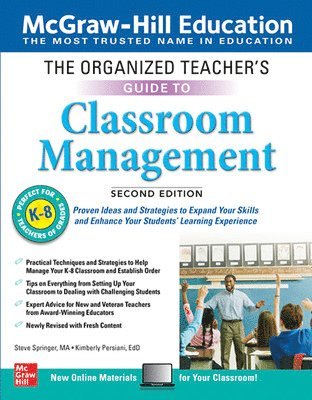
    Organized Teacher's Guide to Classroom Management, Grades K-8, Second Edition

    AvSteve Springer,Kimberly Persiani

    Häftad, Engelska, 2019

    173 kr

    Beställningsvara. Skickas inom 3-6 vardagar. Fri frakt över 249 kr.

    Beskrivning

    Discover strategies and tools to make your classroom run more smoothly

    Classroom management can be challenging even for experienced teachers. Written by two award-winning educators, this practical guide is filled with tips and proticols to help you manage your classroom more efficiently. There’s advice on setting up your classroom, establishing rules,  dealing with difficult students, meeting with parents, and much more. The authors also examine teaching theories from leading educators and offer guidance to help you determine the best teaching style for every situation. 

    The book includes dozens of useful documents such as charts, rewards certificates, child-teacher or parent-teacher contracts for homework, attendance or discipline, and more. The documents can also be accessed online and sent directly to a printer, saving you valuable time. 

    The Organized Teacher’s Guide to Classroom Management, Second Edition will help you:

    •Find strategies to keep your classroom running smoothly
    •Determine which teaching style is most appropriate for you
    •Establish rules, consequences, and procedures
    •Manage student behavior in the classroom
    •Create more inspired lesson plans and curricula
    •Get organized with reproducible charts, checklists, and more
     

    Produktinformation

    • Utgivningsdatum:2019-07-04
    • Mått:213 x 272 x 20 mm
    • Vikt:612 g
    • Format:Häftad
    • Språk:Engelska
    • Antal sidor:304
    • Upplaga:2
    • Förlag:McGraw-Hill Education
    • ISBN:9781260441895

    Utforska kategorier

    • Skolan och förskolan inom Psykologi och pedagogik
    • Pedagogisk metodik inom Psykologi och pedagogik

    Mer om författaren

    McGraw-Hill authors represent the leading experts in their fields and are dedicated to improving the lives, careers, and interests of readers worldwide. Steve Springer has taught and developed training programs for the Los Angeles Unified School District for over 15 years. He has been a mentor and master teacher throughout his career. He has used this experience along with his talents in fine arts to write and illustrate several books for teachers. The Organized Teacher and The Creative Teacher, published by McGraw-Hill, are two of these books that offer visual hands-on guides to organizing and creating a dynamic classroom. Steve recently started a program called Reach and Teach. His vision was to share his teaching experience with other teachers. Over sixty teachers were in-serviced in South Africa. They left empowered to create a more exciting, interactive classroom. Each participant received a McGraw-Hill resource book and a set of supplies. The program was well received and he plans to continue his involvement. McGraw-Hill authors represent the leading experts in their fields and are dedicated to improving the lives, careers, and interests of readers worldwide

    Innehållsförteckning

    • What Do Teachers Make? Preface 1 Theorists Twelve Theorists of Classroom Management Albert Bandura: Social Learning Theory Lee and Marlene Canter: Assertive Discipline Richard Curwin and Allen Mendler: Discipline with Dignity Rudolf Dreikurs: Discipline Through Democratic Teaching Haim Ginott: Discipline Through Congruent Communication William Glasser: Noncoercive Discipline Fred Jones: Positive Classroom Discipline Spencer Kagan: Win-Win Discipline Jacob Kounin: Improving Discipline Through Lesson Management Marvin Marshall: Discipline Through Raising Responsibility Fritz Redl and William Wattenberg: Discipline Through Influencing Group Behavior B. F. Skinner: Discipline Through Shaping Desired Behavior 2 Organizing Your Classroom Physical Arrangement Purposeful Room Arrangement Inheriting a Classroom High-Traffic Areas Student Accessibility to Teacher and Instruction Teacher and Student Supply Kits Teacher Kit Student Kits Bulletin Boards Physical Classroom Setup Instructional Focal Point Arrangement of Student Desks Placement of Teacher’s Desk File Cabinets Equipment Bookcases Small Group Instruction Areas Learning Centers/Labs Textbooks Instructional Materials Student Work and Student Portfolios Utilizing Storage Space Efficiency Is the Key 3 Establishing Rules, Consequences, and Procedures Establishing Classroom Rules Kindergarten–First Grade Second–Third Grades Fourth–Sixth Grades Secondary Grades or Advanced Learners Rules That Work for Any Grade Additional Ideas for Rules Establishing Classroom Consequences Time-Out Detention Communication Home Action Plan and/or Conference Summary Establishing Classroom Procedures Use of Classroom Elements Student Participation Talking Among Students Obtaining Help Activities for “Early Finishers” Classroom Transitions General Procedures Distributing Materials Interruptions and Delays Restroom Breaks The Library The Resource Room The Office The Nurse The Cafeteria The Playground and Equipment Fire and Disaster Drills Classroom Helpers and Monitors 4 Managing Student Behavior Consistency A Positive Classroom Climate Incentives and Rewards Recognition Privileges Activities Tangible Rewards Cautions About Using Rewards Managing Misbehavior Misbehavior in the Classroom Identifying Misbehavior Discipline and Flexibility Converting Inappropriate Behavior Techniques for Managing Behavior Anecdotal Records Addressing Concerns About Behavior Meeting the Students’ Needs Communicating with Parents 5 Getting off to a Good Start Teaching Routines and Procedures Describing and Modeling Desired Behavior Students Respond to Appropriate Classroom Routines Give Appropriate Feedback Creating a Congenial and Positive Climate in Your Classroom Teacher Authority Rules and Consequences The First Days of the School Year Communicating with Families Anticipating Problems The First Week of School Final Thoughts 6 Know Your Support Team Connecting with the Team Members of the Team Teachers Administration Office Staff Instructional Support Parents 7 Planning, Instruction, and Assessment Planning Common Core Standards Goals Objectives Materials Lesson Plan Procedures Instruction Tone Strategies Inclusion Questioning Assessment Summative Assessment Formative Assessment Check for Understanding Reflection Aids for Planning, Instruction, and Assessment Troubleshooting a Lesson Lesson Plan Templates 5E Lesson Plan Student-Focused Lesson Plan Understanding Your Teacher’s Edition Cumulative Records Individualized Education Plan Bloom’s Taxonomy Gardner’s Multiple Intelligences Visual, Auditory, and Kinesthetic Learning Styles Final Thoughts 8 Managing Active Learning Group Work Designing Small Groups Activities for Small Groups Activity for Pairs or Partners Learning Centers Setting Up Learning Centers Curriculum-Related Learning Centers Learning Center Rules of Behavior Individual Work Activities for Individual Work Final Thoughts 9 Instructional Challenges Different Learning Styles Visual Learners Auditory Learners Kinesthetic Learners Modifications Getting Students Started Keeping Students Engaged Keeping Students in Their Seats Helping Students Follow Directions Additional Modifications Working with Students with Special Needs Students with Learning Disabilities Students with ADD or ADHD Students with Autism Students with Asperger’s Syndrome Students with Emotional and Behavioral Disorders Students Who Are Gifted Working with English Language Learners E.L.D. Levels E.L.D. Strategies E.L.D. Series English Language Development Levels Diversity of Students Diversity and the Curriculum Final Thoughts 10 Curriculum Overview Understanding Who Your Students Are Kindergarten (5–6 Years Old) First Grade (6–7 Years Old) Second Grade (7–8 Years Old) Third Grade (8–9 Years Old) Fourth Grade (9–10 Years Old) Fifth Grade (10–11 Years Old) Sixth Grade (11–12 Years Old) Understanding the Curriculum Language Arts: Reading Language Arts: Writing Math Social Studies Science Physical Education Visual and Performing Arts Cross-Curricular Subject Areas Curriculum Planning Templates Index