• Fri frakt över 249 kr
  • •
  • Snabba leveranser
  • •
  • Billiga böcker
Kundservice

Du är på sajten för privatpersoner.

Företag, bibliotek eller offentlig verksamhet?

Du handlar på classic.bokus.com, där alla dina funktioner finns intakta.
Till classic.bokus.com
Bokus logotyp. Gå till startsidan.
  • Erbjudanden
  • Nyheter
  • Student
  • Topplistor
  • Barn & ungdom
  • Bokus Play
  • E-böcker
  • Pocketböcker
  • Spel & pussel

10% rabatt på allt med kod NYSTART10 →

Sidfot

Mina sidor

    Hjälp

    • Kundservice
    • Vanliga frågor och svar
    • Frakt och leverans
    • Retur vid ångerrätt
    • Reklamera vara
    • Betalning
    • Köpvillkor
    • Allmänna villkor
    • Information om webbplatsens tillgänglighet

    Om Bokus

    • Om oss
    • Pressrum
    • För studenter
    • För företag
    • För bibliotek och offentlig verksamhet
    • För leverantörer
    • Hållbarhet

    Populärt

    • Aktuella erbjudanden
    • Presentkort
    • Studentlitteratur
    • Nya böcker
    • Topplistor
    • Signerade böcker
    • Engelska böcker

    Inspiration

    • Boktips
    • BookTok
    • Populära bokserier
    • Barnbokskaraktärer
    • Populära författare
    Logotyp för Bokus
    Följ oss på Facebook (extern länk)Följ oss på Instagram (extern länk)Följ oss på YouTube (extern länk)Följ oss på TikTok (extern länk)
    bokus @ CookiesAnpassa cookiesIntegritetspolicyKöpvillkor
    Till Citymail hemsida (extern länk)Till Budbee hemsida (extern länk)Till Postnord hemsida (extern länk)Till Schenker hemsida (extern länk)Till Early Bird hemsida (extern länk)Till Walleys hemsida (extern länk)
    1. Data och IT
    2. Hårdvara

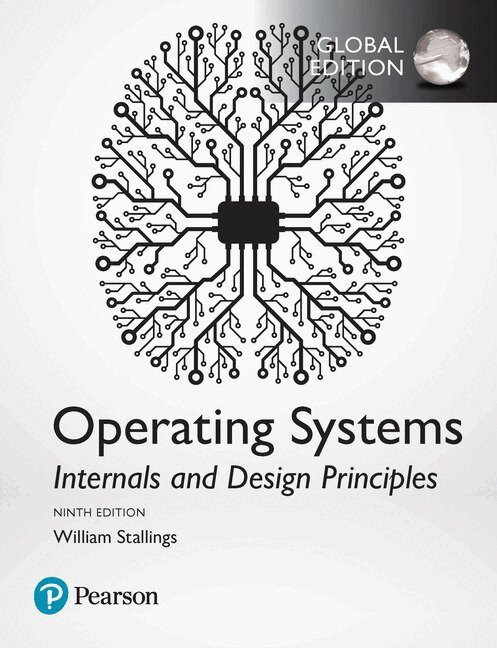
    Operating Systems: Internals and Design Principles, Global Edition

    AvWilliam Stallings

    Häftad, Engelska, 2017

    1 213 kr

    Beställningsvara. Skickas inom 7-10 vardagar. Fri frakt över 249 kr.

    Fler format och utgåvor

    E-bok

    797 kr

    Beskrivning

    For one- or two-semester undergraduate courses in operating systems for computer science, computer engineering, and electrical engineering majors

    An introduction to operating systems with up-to-date and comprehensive coverage

    Now in its 9th Edition, Operating Systems: Internals and Design Principles provides a comprehensive, unified introduction to operating systems topics aimed at computer science, computer engineering, and electrical engineering majors. Author William Stallings emphasises both design issues and fundamental principles in contemporary systems, while providing readers with a solid understanding of the key structures and mechanisms of operating systems. He discusses design trade-offs and the practical decisions affecting design, performance and security. The text illustrates and reinforces design concepts, tying them to real-world design choices with case studies in Linux, UNIX, Android, and Windows 10.

    With an unparalleled degree of support for integrating projects into the course, plus comprehensive coverage of the latest trends and developments in operating systems, including cloud computing and the Internet of Things (IoT), the text provides everything students and instructors need to keep pace with a complex and rapidly changing field. The 9th Edition has been extensively revised and contains new material, new projects, and updated chapters.

    Produktinformation

    • Utgivningsdatum:2017-09-19
    • Mått:178 x 232 x 24 mm
    • Vikt:1 060 g
    • Format:Häftad
    • Språk:Engelska
    • Antal sidor:800
    • Upplaga:9
    • Förlag:Pearson Education
    • ISBN:9781292214290

    Utforska kategorier

    • Hårdvara inom Data och IT
    • Operativsystem inom Data och IT

    Innehållsförteckning

    • Online Chapters and Appendices VideoNotes Preface About the Author  I. Background  1. Computer System Overview  1.1. Basic Elements 1.2. Evolution of the Microprocessor 1.3. Instruction Execution 1.4. Interrupts 1.5. The Memory Hierarchy 1.6. Cache Memory 1.7. Direct Memory Access 1.8. Multiprocessor and Multicore Organization 1.9. Key Terms, Review Questions, and Problems 1A. Performance Characteristics of Two-Level Memories  2. Operating System Overview  2.1. Operating System Objectives and Functions 2.2. The Evolution of Operating Systems 2.3. Major Achievements 2.4. Developments Leading to Modern Operating Systems 2.5. Fault Tolerance2.6. Os Design Considerations for Multiprocessor and Multicore 2.7. Microsoft Windows Overview 2.8. Traditional Unix Systems 2.9. Modern Unix Systems 2.10. Linux 2.11. Android 2.12. Key Terms, Review Questions, and Problems  II. Processes  3. Process Description and Control  3.1. What is a Process? 3.2. Process States 3.3. Process Description 3.4. Process Control 3.5. Execution of the Operating System 3.6. Unix Svr4 Process Management 3.7. Summary 3.8. Key Terms, Review Questions, and Problems  4. Threads  4.1. Processes and Threads 4.2. Types of Threads 4.3. Multicore and Multithreading 4.4. Windows Process and Thread Management 4.5. Solaris Thread and Smp Management 4.6. Linux Process and Thread Management 4.7. Android Process and Thread Management 4.8. Mac OS X Grand Central Dispatch 4.9. Summary 4.10. Key Terms, Review Questions, and Problems  5. Concurrency: Mutual Exclusion and Synchronization  5.1. Mutual Exclusion: Software Approaches 5.2. Principles of Concurrency 5.3. Mutual Exclusion: Hardware Support 5.4. Semaphores 5.5. Monitors 5.6. Message Passing 5.7. Readers/Writers Problem 5.8. Summary 5.9. Key Terms, Review Questions, and Problems  6. Concurrency: Deadlock and Starvation  6.1. Principles of Deadlock 6.2. Deadlock Prevention 6.3. Deadlock Avoidance 6.4. Deadlock Detection 6.5. An Integrated Deadlock Strategy 6.6. Dining Philosophers Problem 6.7. Unix Concurrency Mechanisms 6.8. Linux Kernel Concurrency Mechanisms 6.9. Solaris Thread Synchronization Primitives 6.10. Windows Concurrency Mechanisms 6.11. Android Interprocess Communication 6.12. Summary 6.13. Key Terms, Review Questions, and Problems  III. Memory  7. Memory Management  7.1. Memory Management Requirements 7.2. Memory Partitioning 7.3. Paging 7.4. Segmentation 7.5. Summary 7.6. Key Terms, Review Questions, and Problems 7A. Loading and Linking  8. Virtual Memory  8.1. Hardware and Control Structures 8.2. Operating System Software 8.3. Unix and Solaris Memory Management 8.4. Linux Memory Management 8.5. Windows Memory Management 8.6. Android Memory Management 8.7. Summary 8.8. Key Terms, Review Questions, and Problems  IV. Scheduling  9. Uniprocessor Scheduling  9.1. Types of Processor Scheduling 9.2. Scheduling Algorithms 9.3. Traditional Unix Scheduling 9.4. Summary 9.5. Key Terms, Review Questions, and Problems <

    Betyg & recensioner

    4/5