• Fri frakt över 249 kr
  • •
  • Snabba leveranser
  • •
  • Billiga böcker
Kundservice

Du är på sajten för privatpersoner.

Företag, bibliotek eller offentlig verksamhet?

Du handlar på classic.bokus.com, där alla dina funktioner finns intakta.
Till classic.bokus.com
Bokus logotyp. Gå till startsidan.
  • Erbjudanden
  • Nyheter
  • Student
  • Topplistor
  • Barn & ungdom
  • Bokus Play
  • E-böcker
  • Pocketböcker
  • Spel & pussel

Må bättre, för mindre! Upp till 50% rabatt på hälsoböcker

Sidfot

Mina sidor

    Hjälp

    • Kundservice
    • Vanliga frågor och svar
    • Frakt och leverans
    • Retur vid ångerrätt
    • Reklamera vara
    • Betalning
    • Köpvillkor
    • Allmänna villkor
    • Information om webbplatsens tillgänglighet

    Om Bokus

    • Om oss
    • Pressrum
    • För studenter
    • För företag
    • För bibliotek och offentlig verksamhet
    • För leverantörer
    • Hållbarhet

    Populärt

    • Aktuella erbjudanden
    • Presentkort
    • Studentlitteratur
    • Nya böcker
    • Topplistor
    • Signerade böcker
    • Engelska böcker

    Inspiration

    • Boktips
    • BookTok
    • Populära bokserier
    • Barnbokskaraktärer
    • Populära författare
    Logotyp för Bokus
    Följ oss på Facebook (extern länk)Följ oss på Instagram (extern länk)Följ oss på YouTube (extern länk)Följ oss på TikTok (extern länk)
    bokus @ CookiesAnpassa cookiesIntegritetspolicyKöpvillkor
    Till Citymail hemsida (extern länk)Till Budbee hemsida (extern länk)Till Postnord hemsida (extern länk)Till Schenker hemsida (extern länk)Till Early Bird hemsida (extern länk)Till Walleys hemsida (extern länk)
    1. Filosofi och religion
    2. Religion och tro
    3. Judendom

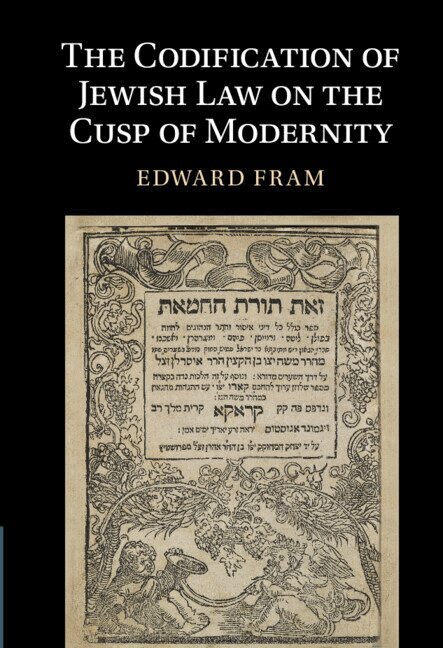
    The Codification of Jewish Law on the Cusp of Modernity

    AvEdward Fram

    Inbunden, Engelska, 2022

    1 107 kr

    Beställningsvara. Skickas inom 10-15 vardagar. Fri frakt över 249 kr.

    Beskrivning

    For more than four centuries, Jewish life has been based on a code of law written by Joseph Caro, his Shulḥan `aruk ['set table']. The work was an immediate best-seller because it presented the law in a clear and concise format. Caro's work, however, was methodologically problematic and was widely criticized in the first generations after its publication. In this volume, Edward Fram examines Caro's methods as well as those of two of his contemporaries, Moses Isserles and Solomon Luria. He highlights criticisms of Caro's legal thought and brings alternative methodologies to the fore. He also compares these three jurists, while placing  their methods, and cases in their historical, intellectual, and religious contexts. Fram's volume ultimately explains why Caro's methodologically problematic work won the day, while more sophisticated approaches remained points of legal reference but fell short of achieving the acceptance that their authors hoped for.

    Produktinformation

    • Utgivningsdatum:2022-04-28
    • Mått:158 x 235 x 22 mm
    • Vikt:650 g
    • Format:Inbunden
    • Språk:Engelska
    • Antal sidor:342
    • Förlag:Cambridge University Press
    • ISBN:9781316511572

    Utforska kategorier

    • Judendom inom Filosofi och religion

    Mer om författaren

    Edward Fram is Associate Professor of Jewish History and Solly Yellin Chair in Lithuanian and Eastern European Jewish Culture at Ben-Gurion University of the Negev. His research focuses on the history of Jewish law in the early modern period. He is the author of several award-winning books including Ideals Face Reality (1997) and A Window on their World: The Rabbinic Court Diary of Rabbi Hayyim Gundersheim, Frankfurt am Main, 1773–1794 (2012).

    Recensioner i media

    '… well written, thoroughly researched, and has a serious prospect to become a classic on the topic in the English language.' Roger S. Kohn, Association of Jewish Libraries Reviews

    Innehållsförteckning

    • Introduction; 1. Joseph Caro and his codification of Jewish law; 2. A difficult beginning; 3. Rabbi Solomon Luria's legal methodology; 4. Rabbi Moses Isserles's responses; 5. Codification and legal creativity; Conclusion.