• Fri frakt över 249 kr
  • •
  • Snabba leveranser
  • •
  • Billiga böcker
Kundservice

Du är på sajten för privatpersoner.

Företag, bibliotek eller offentlig verksamhet?

Du handlar på classic.bokus.com, där alla dina funktioner finns intakta.
Till classic.bokus.com
Bokus logotyp. Gå till startsidan.
  • Erbjudanden
  • Nyheter
  • Student
  • Topplistor
  • Barn & ungdom
  • Bokus Play
  • E-böcker
  • Pocketböcker
  • Spel & pussel

10% rabatt på allt med kod: NYSTART10 →

Sidfot

Mina sidor

    Hjälp

    • Kundservice
    • Vanliga frågor och svar
    • Frakt och leverans
    • Retur vid ångerrätt
    • Reklamera vara
    • Betalning
    • Köpvillkor
    • Allmänna villkor
    • Information om webbplatsens tillgänglighet

    Om Bokus

    • Om oss
    • Pressrum
    • För studenter
    • För företag
    • För bibliotek och offentlig verksamhet
    • För leverantörer
    • Hållbarhet

    Populärt

    • Aktuella erbjudanden
    • Presentkort
    • Studentlitteratur
    • Nya böcker
    • Topplistor
    • Signerade böcker
    • Engelska böcker

    Inspiration

    • Boktips
    • BookTok
    • Populära bokserier
    • Barnbokskaraktärer
    • Populära författare
    Logotyp för Bokus
    Följ oss på Facebook (extern länk)Följ oss på Instagram (extern länk)Följ oss på YouTube (extern länk)Följ oss på TikTok (extern länk)
    bokus @ CookiesAnpassa cookiesIntegritetspolicyKöpvillkor
    Till Citymail hemsida (extern länk)Till Budbee hemsida (extern länk)Till Postnord hemsida (extern länk)Till Schenker hemsida (extern länk)Till Early Bird hemsida (extern länk)Till Walleys hemsida (extern länk)
    1. Historia och arkeologi
    2. Arkeologi
    3. Arkeologiska perioder och områden

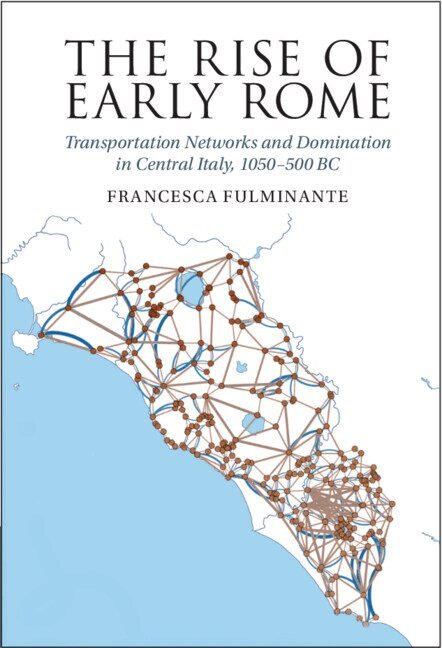
    The Rise of Early Rome

    Transportation Networks and Domination in Central Italy, 1050-500 BC

    AvFrancesca Fulminante

    Inbunden, Engelska, 2023

    1 237 kr

    Beställningsvara. Skickas inom 10-15 vardagar. Fri frakt över 249 kr.

    Beskrivning

    The trajectory of Rome from a small village in Latium vetus, to an emerging power in Italy during the first millennium BC, and finally, the heart of an Empire that sprawled throughout the Mediterranean and much of Europe until the 5th century CE, is well known. Its rise is often presented as inevitable and unstoppable. Yet the factors that contributed to Rome's rise to power are not well understood. Why Rome and not Veii? In this book, Francesca Fulminante offers a fresh approach to this question through the use of a range of methods. Adopting quantitative analyses and a novel network perspective, she focuses on transportation systems in Etruria and Latium Italy from ca. 1000-500 BC. Fulminante reveals the multiple factors that contributed to the emergence and dominance of Rome within these regional networks, and the critical role they in the rise of the city and, ultimately, Roman imperialism.

    Produktinformation

    • Utgivningsdatum:2023-08-31
    • Mått:159 x 235 x 21 mm
    • Vikt:560 g
    • Format:Inbunden
    • Språk:Engelska
    • Antal sidor:288
    • Förlag:Cambridge University Press
    • ISBN:9781316516805

    Utforska kategorier

    • Arkeologiska perioder och områden inom Historia och arkeologi

    Mer om författaren

    Francesca Fulminante is Senior Research Fellow at the University of Bristol and Royal Holloway University of London, and Adjunct Professor (Cultore della Materia), Universita Roma Tre, Italy. Her research focuses on Mediterranean urbanization during the first Millennium BCE in central Italy.

    Recensioner i media

    'Fulminante's book is clearly structured and well-written...This book offers a new perspective on the development of early Rome, as well as being a valuable contribution to those interested in applying network science to past transportation systems.' Joseph Lewis, TRAJ, Theoretical Roman Archaeology Journal

    Innehållsförteckning

    • 1. The ancient city: still a debated topic; 2. Transportation infrastructure: a new approach to interactions; 3. Data and methodology; 4. Network analysis centrality indexes; 5. Network analysis efficiency indexes; 6. Multi-scale analysis based on least-cost-paths; 7. Modelling; Conclusions; Appendix 1. Explanations for Efficacy Measures in Chapter 5; Appendix 2. Modelling from Chapter 7 step-by-step.