• Fri frakt över 249 kr
  • •
  • Snabba leveranser
  • •
  • Billiga böcker
Kundservice

Du är på sajten för privatpersoner.

Företag, bibliotek eller offentlig verksamhet?

Du handlar på classic.bokus.com, där alla dina funktioner finns intakta.
Till classic.bokus.com
Bokus logotyp. Gå till startsidan.
  • Erbjudanden
  • Nyheter
  • Student
  • Topplistor
  • Barn & ungdom
  • Bokus Play
  • E-böcker
  • Pocketböcker
  • Spel & pussel

10% rabatt på allt med kod: NYSTART10 →

Sidfot

Mina sidor

    Hjälp

    • Kundservice
    • Vanliga frågor och svar
    • Frakt och leverans
    • Retur vid ångerrätt
    • Reklamera vara
    • Betalning
    • Köpvillkor
    • Allmänna villkor
    • Information om webbplatsens tillgänglighet

    Om Bokus

    • Om oss
    • Pressrum
    • För studenter
    • För företag
    • För bibliotek och offentlig verksamhet
    • För leverantörer
    • Hållbarhet

    Populärt

    • Aktuella erbjudanden
    • Presentkort
    • Studentlitteratur
    • Nya böcker
    • Topplistor
    • Signerade böcker
    • Engelska böcker

    Inspiration

    • Boktips
    • BookTok
    • Populära bokserier
    • Barnbokskaraktärer
    • Populära författare
    Logotyp för Bokus
    Följ oss på Facebook (extern länk)Följ oss på Instagram (extern länk)Följ oss på YouTube (extern länk)Följ oss på TikTok (extern länk)
    bokus @ CookiesAnpassa cookiesIntegritetspolicyKöpvillkor
    Till Citymail hemsida (extern länk)Till Budbee hemsida (extern länk)Till Postnord hemsida (extern länk)Till Schenker hemsida (extern länk)Till Early Bird hemsida (extern länk)Till Walleys hemsida (extern länk)
    1. Medicin
    2. Andra medicinska specialiteter
    3. Klinisk psykologi

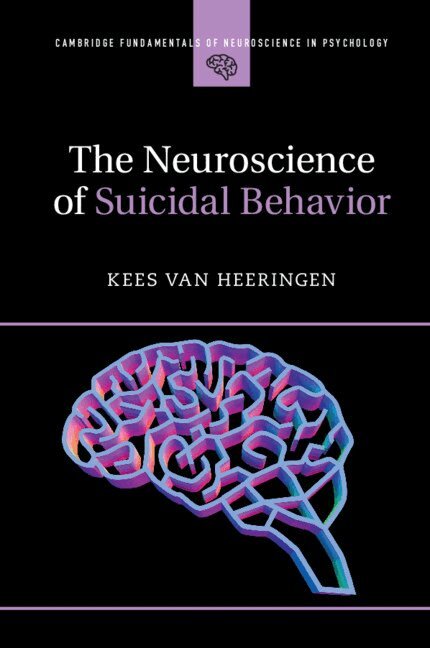
    The Neuroscience of Suicidal Behavior

    AvKees van Heeringen

    Häftad, Engelska, 2018

    Del i serien Cambridge Fundamentals of Neuroscience in Psychology

    430 kr

    Beställningsvara. Skickas inom 10-15 vardagar. Fri frakt över 249 kr.

    Fler format och utgåvor

    Inbunden

    1 361 kr

    Beskrivning

    Nearly one million people take their own lives each year world-wide - however, contrary to popular belief, suicide can be prevented. While suicide is commonly thought to be an understandable reaction to severe stress, it is actually an abnormal reaction to regular situations. Something more than unbearable stress is needed to explain suicide, and neuroscience shows what this is, how it is caused and how it can be treated. Professor Kees van Heeringen describes findings from neuroscientific research on suicide, using various approaches from population genetics to brain imaging. Compelling evidence is reviewed that shows how and why genetic characteristics or early traumatic experiences may lead to a specific predisposition that makes people vulnerable to triggering life events. Neuroscientific studies are yielding results that provide insight into how the risk of suicide may develop; ultimately demonstrating how suicide can be prevented.

    Produktinformation

    • Utgivningsdatum:2018-08-23
    • Mått:143 x 205 x 14 mm
    • Vikt:477 g
    • Format:Häftad
    • Språk:Engelska
    • Serie:Cambridge Fundamentals of Neuroscience in Psychology
    • Antal sidor:286
    • Förlag:Cambridge University Press
    • ISBN:9781316602904

    Utforska kategorier

    • Klinisk psykologi inom Medicin

    Mer om författaren

    Kees van Heeringen is a Professor of Psychiatry, Chair of the Department of Psychiatry and Medical Psychology, and Director of the Unit for Suicide Research at Ghent University, Belgium. He is also Co-founder of the Flemish Expertise Centre for Suicide Prevention. Professor van Heeringen's research has been awarded the Stengel Award by the International Association for Suicide Prevention.

    Recensioner i media

    '… van Heeringen has made the neuroscience of suicide accessible, understandable, non-intimidating, reader-friendly, and actually rather interesting …' Alan L. Berman, The Journal of Crisis Intervention and Suicide Prevention

    Innehållsförteckning

    • 1. What is suicidal behavior, and can it be prevented?; 2. Stress, vulnerability, and suicide: the stress-diathesis model; 3. The dark side of the brain: neuroscience approaches to suicidal behavior; 4. Lethal signals: the molecular neuroscience of suicidal behavior; 5. I think, therefore I do not want to be: the cognitive neuroscience of suicidal behavior; 6. Images of the suicidal brain: systems neuroscience and suicide; 7. In my end is my beginning: a developmental neuroscience perspective of suicidal behavior; 8. I predict, therefore I cannot be: a predictive coding account of suicidal behavior; 9. Predicting the unpredictable: the contribution of neuroscience to suicide prediction; 10. The treatment of suicide risk: neuroscience aspects.