• Fri frakt över 249 kr
  • •
  • Snabba leveranser
  • •
  • Billiga böcker
Kundservice

Du är på sajten för privatpersoner.

Företag, bibliotek eller offentlig verksamhet?

Du handlar på classic.bokus.com, där alla dina funktioner finns intakta.
Till classic.bokus.com
Bokus logotyp. Gå till startsidan.
  • Erbjudanden
  • Nyheter
  • Student
  • Topplistor
  • Barn & ungdom
  • Bokus Play
  • E-böcker
  • Pocketböcker
  • Spel & pussel

10% rabatt på allt med kod NYSTART10 →

Sidfot

Mina sidor

    Hjälp

    • Kundservice
    • Vanliga frågor och svar
    • Frakt och leverans
    • Retur vid ångerrätt
    • Reklamera vara
    • Betalning
    • Köpvillkor
    • Allmänna villkor
    • Information om webbplatsens tillgänglighet

    Om Bokus

    • Om oss
    • Pressrum
    • För studenter
    • För företag
    • För bibliotek och offentlig verksamhet
    • För leverantörer
    • Hållbarhet

    Populärt

    • Aktuella erbjudanden
    • Presentkort
    • Studentlitteratur
    • Nya böcker
    • Topplistor
    • Signerade böcker
    • Engelska böcker

    Inspiration

    • Boktips
    • BookTok
    • Populära bokserier
    • Barnbokskaraktärer
    • Populära författare
    Logotyp för Bokus
    Följ oss på Facebook (extern länk)Följ oss på Instagram (extern länk)Följ oss på YouTube (extern länk)Följ oss på TikTok (extern länk)
    bokus @ CookiesAnpassa cookiesIntegritetspolicyKöpvillkor
    Till Citymail hemsida (extern länk)Till Budbee hemsida (extern länk)Till Postnord hemsida (extern länk)Till Schenker hemsida (extern länk)Till Early Bird hemsida (extern länk)Till Walleys hemsida (extern länk)
    1. Samhälle och politik
    2. Politik och statsskick
    3. Statsvetenskap och politisk teori

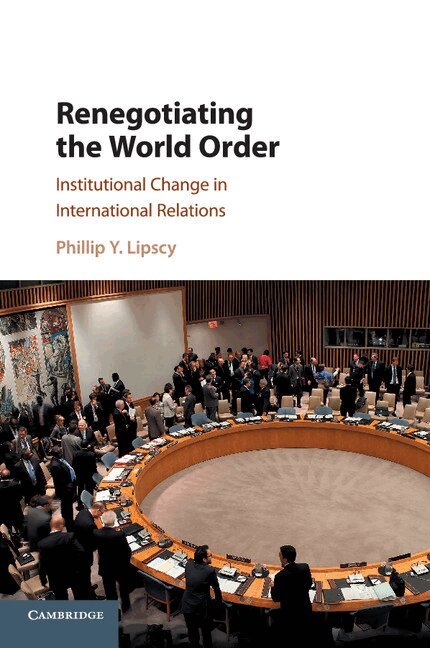
    Renegotiating the World Order

    Institutional Change in International Relations

    AvPhillip Y. Lipscy

    Häftad, Engelska, 2018

    463 kr

    Beställningsvara. Skickas inom 10-15 vardagar. Fri frakt över 249 kr.

    Fler format och utgåvor

    Inbunden

    1 285 kr

    Beskrivning

    Rising powers often seek to reshape the world order, triggering confrontations with those who seek to defend the status quo. In recent years, as international institutions have grown in prevalence and influence, they have increasingly become central arenas for international contestation. Phillip Y. Lipscy examines how international institutions evolve as countries seek to renegotiate the international order. He offers a new theory of institutional change and explains why some institutions change flexibly while others successfully resist or fall to the wayside. The book uses a wealth of empirical evidence - quantitative and qualitative - to evaluate the theory from international organizations such as the International Monetary Fund, World Bank, European Union, League of Nations, United Nations, the International Telecommunications Satellite Organization, and the Internet Corporation for Assigned Names and Numbers. The book will be of particular interest to scholars interested in the historical and contemporary diplomacy of the United States, Japan, and China.

    Produktinformation

    • Utgivningsdatum:2018-06-14
    • Mått:154 x 228 x 18 mm
    • Vikt:520 g
    • Format:Häftad
    • Språk:Engelska
    • Antal sidor:342
    • Förlag:Cambridge University Press
    • ISBN:9781316604281

    Utforska kategorier

    • Statsvetenskap och politisk teori inom Samhälle och politik

    Mer om författaren

    Phillip Y. Lipscy is Assistant Professor of Political Science, Stanford University, California and the Thomas Rohlen Center Fellow at the Freeman Spogli Institute for International Studies. His fields of research include international relations, international organizations, international and comparative political economy, and the politics of East Asia, particularly Japan. Lipscy obtained his Ph.D. in political science at Harvard University, Massachusetts and his M.A. in international policy studies and B.A. in economics and political science at Stanford University, California.

    Recensioner i media

    'Phillip Y. Lipscy shows, using rationalist theory, that variation in competition among international institutions explains variation in their willingness to undergo fundamental institutional change. Renegotiating the World Order is a theoretically innovative and empirically impressive book on an important topic.' Robert O. Keohane, Princeton University, New Jersey

    Innehållsförteckning

    • 1. Introduction; 2. A theory of institutional change; 3. The International Monetary Fund and the World Bank; 4. Japan in the International Monetary Fund and the World Bank; 5. INTELSAT; 6. ICANN; 7. The League of Nations and the United Nations Security Council; 8. Policy area discipline: development institutions and regional integration projects; 9. China-Taiwan competition over international organizations: a placebo test; 10. Conclusion.