• Fri frakt över 249 kr
  • •
  • Snabba leveranser
  • •
  • Billiga böcker
Kundservice

Du är på sajten för privatpersoner.

Företag, bibliotek eller offentlig verksamhet?

Du handlar på classic.bokus.com, där alla dina funktioner finns intakta.
Till classic.bokus.com
Bokus logotyp. Gå till startsidan.
  • Erbjudanden
  • Nyheter
  • Student
  • Topplistor
  • Barn & ungdom
  • Bokus Play
  • E-böcker
  • Pocketböcker
  • Spel & pussel

10% rabatt på allt med kod: NYSTART10 →

Sidfot

Mina sidor

    Hjälp

    • Kundservice
    • Vanliga frågor och svar
    • Frakt och leverans
    • Retur vid ångerrätt
    • Reklamera vara
    • Betalning
    • Köpvillkor
    • Allmänna villkor
    • Information om webbplatsens tillgänglighet

    Om Bokus

    • Om oss
    • Pressrum
    • För studenter
    • För företag
    • För bibliotek och offentlig verksamhet
    • För leverantörer
    • Hållbarhet

    Populärt

    • Aktuella erbjudanden
    • Presentkort
    • Studentlitteratur
    • Nya böcker
    • Topplistor
    • Signerade böcker
    • Engelska böcker

    Inspiration

    • Boktips
    • BookTok
    • Populära bokserier
    • Barnbokskaraktärer
    • Populära författare
    Logotyp för Bokus
    Följ oss på Facebook (extern länk)Följ oss på Instagram (extern länk)Följ oss på YouTube (extern länk)Följ oss på TikTok (extern länk)
    bokus @ CookiesAnpassa cookiesIntegritetspolicyKöpvillkor
    Till Citymail hemsida (extern länk)Till Budbee hemsida (extern länk)Till Postnord hemsida (extern länk)Till Schenker hemsida (extern länk)Till Early Bird hemsida (extern länk)Till Walleys hemsida (extern länk)
    1. Historia och arkeologi
    2. Historia
    3. Europas historia

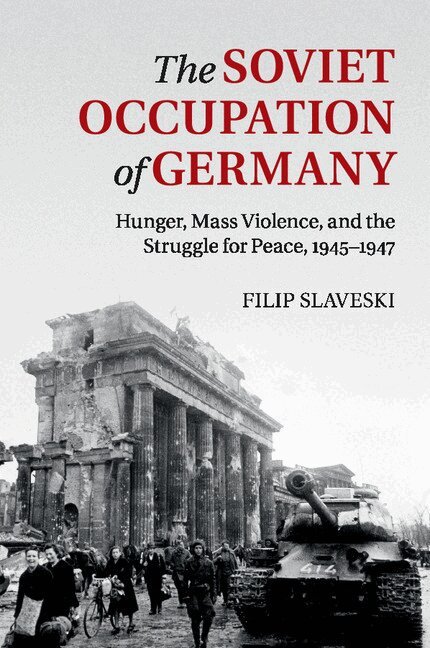
    The Soviet Occupation of Germany

    Hunger, Mass Violence and the Struggle for Peace, 1945-1947

    AvFilip Slaveski

    Häftad, Engelska, 2016

    560 kr

    Beställningsvara. Skickas inom 10-15 vardagar. Fri frakt över 249 kr.

    Fler format och utgåvor

    Inbunden

    1 319 kr

    Beskrivning

    This is a major account of the Soviet occupation of postwar Germany and the beginning of the Cold War. Dr Filip Slaveski shows how in the immediate aftermath of war the Red Army command struggled to contain the violence of soldiers against German civilians and, at the same time, feed and rebuild the country. This task was then assumed by the Soviet Military Administration in Germany (SVAG) which was established to impose order on this chaos. Its attempt, however, intensified the battle for resources and power among competing occupation organs, especially SVAG and the army, which spilled over from threats and sabotage into fighting and shootouts in the streets. At times, such conflicts threatened to paralyse occupation governance, leaving armed troops, liberated POWs and slave labourers free to roam. SVAG's successes in reducing the violence and reconstructing eastern Germany were a remarkable achievement in the chaotic aftermath of war.

    Produktinformation

    • Utgivningsdatum:2016-12-15
    • Mått:152 x 229 x 10 mm
    • Vikt:400 g
    • Format:Häftad
    • Språk:Engelska
    • Antal sidor:188
    • Förlag:Cambridge University Press
    • ISBN:9781316635483

    Utforska kategorier

    • Europas historia inom Historia och arkeologi

    Mer om författaren

    Filip Slaveski is a lecturer at the School of Historical and Philosophical Studies, University of Melbourne. He received his PhD in History from the University of Melbourne and has taught Russian and Soviet History there for a number of years. Much of his research is based on declassified Soviet archival sources relevant to his major interests of Soviet occupations in post-war Eastern Europe, particularly in Germany, and the post-war reconstruction of the Soviet Union itself. Dr Slaveski has collaborated on international research projects investigating Soviet famine in 1946-7 and its impact on Eastern Europe, the demobilisation of the Red Army from 1945, and published journal articles and book chapters in this area. His current work involves a comparative study of the chaotic reconstruction of former Soviet territories and Soviet-occupied Europe in the wake of the Second World War. It compares aspects of mass violence and social disintegration which plagued these countries and asks how violent insurgencies hindered the Soviets in their attempts at reconstructing them, providing much-needed historical insights into the most contemporary and pressing problem of modern state-building.

    Recensioner i media

    '… this is an extremely interesting and informative work, based on a very thorough and careful reading of a range of Russian, English and German archival, primary and secondary literature on the subject. The book is also written with a degree of passion … and, thanks to this and the author's engaging writing style, is easy to read and comprehend.' Steven J. Main, Europe-Asia Studies

    Innehållsförteckning

    • Part I. The Explosion of Violence: 1. The Soviet advance into Germany; 2. Inheriting wartime chaos; 3. Bringing soldiers to heel after the war; 4. SVAG-Army conflicts in 'peacetime'; 5. Suicide, apathy, violence; 6. The muted German response to violence; Part II. The Beginnings of Peace and Stability: 7. The struggle to feed Germany; 8. The politics of food and peaceful protest; 9. Building the shed; 10. The shift in policy and end of chaos.