• Fri frakt över 249 kr
  • •
  • Snabba leveranser
  • •
  • Billiga böcker
Kundservice

Du är på sajten för privatpersoner.

Företag, bibliotek eller offentlig verksamhet?

Du handlar på classic.bokus.com, där alla dina funktioner finns intakta.
Till classic.bokus.com
Bokus logotyp. Gå till startsidan.
  • Erbjudanden
  • Student
  • Topplistor
  • Barn & ungdom
  • Bokus Play
  • E-böcker
  • Ljudböcker
  • Pocketböcker
  • Spel och pussel

5% studentrabatt – använd koden KURSBOK27 →

Sidfot

Mina sidor

    Hjälp

    • Kundservice
    • Vanliga frågor och svar
    • Frakt och leverans
    • Retur vid ångerrätt
    • Reklamera vara
    • Betalning
    • Köpvillkor
    • Allmänna villkor
    • Information om webbplatsens tillgänglighet

    Om Bokus

    • Om oss
    • Pressrum
    • För studenter
    • För företag
    • För bibliotek och offentlig verksamhet
    • För leverantörer
    • Hållbarhet

    Populärt

    • Aktuella erbjudanden
    • Presentkort
    • Studentlitteratur
    • Nya böcker
    • Topplistor
    • Signerade böcker
    • Engelska böcker

    Inspiration

    • Boktips
    • BookTok
    • Barnbokskaraktärer
    • Populära författare
    Logotyp för Bokus
    Följ oss på Facebook (extern länk)Följ oss på Instagram (extern länk)Följ oss på YouTube (extern länk)Följ oss på TikTok (extern länk)
    bokus @ CookiesAnpassa cookiesIntegritetspolicyKöpvillkor
    Till Citymail hemsida (extern länk)Till Budbee hemsida (extern länk)Till Postnord hemsida (extern länk)Till Schenker hemsida (extern länk)Till Early Bird hemsida (extern länk)Till Walleys hemsida (extern länk)
    1. Psykologi och pedagogik
    2. Pedagogik

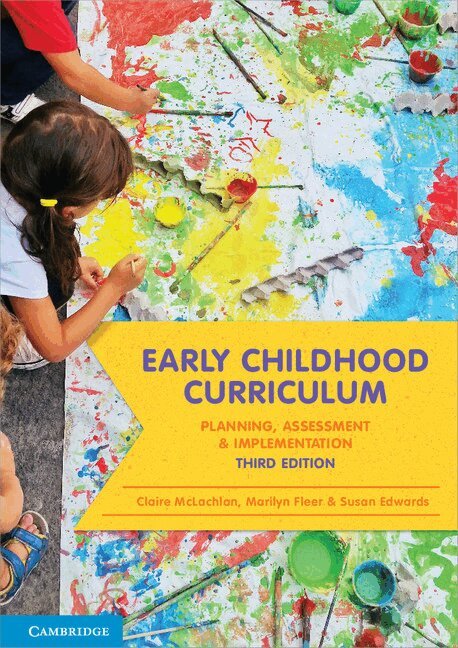
    Early Childhood Curriculum

    Planning, Assessment and Implementation

    AvClaire McLachlan,Marilyn Fleer

    Häftad, Engelska, 2018

    855 kr

    Beställningsvara. Skickas inom 7-10 vardagar. Fri frakt över 249 kr.

    Beskrivning

    The third edition of Early Childhood Curriculum provides a comprehensive and accessible introduction to curriculum theories and approaches in early childhood and early primary settings. Drawing on a cultural-historical framework for education, the text explores a variety of approaches to learning and teaching and equips readers with the tools to effectively plan, design and implement curriculum strategies. Thoroughly revised and updated, this edition features up-to-date coverage of national curriculum documents, including the Early Years Learning Framework and Te Whāriki, and expanded content on play-based curriculum, assessment and documentation. Key domain areas of the curriculum are explored in depth and have been revised to include updated discussions of environmental factors, digital knowledge and multiliteracies. Each chapter is enriched with learning intentions, definitions of key terms, reflection points, links to current curriculum documents and illustrative case studies to help readers connect theory to practice.

    Produktinformation

    • Utgivningsdatum:2018-03-30
    • Mått:176 x 249 x 15 mm
    • Vikt:500 g
    • Format:Häftad
    • Språk:Engelska
    • Antal sidor:266
    • Upplaga:3
    • Förlag:Cambridge University Press
    • ISBN:9781316642849

    Utforska kategorier

    • Pedagogik inom Psykologi och pedagogik

    Mer om författaren

    Claire McLachlan is Professor of Education and Head of School, Te Hononga School of Curriculum and Pedagogy, Faculty of Education, University of Waikato, New Zealand. She has lectured on early childhood education at the University of Wisconsin, Madison, at Auckland University of Technology, Massey University, Auckland, and the University of Waikato, Hamilton and Tauranga, as well as having had various roles as a teacher and manager in early childhood centres. Claire has a longstanding interest in curriculum, particularly early literacy and physical education, and over a 200 publications on various aspects of curriculum, assessment, and planning, including nine books. Claire is a member of the UNESCO-IBE Early Reading Panel and the New Zealand Ministry of Education Early Childhood Research Policy Forum and Teacher Lead Innovation Panel. Claire was also a member of the writing team for the update of Te Whāriki (2017). Marilyn Fleer is Professor of Early Childhood Education at Monash University, Australia. She has been a teacher in long day care, preschool and school. She has also been an adviser and curriculum officer for the Ministry of Education in Western Australia. In 2002 she was appointed as a Research Fellow for the Australian Government (then named the Department of Education, Technology and Youth Affairs). Having graduated 21 Ph.D. students, she has been honoured twice with commendations for post graduate supervision. She has published nearly 350 works, 32 of which are scholarly books and 28 that are professional books. She is the immediate past President for the International Society for Cultural Activity Research. Susan Edwards is Professor of Early Childhood Education at the Australian Catholic University, Melbourne, where she directs the Early Childhood Futures research group in the Learning Sciences Institute Australia. She has practised as an early childhood educator in long day care, occasional care and preschool settings. Susan has been actively involved in researching early childhood curriculum, particularly issues associated with teacher thinking, digital technologies, theories of development and the role of play in learning. She has published several key books and articles in these areas of research and practice.

    Innehållsförteckning

    • 1. Introduction; 2. Theory, research and the early childhood curriculum; 3. Play, learning and development: how views of development shape how curriculum is framed; 4. Curriculum as cultural broker; 5. Interpreting early childhood curriculum; 6. Cultural-historical curriculum in action; 7. Curriculum as a conceptual tool: observation, content and programming; 8. Assessing children and evaluating curriculum: shifting lenses; 9. Content knowledge: science, technology, engineering and mathematics (STEM); 10. Content knowledge: language and literacies; 11. Content knowledge: the arts and health, wellbeing and physical activity; 12. Conclusions.