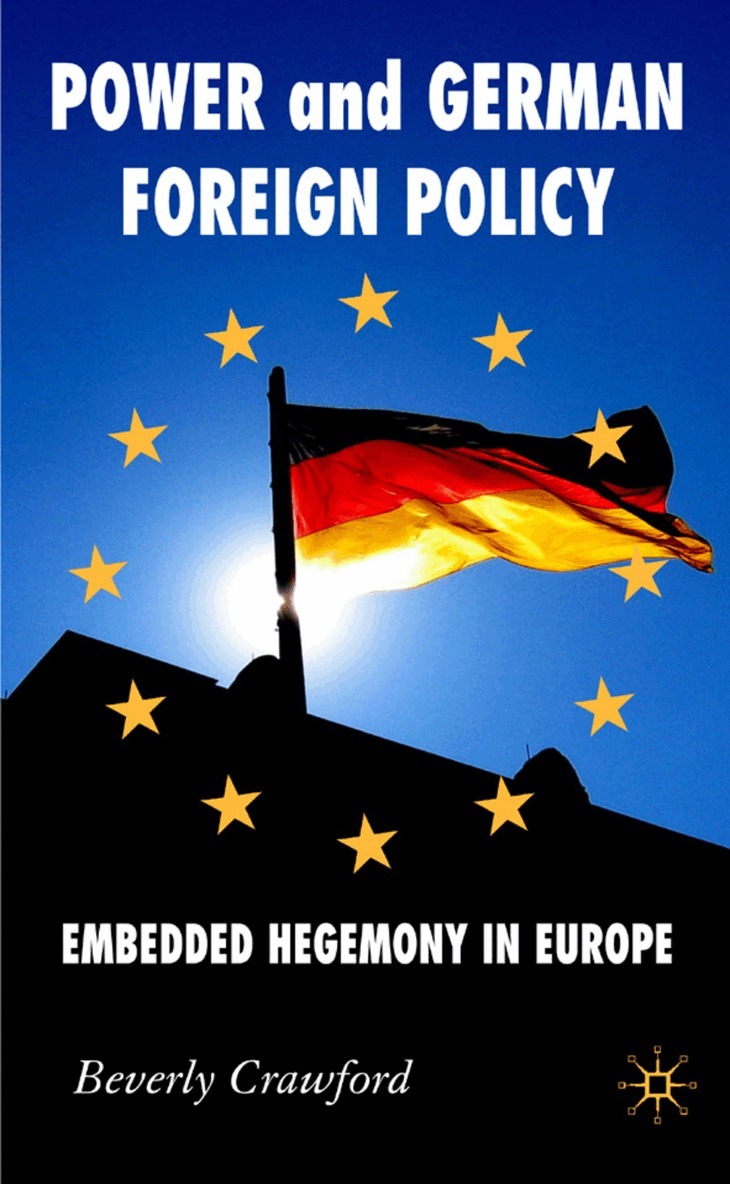
Power and German Foreign Policy
Embedded Hegemony in Europe
1 104 kr
Beställningsvara. Skickas inom 10-15 vardagar. Fri frakt över 249 kr.
Du är på sajten för privatpersoner.
1 104 kr
Beställningsvara. Skickas inom 10-15 vardagar. Fri frakt över 249 kr.
BEVERLY CRAWFORD teaches Political Economy at the University of California at Berkeley, USA, and is the Associate Director of UC Berkeley's Institute of European Studies. She is the author of Economic Vulnerability in International Relations and editor and co-editor of numerous volumes and articles on Ethnic Conflict, European Integration, German politics, and Post-Communist Transition She has also written extensively on technology transfer strategy in Eastern Europe, Export Control regulation in the United States and Europe, and German politics and foreign policy. She has held Visiting Professorships at Bocconi University in Milan Italy, the Free University of Berlin, and the Technical University, Dresden.
'From the first page, Crawford's seductively written book grabs readers like a powerful novel. Its main value, however, and the main reason it will leave a lasting mark, is its unique and important explanation of German foreign policy, which bridges the systemic-foreign policy divide. Suggesting that Germany's foreign policy has been characterized by the embedding of power in international institutions, Crawford's book is a must read for everyone interested in Germany's latest transformation and in innovative International Relations theory.' - Emanuel Adler, Andrea and Charles Bronfman Chair in Israeli Studies, University of Toronto, Canada 'Beverly Crawford's book offers a powerful and provocative argument which challenges much of the received wisdom about the foundations of and prospects for Germany's role in Europe and beyond. While most scholars continue to maintain that the core of post-unification German foreign policy remains basically unchanged, Crawford observes in that policy a tectonic shift. Elegantly synthesizing realist and liberal theory she provides an original argument that Germany may indeed be regarded as both a liberal and highly self-interested European hegemon. Even those readers who won't fully accept the argument will be impressed by its subtlety and the evidence presented.' - Gunther Hellmann, Professor of Political Science, Johann Wolfgang Goethe University, Frankfurt am Main, Germany 'What shapes German foreign policy? Beverly Crawford asks important questions and gives cogent answers. Rather than merely describing policy outcomes, she explains them.' - Kenneth N. Waltz, Senior Research Scholar, Institute of War and Peace Studies, Columbia University, USA
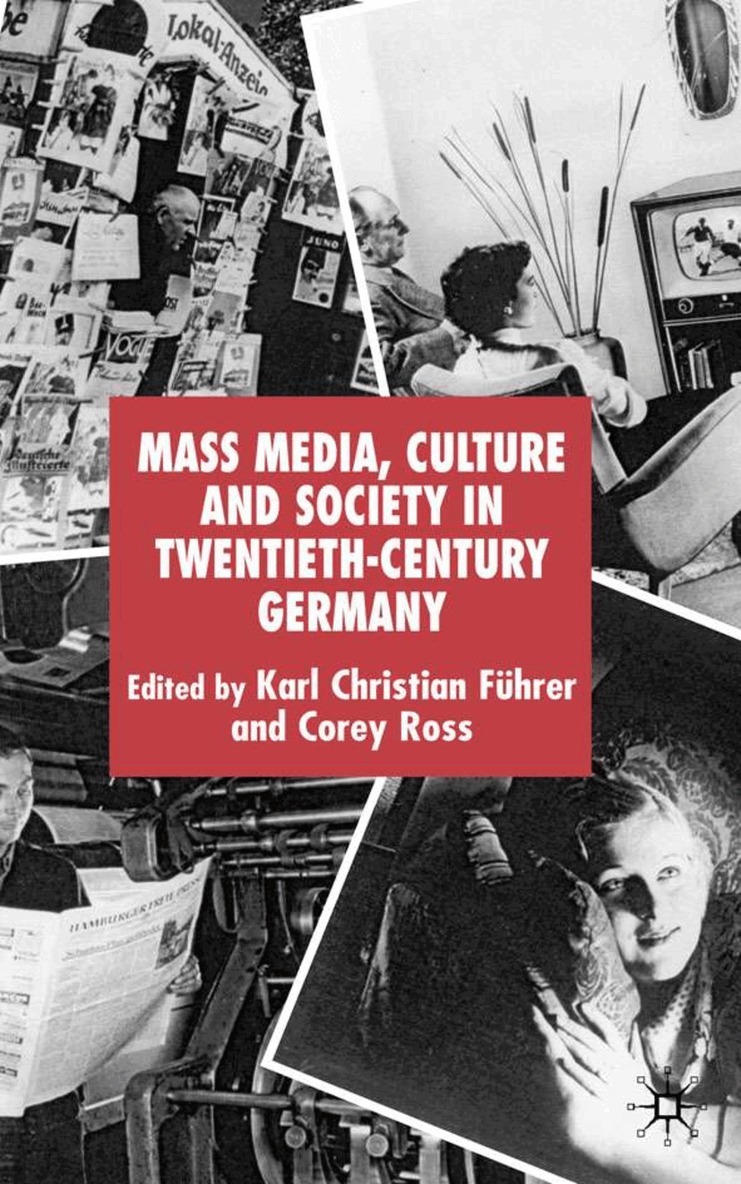
K. Führer, C. Ross
Inbunden, 2006
1 137 kr
Victor Pavic Lundberg
Inbunden, 2026
259 kr
Du är på sajten för privatpersoner.
1 104 kr
Beställningsvara. Skickas inom 10-15 vardagar. Fri frakt över 249 kr.
BEVERLY CRAWFORD teaches Political Economy at the University of California at Berkeley, USA, and is the Associate Director of UC Berkeley's Institute of European Studies. She is the author of Economic Vulnerability in International Relations and editor and co-editor of numerous volumes and articles on Ethnic Conflict, European Integration, German politics, and Post-Communist Transition She has also written extensively on technology transfer strategy in Eastern Europe, Export Control regulation in the United States and Europe, and German politics and foreign policy. She has held Visiting Professorships at Bocconi University in Milan Italy, the Free University of Berlin, and the Technical University, Dresden.
'From the first page, Crawford's seductively written book grabs readers like a powerful novel. Its main value, however, and the main reason it will leave a lasting mark, is its unique and important explanation of German foreign policy, which bridges the systemic-foreign policy divide. Suggesting that Germany's foreign policy has been characterized by the embedding of power in international institutions, Crawford's book is a must read for everyone interested in Germany's latest transformation and in innovative International Relations theory.' - Emanuel Adler, Andrea and Charles Bronfman Chair in Israeli Studies, University of Toronto, Canada 'Beverly Crawford's book offers a powerful and provocative argument which challenges much of the received wisdom about the foundations of and prospects for Germany's role in Europe and beyond. While most scholars continue to maintain that the core of post-unification German foreign policy remains basically unchanged, Crawford observes in that policy a tectonic shift. Elegantly synthesizing realist and liberal theory she provides an original argument that Germany may indeed be regarded as both a liberal and highly self-interested European hegemon. Even those readers who won't fully accept the argument will be impressed by its subtlety and the evidence presented.' - Gunther Hellmann, Professor of Political Science, Johann Wolfgang Goethe University, Frankfurt am Main, Germany 'What shapes German foreign policy? Beverly Crawford asks important questions and gives cogent answers. Rather than merely describing policy outcomes, she explains them.' - Kenneth N. Waltz, Senior Research Scholar, Institute of War and Peace Studies, Columbia University, USA
K. Führer, C. Ross
Inbunden, 2006
1 137 kr
Victor Pavic Lundberg
Inbunden, 2026
259 kr
Du är på sajten för privatpersoner.
1 104 kr
Beställningsvara. Skickas inom 10-15 vardagar. Fri frakt över 249 kr.
BEVERLY CRAWFORD teaches Political Economy at the University of California at Berkeley, USA, and is the Associate Director of UC Berkeley's Institute of European Studies. She is the author of Economic Vulnerability in International Relations and editor and co-editor of numerous volumes and articles on Ethnic Conflict, European Integration, German politics, and Post-Communist Transition She has also written extensively on technology transfer strategy in Eastern Europe, Export Control regulation in the United States and Europe, and German politics and foreign policy. She has held Visiting Professorships at Bocconi University in Milan Italy, the Free University of Berlin, and the Technical University, Dresden.
'From the first page, Crawford's seductively written book grabs readers like a powerful novel. Its main value, however, and the main reason it will leave a lasting mark, is its unique and important explanation of German foreign policy, which bridges the systemic-foreign policy divide. Suggesting that Germany's foreign policy has been characterized by the embedding of power in international institutions, Crawford's book is a must read for everyone interested in Germany's latest transformation and in innovative International Relations theory.' - Emanuel Adler, Andrea and Charles Bronfman Chair in Israeli Studies, University of Toronto, Canada 'Beverly Crawford's book offers a powerful and provocative argument which challenges much of the received wisdom about the foundations of and prospects for Germany's role in Europe and beyond. While most scholars continue to maintain that the core of post-unification German foreign policy remains basically unchanged, Crawford observes in that policy a tectonic shift. Elegantly synthesizing realist and liberal theory she provides an original argument that Germany may indeed be regarded as both a liberal and highly self-interested European hegemon. Even those readers who won't fully accept the argument will be impressed by its subtlety and the evidence presented.' - Gunther Hellmann, Professor of Political Science, Johann Wolfgang Goethe University, Frankfurt am Main, Germany 'What shapes German foreign policy? Beverly Crawford asks important questions and gives cogent answers. Rather than merely describing policy outcomes, she explains them.' - Kenneth N. Waltz, Senior Research Scholar, Institute of War and Peace Studies, Columbia University, USA
K. Führer, C. Ross
Inbunden, 2006
1 137 kr
Victor Pavic Lundberg
Inbunden, 2026
259 kr