• Fri frakt över 249 kr
  • •
  • Snabba leveranser
  • •
  • Billiga böcker
Kundservice

Du är på sajten för privatpersoner.

Företag, bibliotek eller offentlig verksamhet?

Du handlar på classic.bokus.com, där alla dina funktioner finns intakta.
Till classic.bokus.com
Bokus logotyp. Gå till startsidan.
  • Erbjudanden
  • Nyheter
  • Student
  • Topplistor
  • Barn & ungdom
  • Bokus Play
  • E-böcker
  • Pocketböcker
  • Spel & pussel

10% rabatt på allt med kod NYSTART10 →

Sidfot

Mina sidor

    Hjälp

    • Kundservice
    • Vanliga frågor och svar
    • Frakt och leverans
    • Retur vid ångerrätt
    • Reklamera vara
    • Betalning
    • Köpvillkor
    • Allmänna villkor
    • Information om webbplatsens tillgänglighet

    Om Bokus

    • Om oss
    • Pressrum
    • För studenter
    • För företag
    • För bibliotek och offentlig verksamhet
    • För leverantörer
    • Hållbarhet

    Populärt

    • Aktuella erbjudanden
    • Presentkort
    • Studentlitteratur
    • Nya böcker
    • Topplistor
    • Signerade böcker
    • Engelska böcker

    Inspiration

    • Boktips
    • BookTok
    • Populära bokserier
    • Barnbokskaraktärer
    • Populära författare
    Logotyp för Bokus
    Följ oss på Facebook (extern länk)Följ oss på Instagram (extern länk)Följ oss på YouTube (extern länk)Följ oss på TikTok (extern länk)
    bokus @ CookiesAnpassa cookiesIntegritetspolicyKöpvillkor
    Till Citymail hemsida (extern länk)Till Budbee hemsida (extern länk)Till Postnord hemsida (extern länk)Till Schenker hemsida (extern länk)Till Early Bird hemsida (extern länk)Till Walleys hemsida (extern länk)
    1. Samhälle och politik
    2. Krig och försvar

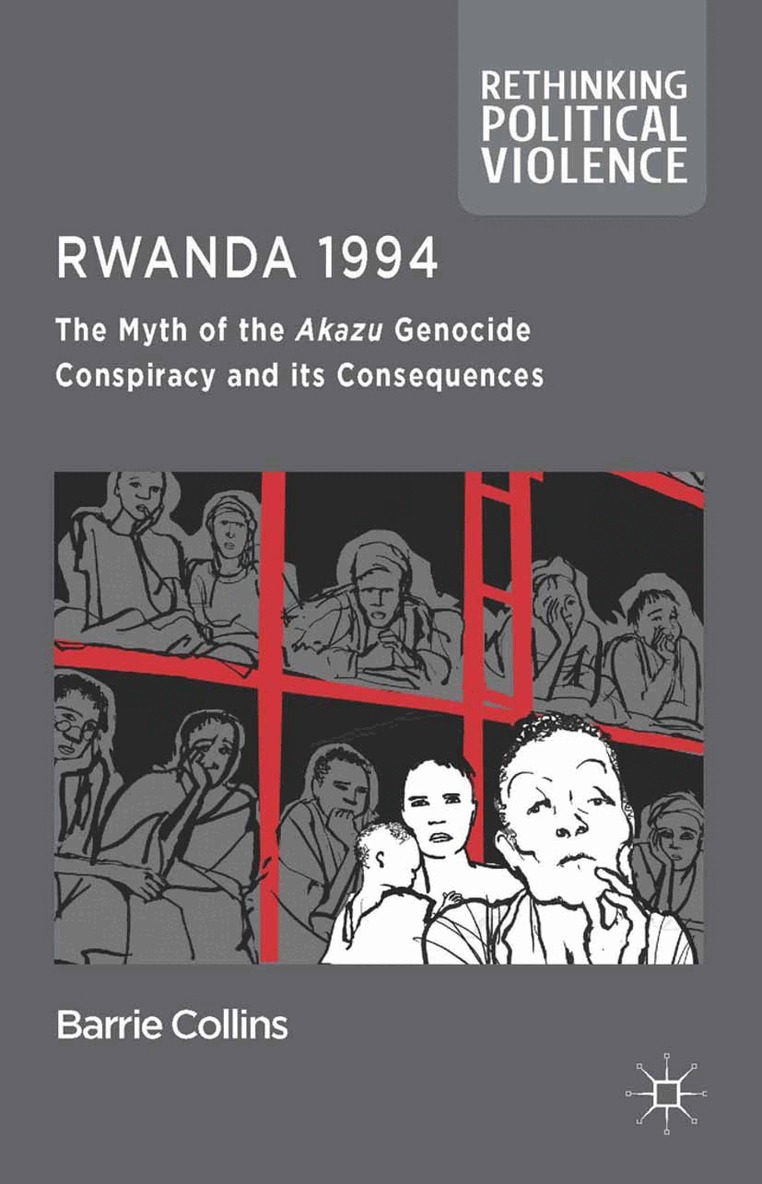
    Rwanda 1994

    The Myth of the Akazu Genocide Conspiracy and its Consequences

    AvBarrie Collins

    Häftad, Engelska, 2014

    Del i serien Rethinking Political Violence

    546 kr

    Beställningsvara. Skickas inom 10-15 vardagar. Fri frakt över 249 kr.

    Fler format och utgåvor

    Inbunden

    563 kr

    E-bok

    755 kr

    Beskrivning

    Through a rigorous critique of the dominant narrative of the Rwandan genocide, Collins provides an alternative argument to the debate situating the killings within a historically-specific context and drawing out a dynamic interplay between national and international actors.

    Produktinformation

    • Utgivningsdatum:2014-01-01
    • Mått:140 x 216 x 16 mm
    • Vikt:366 g
    • Format:Häftad
    • Språk:Engelska
    • Serie:Rethinking Political Violence
    • Antal sidor:272
    • Upplaga:14001
    • Förlag:Palgrave Macmillan
    • ISBN:9781349437832

    Utforska kategorier

    • Krig och försvar inom Samhälle och politik
    • Politik och statsskick inom Samhälle och politik
    • Politiskt förtryck inom Samhälle och politik

    Mer om författaren

    Barrie Collins is an independent researcher and holds a PhD in Politics from The School of Oriental and African Studies (SOAS), UK.

    Recensioner i media

    'Should we let the contextual facts get in the way of a powerful universal morality tale ofgenocide and intervention? Collins is brave enough to think that we should. He makes a compelling case that moral certainties make for poor and reductionist historical, political and legal judgements. This book is going to disturb and unsettle anyone who thinks that genocide is an abstract concept: 'simply' a crime made 'to order' by criminal masterminds and their docile subjects. This is a meticulous study of the genocide which at the same time treats the people of Rwanda with the dignity and respect they deserve.' David Chandler, Professor of International Relations, University of Westminster, UK 'The standard account of the Rwandan 'genocide' of 1994 rests on a conspiracy theory. As Collins demonstrates in his book, the evidence supporting the theory is no better than the evidence refuting it. The United Nations, through its creation of the International Criminal Tribunal for Rwanda, has inadvertently lent its weight to the standard account. Why would a UN Tribunal endorse a myth? No further conspiracy theory is required to explain the ICTR's blinkered view of events in the 1994 Rwandan war. The ICTR fell into the rut of victor's justice, only ever prosecuting the losing side in the 1994 war. The winning side, which since that year has ruled Rwanda, was left alone. Almost twenty years after its establishment the Tribunal is still in the same rut. The lesson for international justice surely is that atrocities should be prosecuted with an open mind and without compromise.' Dr Alexander Zahar, former legal officer at the ICTR and ICTY and co-author of 'International Criminal Law: A Critical Introduction' (2008)

    Innehållsförteckning

    • Introduction 1. Apocalypse 1994 2. The Kingdom, the Colony and the Republics: Ethnicity in Perspective 3. The RPF's War 4. The Myth of the Akazu Genocide Conspiracy 5. Hate Speech, the Audience and Mass Killings 6. Genocide and Humanitarian Intervention in the 20th Century 7. Consequences