• Fri frakt över 249 kr
  • •
  • Snabba leveranser
  • •
  • Billiga böcker
Kundservice

Du är på sajten för privatpersoner.

Företag, bibliotek eller offentlig verksamhet?

Du handlar på classic.bokus.com, där alla dina funktioner finns intakta.
Till classic.bokus.com
Bokus logotyp. Gå till startsidan.
  • Erbjudanden
  • Nyheter
  • Student
  • Topplistor
  • Barn & ungdom
  • Bokus Play
  • E-böcker
  • Pocketböcker
  • Spel & pussel

10% studentrabatt med kod TERM26

Sidfot

Mina sidor

    Hjälp

    • Kundservice
    • Vanliga frågor och svar
    • Frakt och leverans
    • Retur vid ångerrätt
    • Reklamera vara
    • Betalning
    • Köpvillkor
    • Allmänna villkor
    • Information om webbplatsens tillgänglighet

    Om Bokus

    • Om oss
    • Pressrum
    • För studenter
    • För företag
    • För bibliotek och offentlig verksamhet
    • För leverantörer
    • Hållbarhet

    Populärt

    • Aktuella erbjudanden
    • Presentkort
    • Studentlitteratur
    • Nya böcker
    • Topplistor
    • Signerade böcker
    • Engelska böcker

    Inspiration

    • Boktips
    • BookTok
    • Populära bokserier
    • Barnbokskaraktärer
    • Populära författare
    Logotyp för Bokus
    Följ oss på Facebook (extern länk)Följ oss på Instagram (extern länk)Följ oss på YouTube (extern länk)Följ oss på TikTok (extern länk)
    bokus @ CookiesAnpassa cookiesIntegritetspolicyKöpvillkor
    Till Citymail hemsida (extern länk)Till Budbee hemsida (extern länk)Till Postnord hemsida (extern länk)Till Schenker hemsida (extern länk)Till Early Bird hemsida (extern länk)Till Walleys hemsida (extern länk)
    1. Samhälle och politik
    2. Politik och statsskick
    3. Statsvetenskap och politisk teori

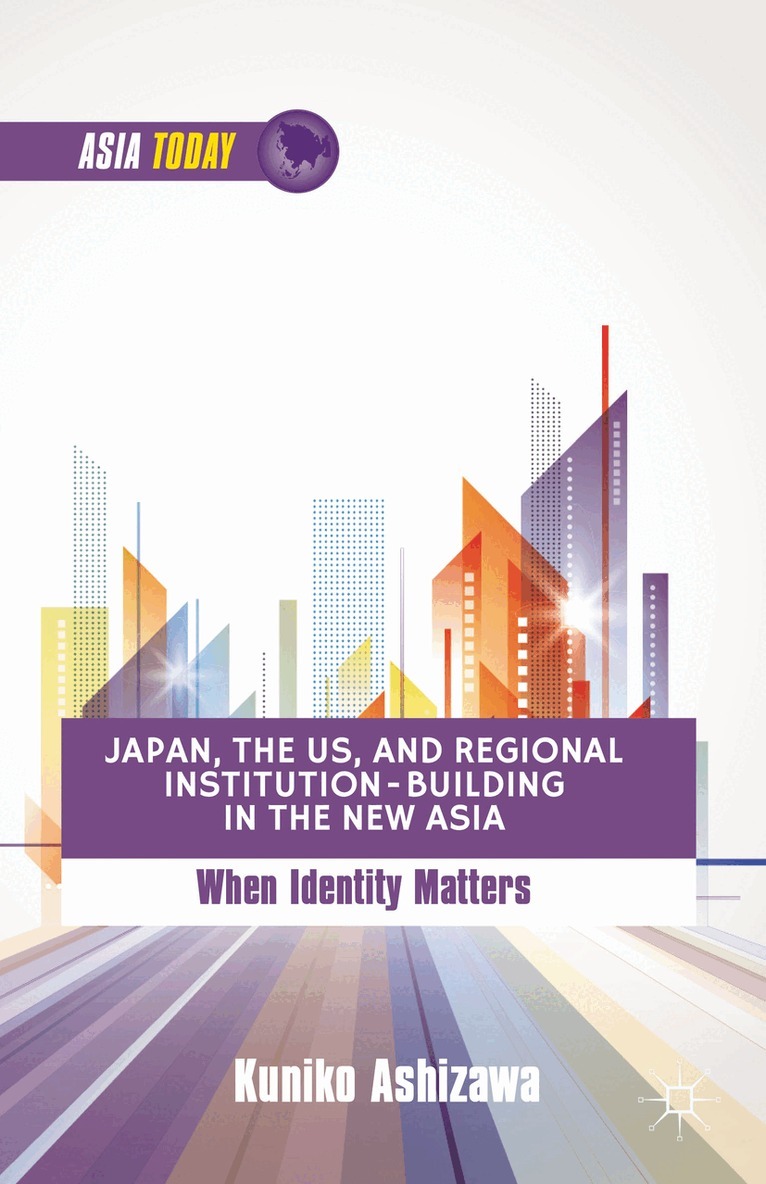
    Japan, the US, and Regional Institution-Building in the New Asia

    When Identity Matters

    AvK. Ashizawa

    Häftad, Engelska, 2013

    Del i serien Asia Today

    549 kr

    Beställningsvara. Skickas inom 10-15 vardagar. Fri frakt över 249 kr.

    Fler format och utgåvor

    Inbunden

    549 kr

    E-bok

    755 kr

    Beskrivning

    Providing a thorough and novel account of US and Japanese foreign policymaking toward regional institution-building in post-Cold War Asia, this study serves as the first comparative analysis of these two major actors in this realm of regional cooperation and demonstrates not only how but also when state identity shapes a state's foreign policy.

    Produktinformation

    • Utgivningsdatum:2013-08-23
    • Mått:140 x 216 x 16 mm
    • Vikt:366 g
    • Format:Häftad
    • Språk:Engelska
    • Serie:Asia Today
    • Antal sidor:271
    • Upplaga:13001
    • Förlag:Palgrave Macmillan
    • ISBN:9781349455645

    Utforska kategorier

    • Statsvetenskap och politisk teori inom Samhälle och politik
    • Politik och statsskick inom Samhälle och politik
    • Internationella relationer inom Samhälle och politik

    Mer om författaren

    Kuniko Ashizawa is a Senior Lecturer in International Relations in the Department of Politics and International Relations of Oxford Brookes University, Oxford, UK.

    Recensioner i media

    In 2015, the Ohira Memorial Foundation in Tokyo, Japan awarded Japan, the US, and Regional Institution-Building in the New Asia the Masayoshi Ohira Memorial Prize, a well-known and prestigious prize for works which contribute to the development of 'the Pacific Basin Community Concept' as well as regional studies of the Pacific Basin region. The Ohira Memorial Foundation awards 4-5 books annually, half of which are expected to have been published internationally. "The theoretical framework is clear, innovative, and strongly linked to existing literature; the empirical casework fills an important gap in our understanding of important developments in Asia-Pacific regionalism; and the prose itself is a pleasure to read Ashizawa helps us to conceptualize when identity matters in policymaking, and also helps to clarify how multiple identities can overlap to shape policy I, for one, would like to try to implement her framework in my own future work." - Andrew Oros, Director of International Studies and Associate Professor of Political Science and International Studies, Washington College, Maryland, USA "For over forty years, specialists have debated whether various approaches explain international relations, only to find that none are completely adequate by themselves. Ashizawa's book smartly uses a more eclectic approach combining the constructivism of the concept of 'state identity' with the neo-realism of the notion of 'the structural attributes of states.' In so doing she ingeniously solves an intriguing puzzle in the international relations of the Asia Pacific: why Japan's and the U.S.'s behavior patterns were different but internally consistent across the founding of the first two significant transnational institutions in the region, APEC and ARF. A truly creative and novel contribution to both the growing literature on Asia-Pacific regionalism and to international relations theory." - Ellis S. Krauss, School of International Relations and Pacific Studies, University of California, San Diego "Important new insights into the changing processes of US and Japanese policymaking in the Pacific multilateral arena, based on detailed empirical research." - Kent E. Calder, Director, Reischauer Center for East Asian Studies, SAIS/Johns Hopkins University

    Innehållsförteckning

    • PART I: INTRODUCTION 1. The Argument 2. Where Does This Stand? PART II: THE VALUE-ACTION FRAMEWORK AND STATE IDENTITY 3. The Value-Action Model of Foreign Policy Analysis 4. The Structural Dimension 5. The Dispositional Dimension 6. The Intentional Dimension 7. State Identity and Foreign Policy 8. State Identity: Definition 9. Identity-Value Nexus  10. Why Identity? When Does It Matter? PART III: JAPAN AND THE CREATION OF APEC: MITI'S QUIET MANEUVER, 1988-1989 11. Explaining Japan's Policymaking toward the Creation of APEC  12. Historical Narrative: Part I  13. The Value-Action Analysis: The Structural Dimension 14. Historical Narrative: Part II  15. The Value-Action Analysis: The Dispositional Dimension  16. State Identity: The Source of The Determinant Values 17. Decision-Making Context: Conceptualizaing a New Regional Order 18. A Dual Member of Asia and the West 19. Identity-Value Nexus  20. Remaining Questions and Competing Explanations PART IV: THE UNITED STATES AND THE CREATION OF APEC: GLOBAL HEGEMON AND REGIONAL COOPERATION, 1988-1989 21. Explaining U.S. Policymaking toward the Creation of APEC  22. Historical Narrative Part I: The United States and MITI's Proposal  23. The Value-Action Analysis: The Structural Dimension  24. Historical Narrative Part II: The Hawke Speech and Comprehensive Policy Review 25. The Value-Action Analysis: Activation of Decision-Making 26. Historical Narrative Part III: 'An Idea Whose Time Has Come'  27. The Value-Action Analysis: The Dispositional Dimension 28. Two Concepts of U.S. State Identity: The Sources of The Determinant Values 29. A Pacific Power 30. An International Institution-Builder 31. On Competing Explanations PART V: JAPAN AND THE CREATION OF THE ARF: MOFA IN MOTION, 1991-1994 32. Explaining Japan's Policymaking toward the Creation of the ARF  33. Historical Narrative Part I: The Nakayama Proposal  34. The Value-Action Analysis: The Structural Dimension  35. Historical Narrative Part II: MOFA's Persistent Commitment  36. The Value-Action Analysis: The Dispositional Dimension 37. Two Concepts of Japanese State Identity: The Sources of the Determinant Value 38. A Past Aggressor in Asia 39. A Dual Member of Asia and the West 40. Remaining Questions and an Alternative Explanation PART VI: THE UNITED STATES AND THE CREATION OF THE ARF: HEGEMONIC APPROACH TOWARD THE POST-COLD WAR ASIAN SECURITY ORDER, 1990-1994 41. Explaining U.S. Policymaking toward the Creation of the ARF  42. Historical Narrative Part I: Appraising Past Success  43. The Value-Action Analysis: The Structural Dimension  44. Historical Narrative Part II and Decision-Making Activation: Lord's 'Ten Major Goals'  45. Historical Narrative Part III: Toward the First ARF Meeting  46. The Dispositional Dimension: Stay Engaged with Asia  47. The Pacific Power Identity: The Source of the Engagement Value  48. An Alternative Explanation, A Remaining Question PART VII: CONCLUSION 49. State Identity and Foreign Policy 50. Japan, the United States, and Institution-Building in 21st Century Asia