• Fri frakt över 249 kr
  • •
  • Snabba leveranser
  • •
  • Billiga böcker
Kundservice

Du är på sajten för privatpersoner.

Företag, bibliotek eller offentlig verksamhet?

Du handlar på classic.bokus.com, där alla dina funktioner finns intakta.
Till classic.bokus.com
Bokus logotyp. Gå till startsidan.
  • Erbjudanden
  • Nyheter
  • Student
  • Topplistor
  • Barn & ungdom
  • Bokus Play
  • E-böcker
  • Pocketböcker
  • Spel & pussel

10% rabatt på allt med kod: NYSTART10 →

Sidfot

Mina sidor

    Hjälp

    • Kundservice
    • Vanliga frågor och svar
    • Frakt och leverans
    • Retur vid ångerrätt
    • Reklamera vara
    • Betalning
    • Köpvillkor
    • Allmänna villkor
    • Information om webbplatsens tillgänglighet

    Om Bokus

    • Om oss
    • Pressrum
    • För studenter
    • För företag
    • För bibliotek och offentlig verksamhet
    • För leverantörer
    • Hållbarhet

    Populärt

    • Aktuella erbjudanden
    • Presentkort
    • Studentlitteratur
    • Nya böcker
    • Topplistor
    • Signerade böcker
    • Engelska böcker

    Inspiration

    • Boktips
    • BookTok
    • Populära bokserier
    • Barnbokskaraktärer
    • Populära författare
    Logotyp för Bokus
    Följ oss på Facebook (extern länk)Följ oss på Instagram (extern länk)Följ oss på YouTube (extern länk)Följ oss på TikTok (extern länk)
    bokus @ CookiesAnpassa cookiesIntegritetspolicyKöpvillkor
    Till Citymail hemsida (extern länk)Till Budbee hemsida (extern länk)Till Postnord hemsida (extern länk)Till Schenker hemsida (extern länk)Till Early Bird hemsida (extern länk)Till Walleys hemsida (extern länk)
    1. Skönlitteratur
    2. Litteraturvetenskap
    3. Litteraturvetenskap

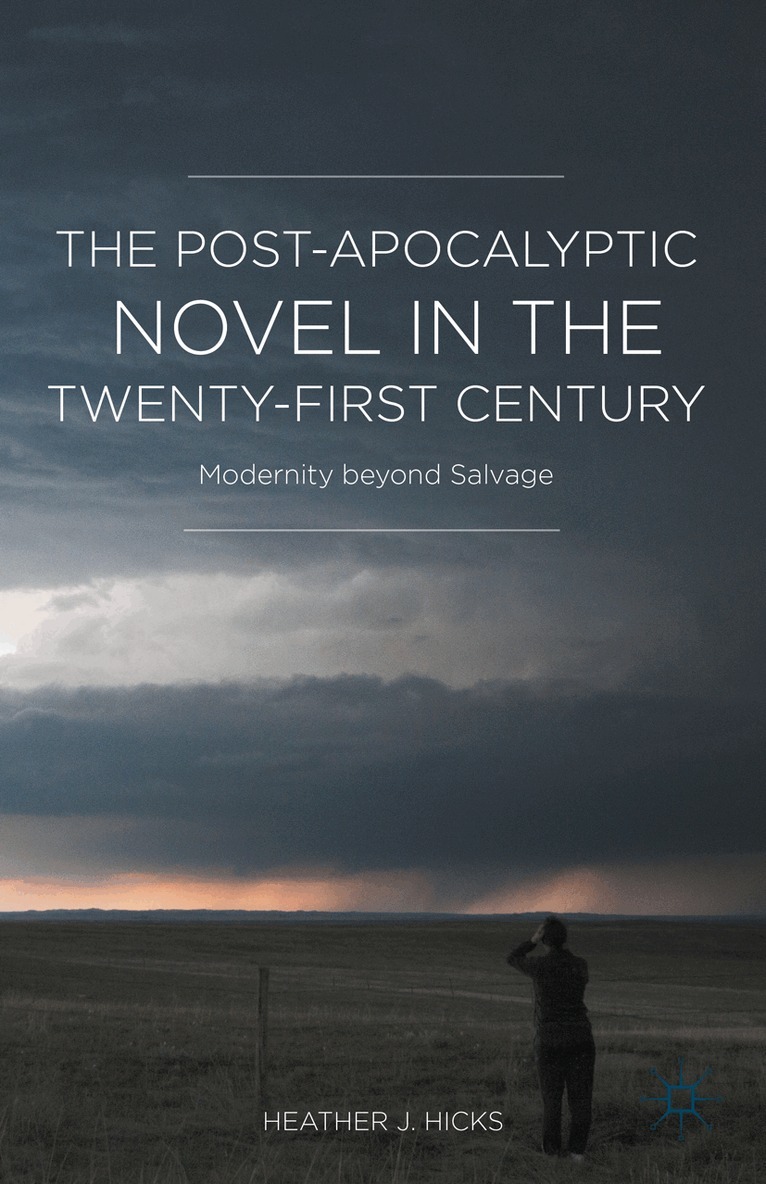
    Post-Apocalyptic Novel in the Twenty-First Century

    Modernity beyond Salvage

    AvH. Hicks

    Häftad, Engelska, 2016

    628 kr

    Beställningsvara. Skickas inom 10-15 vardagar. Fri frakt över 249 kr.

    Fler format och utgåvor

    E-bok

    868 kr

    Inbunden

    939 kr

    Beskrivning

    Since the beginning of the twenty-first century, major Anglophone authors have flocked to a literary form once considered lowbrow 'genre fiction': the post-apocalyptic novel. Calling on her broad knowledge of the history of apocalyptic literature, Hicks examines the most influential post-apocalyptic novels written since the beginning of the new millennium, including works by Margaret Atwood, David Mitchell, Cormac McCarthy, Jeanette Winterson, Colson Whitehead, and Paolo Bacigalupi. Situating her careful readings in relationship to the scholarship of a wide range of historians, theorists, and literary critics, she argues that these texts use the post-apocalyptic form to reevaluate modernity in the context of the new century's political, economic, and ecological challenges. In the immediate wake of disaster, the characters in these novels desperately scavenge the scraps of the modern world. But what happens to modernity beyond these first moments of salvage? In a period when postmodernism no longer defines cultural production, Hicks convincingly demonstrates that these writers employ conventions of post-apocalyptic genre fiction to reengage with key features of modernity, from historical thinking and the institution of nationhood to rationality and the practices of literacy itself.
    Produktinformation

    • Utgivningsdatum:2016-03-18
    • Mått:140 x 216 x 12 mm
    • Vikt:261 g
    • Format:Häftad
    • Språk:Engelska
    • Antal sidor:208
    • Upplaga:2016
    • Förlag:Palgrave Macmillan
    • ISBN:9781349716494

    Utforska kategorier

    • Litteraturvetenskap inom Skönlitteratur

    Mer om författaren

    Heather J. Hicks is Associate Professor of English at Villanova University, USA. She is author of The Culture of Soft Work: Labor, Gender and Race in Postmodern American Narrative and has published in several journals including Postmodern Culture, Arizona Quarterly, Camera Obscura, and Contemporary Literature.

    Recensioner i media

    “Hicks survey is potentially overwhelming. One can readily sympathize with these critics’ leeriness towards tidy solutions to such massive and systemic dangers.” (Derek C. Maus, Orbit, Vol. 7 (1), 2019)“This is a book about the decline of the nation-state, the different ways to understand time, the many potential faces of human slavery, the evolving aesthetic of the sublime, the muddled balance sheet of postmodernism and dehumanizing labor, the power of language, the threat of human ignorance, and the seeming omnipresence of war. Summing Up: Recommended. Lower-division undergraduates and above.” (P. L. Redditt, Choice, Vol. 54 (4), December, 2016)

    Innehållsförteckning

    • Introduction: Beyond Salvage1. The Mother of All Apocalypses in Margaret Atwood's Oryx and Crake2. 'This Time Round': David Mitchell's Cloud Atlas and the Apocalyptic Problem of Historicism3. Friday at the End of the World: Apocalyptic Change and the Legacy of Robinson Crusoe in Cormac McCarthy's The Road and Jeanette Winterson's The Stone Gods4. 'Stop! Can You Hear the Eagle Roar?': Zombie Kitsch and the Apocalyptic Sublime in Colson Whitehead's Zone One5. 'The Raw Materials': Petromodernity, Retromodernity and the Bildungsroman in Paolo Bacigalupi's Ship BreakerConclusion