• Fri frakt över 249 kr
  • •
  • Snabba leveranser
  • •
  • Billiga böcker
Kundservice

Du är på sajten för privatpersoner.

Företag, bibliotek eller offentlig verksamhet?

Du handlar på classic.bokus.com, där alla dina funktioner finns intakta.
Till classic.bokus.com
Bokus logotyp. Gå till startsidan.
  • Erbjudanden
  • Nyheter
  • Student
  • Topplistor
  • Barn & ungdom
  • Bokus Play
  • E-böcker
  • Pocketböcker
  • Spel & pussel

10% rabatt på allt med kod NYSTART10 →

Sidfot

Mina sidor

    Hjälp

    • Kundservice
    • Vanliga frågor och svar
    • Frakt och leverans
    • Retur vid ångerrätt
    • Reklamera vara
    • Betalning
    • Köpvillkor
    • Allmänna villkor
    • Information om webbplatsens tillgänglighet

    Om Bokus

    • Om oss
    • Pressrum
    • För studenter
    • För företag
    • För bibliotek och offentlig verksamhet
    • För leverantörer
    • Hållbarhet

    Populärt

    • Aktuella erbjudanden
    • Presentkort
    • Studentlitteratur
    • Nya böcker
    • Topplistor
    • Signerade böcker
    • Engelska böcker

    Inspiration

    • Boktips
    • BookTok
    • Populära bokserier
    • Barnbokskaraktärer
    • Populära författare
    Logotyp för Bokus
    Följ oss på Facebook (extern länk)Följ oss på Instagram (extern länk)Följ oss på YouTube (extern länk)Följ oss på TikTok (extern länk)
    bokus @ CookiesAnpassa cookiesIntegritetspolicyKöpvillkor
    Till Citymail hemsida (extern länk)Till Budbee hemsida (extern länk)Till Postnord hemsida (extern länk)Till Schenker hemsida (extern länk)Till Early Bird hemsida (extern länk)Till Walleys hemsida (extern länk)
    1. Språk och ordböcker
    2. Språkvetenskap och lingvistik

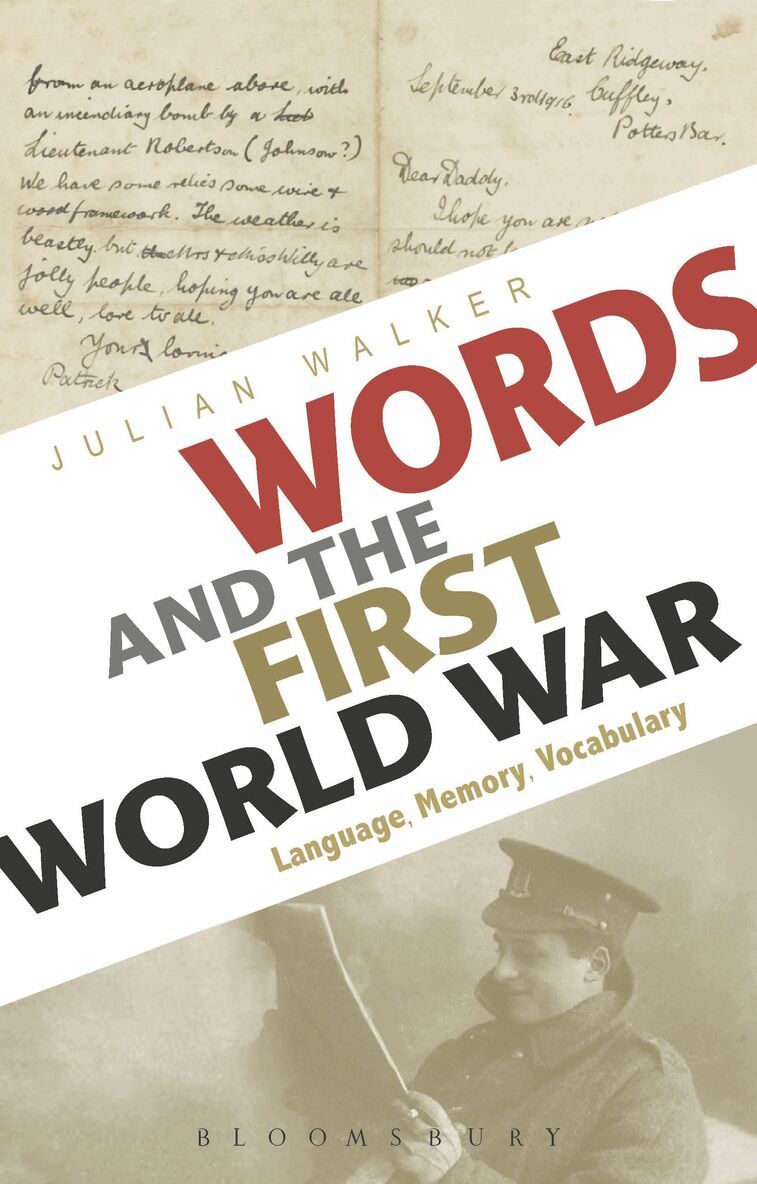
    Words and the First World War

    Language, Memory, Vocabulary

    AvJulian Walker

    Häftad, Engelska, 2017

    308 kr

    Beställningsvara. Skickas inom 10-15 vardagar. Fri frakt över 249 kr.

    Fler format och utgåvor

    Inbunden

    1 009 kr

    E-bok

    327 kr

    E-bok

    327 kr

    Beskrivning

    "An illustrated analytical study, Words and the First World War considers the situation at home, at war, and under categories such as race, gender and class to give a many-sided picture of language used during the conflict." The SpectatorFirst World War expert Julian Walker looks at how the conflict shaped English and its relationship with other languages. He considers language in relation to mediation and authenticity, as well as the limitations and potential of different kinds of verbal communication. Walker also examines:- How language changed, and why changed language was used in communications- Language used at the Front and how the 'language of the war' was commercially exploited on the Home Front- The relationship between language, soldiers and class- The idea of the ‘indescribability’ of the war and the linguistic codes used to convey the experience'Languages of the front' became linguistic souvenirs of the war, abandoned by soldiers but taken up by academics, memoir writers and commentators, leaving an indelible mark on the words we use even today.

    Produktinformation

    • Utgivningsdatum:2017-12-28
    • Mått:138 x 216 x 22 mm
    • Vikt:520 g
    • Format:Häftad
    • Språk:Engelska
    • Antal sidor:416
    • Förlag:Bloomsbury Publishing PLC
    • ISBN:9781350001923

    Utforska kategorier

    • Språkvetenskap och lingvistik inom Språk och ordböcker
    • Första världskriget inom Historia och arkeologi

    Mer om författaren

    Julian Walker is a writer, researcher, artist and educator. He is the co-author of Languages and the First World War: Communicating in a Transnational War (2016), the author of The Roar of the Crowd (2016) and Trench Talk (2012) among many others. His website is www.julianwalker.net

    Recensioner i media

    Edifying and readable … [An] indispensable reference [tool] for anyone researching twentieth-century history and literature, not only the documents of war.

    Innehållsförteckning

    • Part I: Language, Dialect and the Need to Communicate1. Slang, dialect and status2. The need to communicate3. Understanding 'the other'Part II: Language at the Front4. Our language5. Etymologies6. How lingua franca developed7. Glossaries8. Language as weapon and trophy9. Control, and self-control10. Avoidance11. Wordplay12. The sound of war13. Language in combat14. The destruction of the body15. Failure16. Unacceptable weaponsPart III: 'Us' and 'Them'17. Race18. Naming the enemy19. How others spoke20. Naming 'our' side21. The femalePart IV: The Home Front22. Commerce and war language23. DORA and the control of words24. Outrage25. Women and childrenPart V: Owning the Language26. Class war27. 'Not us'28. Our languagePart VI: Letting Go29. Losing the language of war30. The language of commemoration31. Silence32. Post-war war talk33. War porn34. Then and nowBibliographyIndex