• Fri frakt över 249 kr
  • •
  • Snabba leveranser
  • •
  • Billiga böcker
Kundservice

Du är på sajten för privatpersoner.

Företag, bibliotek eller offentlig verksamhet?

Du handlar på classic.bokus.com, där alla dina funktioner finns intakta.
Till classic.bokus.com
Bokus logotyp. Gå till startsidan.
  • Erbjudanden
  • Student
  • Topplistor
  • Barn & ungdom
  • Bokus Play
  • E-böcker
  • Ljudböcker
  • Pocketböcker
  • Spel och pussel

Pocketfynda! Hundratals böcker för 49 kr/st →

Sidfot

Mina sidor

    Hjälp

    • Kundservice
    • Vanliga frågor och svar
    • Frakt och leverans
    • Retur vid ångerrätt
    • Reklamera vara
    • Betalning
    • Köpvillkor
    • Allmänna villkor
    • Information om webbplatsens tillgänglighet

    Om Bokus

    • Om oss
    • Pressrum
    • För studenter
    • För företag
    • För bibliotek och offentlig verksamhet
    • För leverantörer
    • Hållbarhet

    Populärt

    • Aktuella erbjudanden
    • Presentkort
    • Studentlitteratur
    • Nya böcker
    • Topplistor
    • Signerade böcker
    • Engelska böcker

    Inspiration

    • Boktips
    • BookTok
    • Barnbokskaraktärer
    • Populära författare
    Logotyp för Bokus
    Följ oss på Facebook (extern länk)Följ oss på Instagram (extern länk)Följ oss på YouTube (extern länk)Följ oss på TikTok (extern länk)
    bokus @ CookiesAnpassa cookiesIntegritetspolicyKöpvillkor
    Till Citymail hemsida (extern länk)Till Budbee hemsida (extern länk)Till Postnord hemsida (extern länk)Till Schenker hemsida (extern länk)Till Early Bird hemsida (extern länk)Till Walleys hemsida (extern länk)
    1. Filosofi och religion
    2. Religion och tro
    3. Islam
    4. Koranen

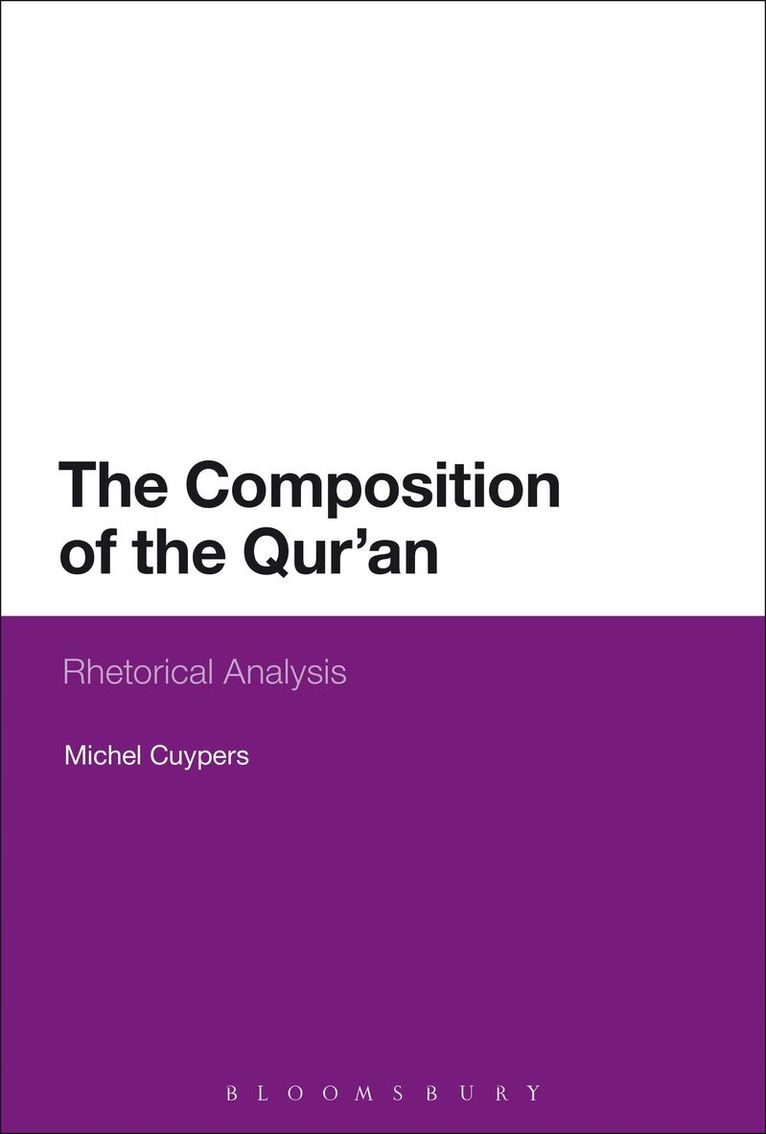
    Composition of the Qur'an

    Rhetorical Analysis

    AvMichel Cuypers

    Häftad, Engelska, 2016

    546 kr

    Beställningsvara. Skickas inom 10-15 vardagar. Fri frakt över 249 kr.

    Fler format och utgåvor

    E-bok

    589 kr

    E-bok

    590 kr

    Inbunden

    1 941 kr

    Beskrivning

    The text of the Qur’an appears to many to be desperately muddled and lacking any coherence. The Composition of the Qur’an provides a systematic presentation of the writing processes (or rhetoric) and argues that there is indeed a coherence to the Qur’anic text. Michel Cuypers shows that the ancient Semitic texts, of which the Qur’an is a part, do not obey the Greek rhetoric and that their basic principle is therefore not progressive linearity, but symmetry which can take several forms, following precise rules. He argues that the knowledge of this rhetorical code allows for a radically new analysis of the structure and rhetoric of the Qur’an. Using copious amounts of examples from the text, The Composition of the Qur’an provides a new theoretical synthesis of Qur’anic rhetoric as well as a methodology for their application in further exegesis. A landmark publication in the field of Qur’anic Studies, this volume will be of interest to scholars and researchers in Islamic Studies, Religious Studies and Arabic Studies.

    Produktinformation

    • Utgivningsdatum:2016-09-22
    • Mått:156 x 234 x 12 mm
    • Vikt:313 g
    • Format:Häftad
    • Språk:Engelska
    • Antal sidor:224
    • Förlag:Bloomsbury Publishing PLC
    • ISBN:9781350008052

    Utforska kategorier

    • Koranen inom Filosofi och religion

    Mer om författaren

    Michel Cuypers is Researcher at the IDEO, the Dominican Institute of Oriental Studies, Cairo, Egypt. He has published numerous articles and is the author of The Banquet: A Reading of the Fifth Sura of the Qur'an (2009).

    Recensioner i media

    In The Composition of the Qur’an Cuypers presents an innovative method for reading the Qur'an, one based on the principle that the Islamic scripture shares with other Semitic texts certain rhetorical structures which have long been missed by Muslim and non-Muslim scholars alike. The Composition of the Qur’an is thus an innovative and important work which should become standard reading for all students of the Qur'an.

    Innehållsförteckning

    • Introduction1. The Question of the coherence of the Qur'anic Text2. Binarity and Parataxis, two Characteristics of Qur’anic Rhetoric3. The Levels of Composition4. The Figures of Composition5. The Center of Concentric Composition6. The Work of Analysis and Re-Writing7. Context, Intertext and Interpretation8. Looking AheadBibliographyIndex