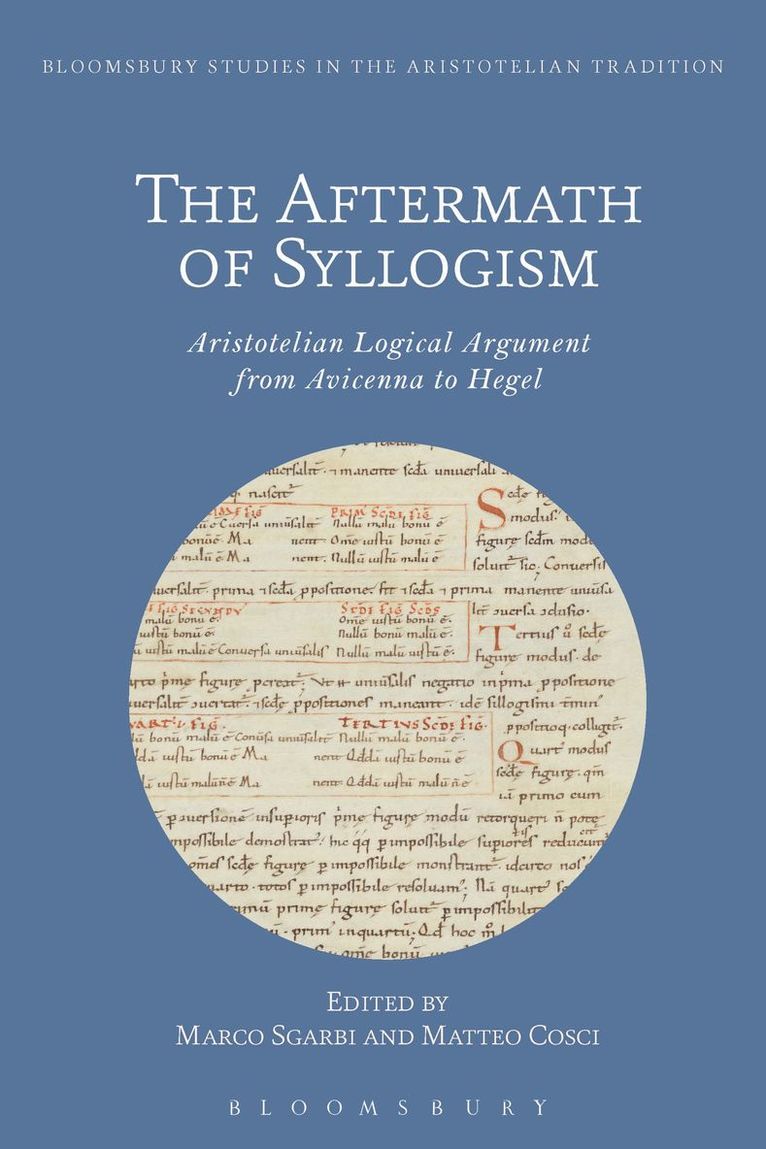
Inbunden, Engelska, 2018
Aftermath of Syllogism
Aristotelian Logical Argument from Avicenna to Hegel
Del i serien Bloomsbury Studies in the Aristotelian Tradition
1827 kr
Beställningsvara. Skickas inom 10-15 vardagar. Fri frakt över 249 kr.
Beskrivning
Produktinformation
- Utgivningsdatum: 2018-01-25
- Mått: 168 x 240 x 24 mm
- Vikt: 480 g
- Format: Inbunden
- Språk: Engelska
- Serie: Bloomsbury Studies in the Aristotelian Tradition
- Antal sidor: 232
- Förlag: Bloomsbury Publishing PLC
- ISBN: 9781350043527
Utforska kategorier
Mer om författaren
Marco Sgarbi is Associate Professor of History of Philosophy at the Università Ca' Foscari, Venice, Italy.Matteo Cosci is a postdoctoral researcher at the Università Ca' Foscari, Venice, Italy, currently working within the ERC project "Aristotle in the Italian Vernacular: Rethinking Renaissance and Early-Modern Intellectual History (c. 1400–c. 1650)".
Recensioner i media
I enjoyed reading this book. It highlights a part of the theory's history that is less well known, and in some sense it is a history of a decline after the heights it reached in the 14th century. But it is nevertheless an interesting history, which sees the theory playing a somewhat different role, not as a formal logic, but as a theory of reasoning … I recommend this volume to anyone interested in the history of the theory of syllogisms.
Betyg & recensioner
0 recensioner
Inga recensioner tillgängliga.