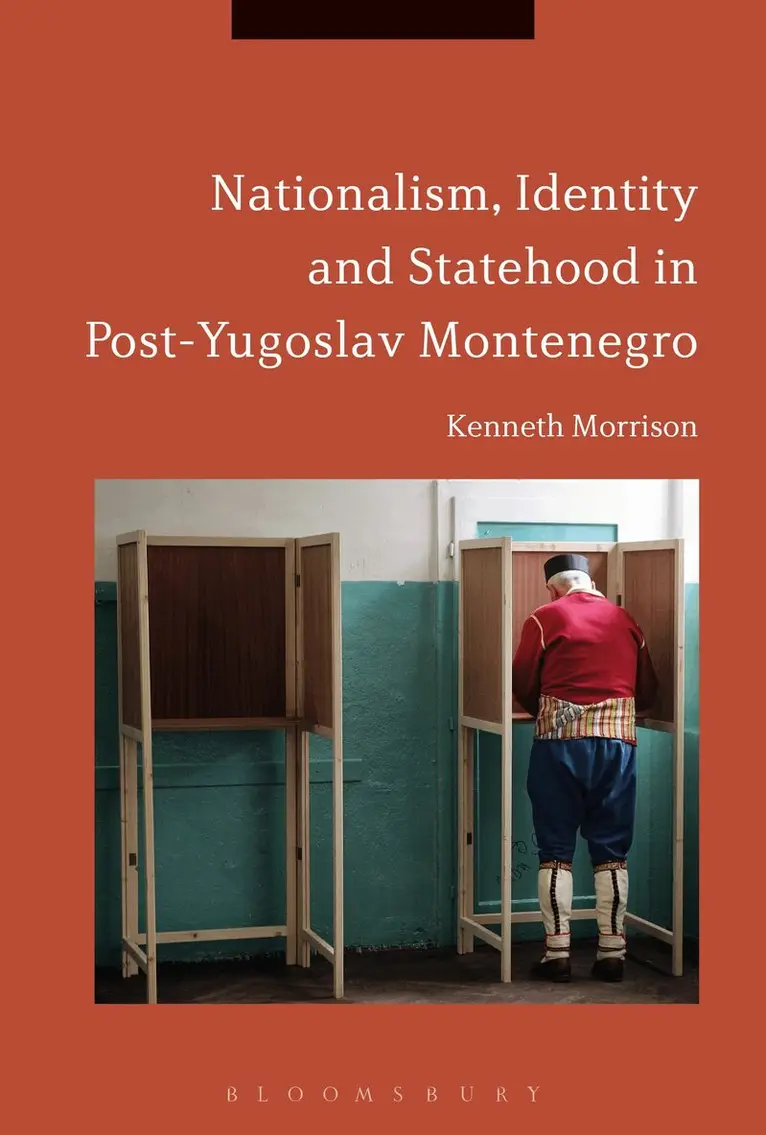
Häftad, Engelska, 2019
Nationalism, Identity and Statehood in Post-Yugoslav Montenegro
514 kr
Beställningsvara. Skickas inom 10-15 vardagar. Fri frakt över 249 kr.
Beskrivning
Produktinformation
- Utgivningsdatum: 2019-07-25
- Mått: 152 x 232 x 18 mm
- Vikt: 440 g
- Format: Häftad
- Språk: Engelska
- Antal sidor: 288
- Förlag: Bloomsbury Publishing PLC
- ISBN: 9781350123106
Mer om författaren
Kenneth Morrison is Professor of Modern Southeast European History and the Co-Director of the Jean Monnet Centre for European Governance (CEG) at De Montfort University, UK. He has published widely on the modern history of Southeast Europe and is the author of Montenegro: A Modern History (2009), Sarajevo’s Holiday Inn: On the Frontline of Politics and War (2016) and, with Elizabeth Roberts, The Sandžak: A History (2013).
Recensioner i media
Morrison impresses the reader repeatedly with his profound expertise and perceptive reading of evidence. His extremely well-informed and comprehensive account of Montenegro’s political history gains additional complexity as he develops on the interrelations between politics, religious communities, national minorities, the media, and the international community. He has researched his project thoroughly in a wide range of source material and a wealth of scholarship in history and the social sciences. The book can be recommended in the strongest terms to anyone interested in the formation of the Montenegrin state and nationhood.
Betyg & recensioner
0 recensioner
Inga recensioner tillgängliga.