• Fri frakt över 249 kr
  • •
  • Snabba leveranser
  • •
  • Billiga böcker
Kundservice

Du är på sajten för privatpersoner.

Företag, bibliotek eller offentlig verksamhet?

Du handlar på classic.bokus.com, där alla dina funktioner finns intakta.
Till classic.bokus.com
Bokus logotyp. Gå till startsidan.
  • Erbjudanden
  • Nyheter
  • Student
  • Topplistor
  • Barn & ungdom
  • Bokus Play
  • E-böcker
  • Pocketböcker
  • Spel & pussel

Må bättre, för mindre! Upp till 50% rabatt på hälsoböcker

Sidfot

Mina sidor

    Hjälp

    • Kundservice
    • Vanliga frågor och svar
    • Frakt och leverans
    • Retur vid ångerrätt
    • Reklamera vara
    • Betalning
    • Köpvillkor
    • Allmänna villkor
    • Information om webbplatsens tillgänglighet

    Om Bokus

    • Om oss
    • Pressrum
    • För studenter
    • För företag
    • För bibliotek och offentlig verksamhet
    • För leverantörer
    • Hållbarhet

    Populärt

    • Aktuella erbjudanden
    • Presentkort
    • Studentlitteratur
    • Nya böcker
    • Topplistor
    • Signerade böcker
    • Engelska böcker

    Inspiration

    • Boktips
    • BookTok
    • Populära bokserier
    • Barnbokskaraktärer
    • Populära författare
    Logotyp för Bokus
    Följ oss på Facebook (extern länk)Följ oss på Instagram (extern länk)Följ oss på YouTube (extern länk)Följ oss på TikTok (extern länk)
    bokus @ CookiesAnpassa cookiesIntegritetspolicyKöpvillkor
    Till Citymail hemsida (extern länk)Till Budbee hemsida (extern länk)Till Postnord hemsida (extern länk)Till Schenker hemsida (extern länk)Till Early Bird hemsida (extern länk)Till Walleys hemsida (extern länk)
    1. Kultur
    2. Scenkonst och film
    3. Dansböcker
    4. Koreografi

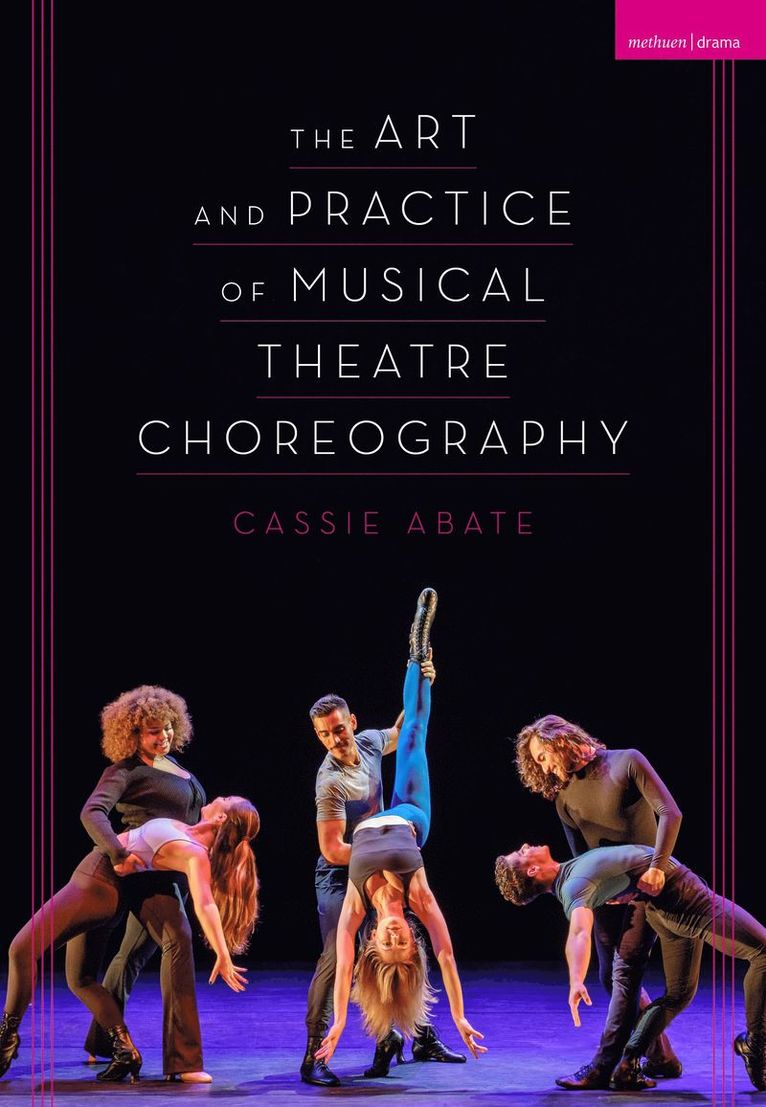
    Art and Practice of Musical Theatre Choreography

    AvCassie Abate

    Häftad, Engelska, 2022

    Del i serien Methuen Drama

    391 kr

    Skickas . Fri frakt över 249 kr.

    Fler format och utgåvor

    Inbunden

    1 222 kr

    E-bok

    420 kr

    E-bok

    420 kr

    Beskrivning

    What does a musical theatre choreographer actually do? They just 'make up the steps', right? This book firstly debunks the misunderstandings around what musical theatre choreographers actually do, demonstrating their need to have an in-depth understanding of storytelling, music theory, performance practices and plot structure in order to create movement that enhances and enlivens the musical. Secondly, it equips the musical theatre choreographer with all the tools needed to create nuanced, informed and inspired movement for productions, through structured activities that build specific skills (such as 'notating the script' and 'scoring the score').Traditionally, this training has been something of a series of secrets, passed from mentor to apprentice. The author demystifies the process to make the previously undisclosed “tricks of the trade” accessible to all choreographers, everywhere. Covering the entire process of choreographing a musical from the first script reading to the final curtain call, this book makes case for the absolute integrity of the choreographer to any musical theatre production and sets out the theoretical principles of choreography alongside the practical application during every step of the production process.

    Produktinformation

    • Utgivningsdatum:2022-08-25
    • Mått:170 x 244 x 14 mm
    • Vikt:559 g
    • Format:Häftad
    • Språk:Engelska
    • Serie:Methuen Drama
    • Antal sidor:216
    • Förlag:Bloomsbury Publishing PLC
    • ISBN:9781350193338

    Utforska kategorier

    • Koreografi inom Kultur
    • Noter, sångtexter inom Kultur

    Mer om författaren

    Cassie Abate is the Head of Musical Theatre Dance at Texas State University, USA, where she mentors choreographers and continues to direct/choreograph at theatres all across the country.

    Innehållsförteckning

    • INTRODUCTIONa. Tradition: An Art Form Passed Downb. Within These Pages: How to Utilize the TextPART 1: THE ART1. CHAPTER 1: Where to Start1.1. The Musical Theatre Choreographer1.2. The Evolution of Dance on Broadway1.2.1. The African, Caribbean, and East Indian Influence1.2.2. The European Influence1.2.3. The Director/Choreographer and the Concept Musical1.2.4. Contemporary Musical Theatre Choreographers1.3. Choreographing in a New Era of Musical Theatre2. CHAPTER 2: Research2.1. The World of the Piece2.1.1. Historical Context2.1.2. Culture2.1.3. Visual Landscape2.1.4. Words, Words, Words2.2. The Life of the Piece2.2.1. Listening2.2.2. Style2.2.3. Movement Vocabulary2.3. The People of the Piece2.3.1. The Role of the Ensemble2.4. The History of the Piece2.4.1. Source Material2.4.2. The Creators2.4.3. Previous Productions2.5. Revivals: Making Something Old New Again2.5.1. Copyright and Licensing2.6. ACTIVITY: Visual Lookbook2.7. ACTIVITY: Movement Reel3. CHAPTER 3: Storytelling Through Movement3.1. The Musical Structure3.2. Roles of Choreography in the Musical3.3. Script Analysis: Creating a Movement Arc3.4. Movement Events3.5. ACTIVITY: Movement Roadmap4. CHAPTER 4: Interpreting the Score4.1. The Basics4.1.1. Meter and Rhythm4.1.2. Time Signatures4.1.3. Staves and Clefs4.1.4. Key Signatures4.1.5. Expressions, Articulations, and Dynamic Markings4.1.6. Other Important Markings4.1.7. Musical Passages and Transitions4.2. Music Through a Dance Lens4.2.1. What you Hear Versus What You See4.2.2. Musical Changes, Counting, and Cutting4.2.3. Physical Interpretation4.3. ACTIVITY: Discovering the Cut4.4. ACTIVITY: Drawing the Musical Phrases4.5. ACTIVITY: Scoring the Score5. CHAPTER 5: Musical Staging5.1. Earning the Song5.2. Music as Action5.3. Stage Moods5.4. Partners5.5. Movement While Singing5.5.1. Motion5.5.2. Crosses: When and How5.5.3. Gestures5.5.4. Stillness5.5.5. Stylization5.5.6. Physical Comedy5.6. The Mini-Build5.7. Sample Staging Outline: Solo5.8. Sample Staging Outline: Duet5.9. ACTIVITY: Notating in the Script6. CHAPTER 6: Production Numbers6.1. Beat Breakdown6.2. How to Create a Build6.2.1. Types of Builds6.2.2. Groupings6.2.3. Eliciting Applause6.2.4. Buttons6.3. Nuts and Bolts6.3.1. Focus6.3.2. Level and Direction6.3.3. Repetition and Visual Variation6.3.4. Individual Versus Unison6.3.5. Balance: Symmetrical Versus Asymmetrical6.4. Formations6.4.1. Lines6.4.2. Curves6.4.3. Other Formations6.4.4. Multiple Formations6.5. Movement Patterns6.6. Diagrams6.7. ACTIVITY: Analyzing the Build6.8. ACTIVITY: Building the Build7. CHAPTER 7: Creating Steps7.1. Process7.1.1. The Five Parts of Dance7.1.2. Intention7.1.3. Style7.1.4. Economy7.2. Creation7.2.1. Research7.2.2. Abstraction7.2.3. Physical Metaphor7.2.4. Dance Journaling7.2.5. Movement Prompts7.2.6. Efforts7.2.7. Objectives and Drives7.3. Fundamentals7.3.1. Initiation and Framing7.3.2. Shapes and Transitions7.3.3. Choreographing the Eyes7.3.4. Rhythm, Speed, and Syncopation7.3.5. Contrast, Isolation, and Accent7.3.6. Pauses, Freezes, and Sounds7.3.7. Dancers as Objects7.3.8. Crowd Movements7.4. Utilizing the Design7.5. Notation7.6. ACTIVITY: Steps Notation8. CHAPTER 8: Adapting to Various Spaces8.1. Types of Spaces8.2. Site Specific Theatre8.3. Benefits and Challenges8.4. Tricks of the Trade8.5. Formations8.6. Movement Patterns8.7. Creating Focus8.8. Musical Staging8.9. Storytelling8.10. ACTIVITY: From Proscenium to the RoundPART 2: THE PRACTICE9. CHAPTER 9: Assembling Your Team9.1. Members of the Choreographic Team9.1.1. Dance Captain9.1.2. Assistant Choreographer9.1.3. Associate Choreographer9.2. Pre-Production9.3. Auditions9.3.1. Audition Breakdown9.3.2. Dance Calls9.3.3. Audition Combination9.3.4. In the Room9.3.5. Making the Cut9.4. ACTIVITY: The Dance Audition Combination10. CHAPTER 10: Collaboration10.1. Design and Production Meetings10.1.1. Creative Discussions10.1.2. Design Meetings10.1.3. Break Out Meetings10.1.4. Production Meetings10.2. Collaborating with the Director and Music Director10.2.1. The Director10.2.2. The Music Director10.2.3. The Dance Arranger10.3. Collaborating with the Design Team10.3.1. The Set Designer10.3.2. The Costume Designer10.3.3. The Lighting Designer10.3.4. The Sound Designer10.4. The Stage Manager10.5. The Director/Choreographer10.6. ACTIVITY: Question Lists11. CHAPTER 11: Rehearsals11.1. Types of Rehearsals11.1.1. Staging Rehearsals11.1.2. Cleaning Rehearsals11.1.3. Run-Throughs11.1.4. Spacing Onstage11.1.5. Sitzprobe and Wandelprobe11.1.6. Technical Rehearsals11.1.7. Previews11.2. Running Rehearsals: How to Lead11.2.1. Working with Performers11.2.2. Giving Notes11.3. ACTIVITY: Rehearsal Timeline12. CHAPTER 12: All the Other Things12.1. Transitions12.2. Contact and Intimacy12.3. Improvisation12.4. Child Performers12.5. Special Skills12.6. Curtain Call12.7. Photo Call12.8. Rehearsing Understudies and Swings12.9. Accessibility12.10. Activity: Tracking Transitions13. CHAPTER 13: Nice Work If You Can Get It13.1. Finding Work13.2. Creating Your Own Work13.3. Displaying Your Work13.4. ACTIVITY: Choreography ReelAPPENDIX: Suggested Reading