• Fri frakt över 249 kr
  • •
  • Snabba leveranser
  • •
  • Billiga böcker
Kundservice

Du är på sajten för privatpersoner.

Företag, bibliotek eller offentlig verksamhet?

Du handlar på classic.bokus.com, där alla dina funktioner finns intakta.
Till classic.bokus.com
Bokus logotyp. Gå till startsidan.
  • Erbjudanden
  • Nyheter
  • Student
  • Topplistor
  • Barn & ungdom
  • Bokus Play
  • E-böcker
  • Pocketböcker
  • Spel & pussel

10% rabatt på allt med kod: NYSTART10 →

Sidfot

Mina sidor

    Hjälp

    • Kundservice
    • Vanliga frågor och svar
    • Frakt och leverans
    • Retur vid ångerrätt
    • Reklamera vara
    • Betalning
    • Köpvillkor
    • Allmänna villkor
    • Information om webbplatsens tillgänglighet

    Om Bokus

    • Om oss
    • Pressrum
    • För studenter
    • För företag
    • För bibliotek och offentlig verksamhet
    • För leverantörer
    • Hållbarhet

    Populärt

    • Aktuella erbjudanden
    • Presentkort
    • Studentlitteratur
    • Nya böcker
    • Topplistor
    • Signerade böcker
    • Engelska böcker

    Inspiration

    • Boktips
    • BookTok
    • Populära bokserier
    • Barnbokskaraktärer
    • Populära författare
    Logotyp för Bokus
    Följ oss på Facebook (extern länk)Följ oss på Instagram (extern länk)Följ oss på YouTube (extern länk)Följ oss på TikTok (extern länk)
    bokus @ CookiesAnpassa cookiesIntegritetspolicyKöpvillkor
    Till Citymail hemsida (extern länk)Till Budbee hemsida (extern länk)Till Postnord hemsida (extern länk)Till Schenker hemsida (extern länk)Till Early Bird hemsida (extern länk)Till Walleys hemsida (extern länk)
    1. Filosofi och religion
    2. Religion och tro
    3. Religion: allmänt

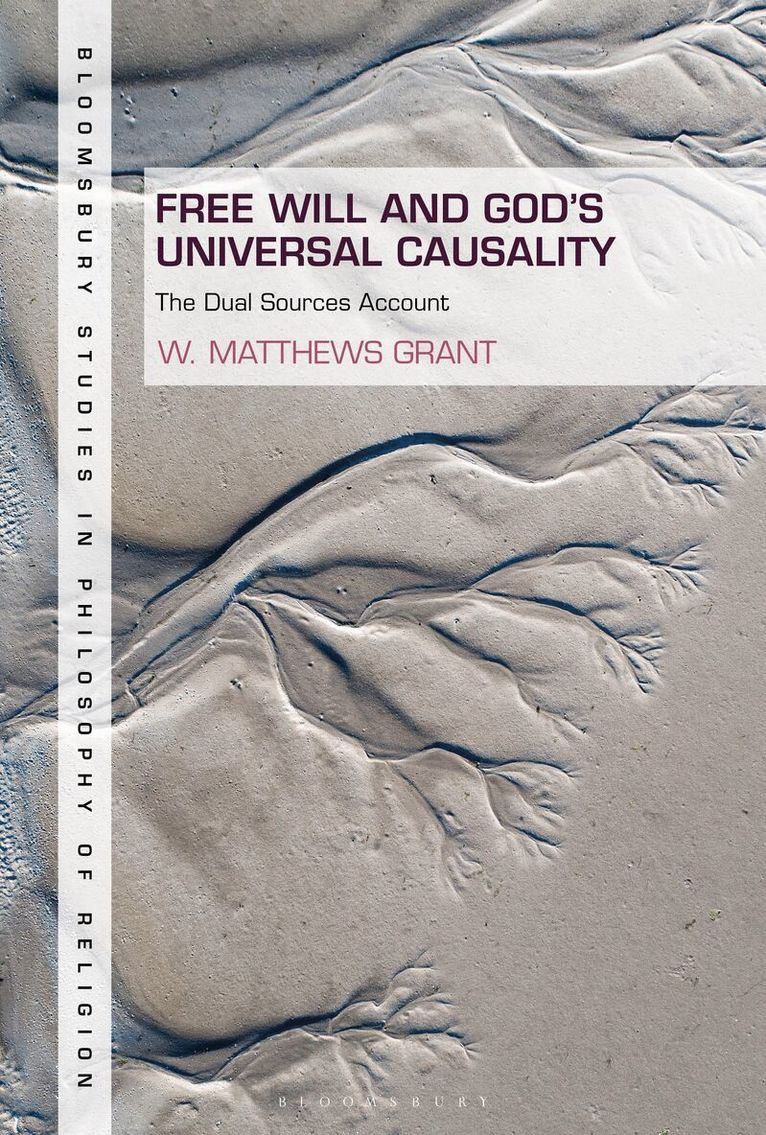
    Free Will and God's Universal Causality

    The Dual Sources Account

    AvW. Matthews Grant,Stewart Goetz

    Häftad, Engelska, 2020

    Del i serien Bloomsbury Studies in Philosophy of Religion

    479 kr

    Beställningsvara. Skickas inom 10-15 vardagar. Fri frakt över 249 kr.

    Fler format och utgåvor

    Inbunden

    1 672 kr

    E-bok

    513 kr

    E-bok

    513 kr

    Beskrivning

    The traditional doctrine of God's universal causality holds that God directly causes all entities distinct from himself, including all creaturely actions. But can our actions be free in the strong, libertarian sense if they are directly caused by God? W. Matthews Grant argues that free creaturely acts have dual sources, God and the free creaturely agent, and are ultimately up to both in a way that leaves all the standard conditions for libertarian freedom satisfied. Offering a comprehensive alternative to existing approaches for combining theism and libertarian freedom, he proposes new solutions for reconciling libertarian freedom with robust accounts of God's providence, grace, and predestination. He also addresses the problem of moral evil without the commonly employed Free Will Defense. Written for analytic philosophers and theologians, Grant's approach can be characterized as “neo-scholastic” as well as “analytic,” since many of the positions defended are inspired by, consonant with, and develop resources drawn from the scholastic tradition, especially Aquinas.

    Produktinformation

    • Utgivningsdatum:2020-09-17
    • Mått:154 x 232 x 16 mm
    • Vikt:400 g
    • Format:Häftad
    • Språk:Engelska
    • Serie:Bloomsbury Studies in Philosophy of Religion
    • Antal sidor:256
    • Förlag:Bloomsbury Publishing PLC
    • ISBN:9781350203655

    Utforska kategorier

    • Religion: allmänt inom Filosofi och religion
    • Filosofi inom Filosofi och religion

    Mer om författaren

    W. Matthews Grant is Professor of Philosophy at University of St Thomas (MN), USA.

    Recensioner i media

    Free Will and God’s Universal Causality is a significant and novel contribution to the philosophical and theological literature on divine providence, in particular the interaction between human and divine agency. The book is clearly written, exceptionally argued, and truly innovative in many ways.

    Innehållsförteckning

    • Acknowledgments1. Introduction 1.1. Divine Universal Causality (DUC) and Creaturely Action 1.2. Libertarian Freedom and the Apparent Conflict with DUC 1.3. Dual Sources: A Neo-scholastic Approach to Resolving the Conflict 2. God: Universal Cause and Cause of Human Actions 2.1. Scripture 2.2. Perfect Being Theology: An Anselmian Approach 2.3. Cosmological Arguments from Contingency 2.4. Conservation and Concurrence: A Suarezian Argument 2.5. A Thomistic Argument from Participation 3. Divine Universal Causality and the Threat of Occasionalism 3.1. Does DUC render creaturely causes otiose? 3.2. God and Creaturely Causes: The Claims of Non-Occasionalist DUC 3.3. Non-Occasionalist DUC: The Metaphysical Objection 3.4. Non-Occasionalist DUC: The Epistemic Objection 3.5. Can agent-causal acts be caused by God? 4. Free Creatures of the Universal Cause 4.1. The Intrinsic/Extrinsic Distinction 4.2. Why DUC may appear to preclude libertarian freedom 4.3. The Extrinsic Model of Divine Agency 4.4. DUC without Determinism4.5. Ability to do otherwise 4.6. Ultimate Responsibility 4.7. Dual Sources 5. The Extrinsic Model Defended 5.1. The Extrinsic Model, Intrinsic Models, and Scholastic Theology 5.2. From DUC to the Extrinsic Model 5.3. But is the Extrinsic Model also ruled out by DUC? 5.4. Does the Extrinsic Model render Divine Causality Unintelligible? 6. Does God Cause Sin? 6.1. DUC, Moral Evil, and the Privation Solution 6.2. Moral Evil and Privation 6.3. Objections to the Privation Account of Moral Evil 6.4. Does God cause the badness in sinful acts simply by causing the acts? 6.5. How the badness in sinful acts is caused by the sinner alone 7. The Problem of Moral Evil 7.1. The Failure of the Free Will Defense 7.2. Responding to the problem without FWD 7.3. Moral Evil, Dual Sources, and Molinism 7.4. Moral Evil, Dual Sources, and Open Theism 7.5. Sin and the Divine Will 7.6. God’s Involvement in Sin: A Cost of Dual Sources? 8. Providence, Grace, and Predestination 8.1. An Extrinsic Model of Divine Knowing 8.2. Time, Foreknowledge, and a Variation on the Eternity Solution 8.3. Providence 8.4. Grace 8.5. Divine-Human Dialogue 8.6. Predestination Notes Bibliography Index