• Fri frakt över 249 kr
  • •
  • Snabba leveranser
  • •
  • Billiga böcker
Kundservice

Du är på sajten för privatpersoner.

Företag, bibliotek eller offentlig verksamhet?

Du handlar på classic.bokus.com, där alla dina funktioner finns intakta.
Till classic.bokus.com
Bokus logotyp. Gå till startsidan.
  • Erbjudanden
  • Student
  • Topplistor
  • Barn & ungdom
  • Bokus Play
  • E-böcker
  • Ljudböcker
  • Pocketböcker
  • Spel & pussel

Upp till 25% på utvalda nyheter →

Sidfot

Mina sidor

    Hjälp

    • Kundservice
    • Vanliga frågor och svar
    • Frakt och leverans
    • Retur vid ångerrätt
    • Reklamera vara
    • Betalning
    • Köpvillkor
    • Allmänna villkor
    • Information om webbplatsens tillgänglighet

    Om Bokus

    • Om oss
    • Pressrum
    • För studenter
    • För företag
    • För bibliotek och offentlig verksamhet
    • För leverantörer
    • Hållbarhet

    Populärt

    • Aktuella erbjudanden
    • Presentkort
    • Studentlitteratur
    • Nya böcker
    • Topplistor
    • Signerade böcker
    • Engelska böcker

    Inspiration

    • Boktips
    • BookTok
    • Populära bokserier
    • Barnbokskaraktärer
    • Populära författare
    Logotyp för Bokus
    Följ oss på Facebook (extern länk)Följ oss på Instagram (extern länk)Följ oss på YouTube (extern länk)Följ oss på TikTok (extern länk)
    bokus @ CookiesAnpassa cookiesIntegritetspolicyKöpvillkor
    Till Citymail hemsida (extern länk)Till Budbee hemsida (extern länk)Till Postnord hemsida (extern länk)Till Schenker hemsida (extern länk)Till Early Bird hemsida (extern länk)Till Walleys hemsida (extern länk)
    1. Samhälle och politik
    2. Sociologi och antropologi
    3. Antropologi

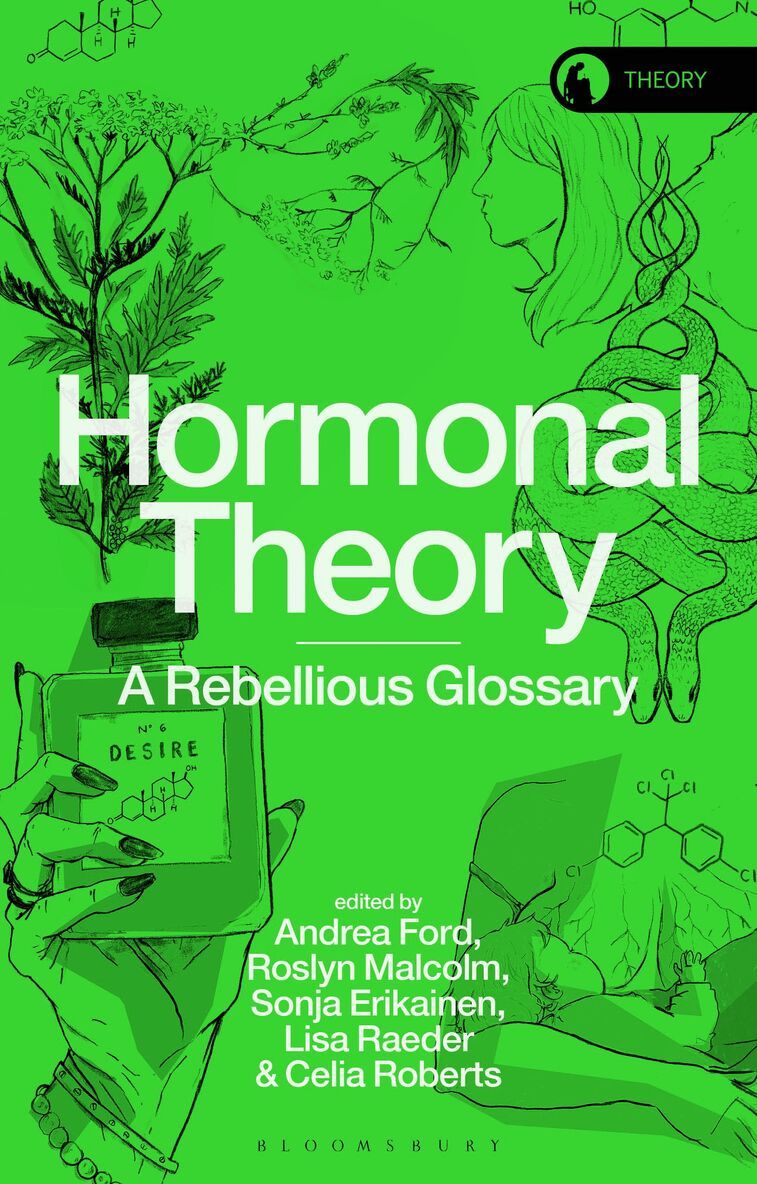
    Hormonal Theory

    A Rebellious Glossary

    AvAndrea Ford,Roslyn Malcolm

    Häftad, Engelska, 2024

    Del i serien Theory in the New Humanities

    320 kr

    Beställningsvara. Skickas inom 5-8 vardagar. Fri frakt över 249 kr.

    Beskrivning

    A 2024 Choice Outstanding Academic TitleFrom angiotensin to cortisol, testosterone to xenoestrogens, and dopamine to endocrine disruptors, hormones are everywhere. These chemical entities are foundational to biological life and shape social, cultural, and political forces, while simultaneously being shaped by them. Hormones are increasingly central not only to medical and other body-shaping practices and contemporary science, but also environmentally-oriented conversations. Throughout Hormonal Theory, authors trace how biomedical, social, political, and experiential forces entangle to produce hormones as we know them today. It illuminates how hormones emerge and exist as complex entities that permeate every sphere of our lives.Each glossary entry takes a particular hormonal compound as its starting point, yet works to elaborate and complicate understandings of hormones as distinct biological or chemical entities. The entries collectively show how hormones never operate in isolation from other hormones, nor bodies in isolation from other human and non-human bodies and their socio-ecological surroundings. Indeed, they “cascade” into one another. This volume, then, is not simply a qualitatively-rich companion to medical knowledge about hormones, but a challenge to the conceptual underpinnings of current dominant understandings of disease, wellness, and normalcy.

    Produktinformation

    • Utgivningsdatum:2024-03-07
    • Mått:156 x 232 x 20 mm
    • Vikt:400 g
    • Format:Häftad
    • Språk:Engelska
    • Serie:Theory in the New Humanities
    • Antal sidor:248
    • Förlag:Bloomsbury Publishing PLC
    • ISBN:9781350322981
    • Utmärkelser:Winner of Choice Outstanding Academic Title 2024 (UK)

    Utforska kategorier

    • Antropologi inom Samhälle och politik
    • Genusvetenskap inom Samhälle och politik
    • Naturvetenskapens filosofi inom Naturvetenskap och teknik

    Mer om författaren

    Sonja Erikainen is Research Fellow at the Centre for Biomedicine, Self and Society, Usher Institute, The University of Edinburgh, UK.Andrea Ford is Research Fellow at the Centre for Biomedicine, Self and Society, Usher Institute, The University of Edinburgh, UK.Rosalyn Malcolm is Assistant Professor in Anthropology at Durham University, UK.Lisa Raeder is a qualitative researcher and PhD candidate at the Centre for Biomedicine, Self, and Society at the University of Edinburgh, UK.Celia Roberts is Professor of Gender and Women's Studies, Australian National University, Australia.

    Recensioner i media

    Hormonal Theory is a long-awaited and much-needed contribution to the meaning and significance of hormones. An elegant combination of theorization and meticulous case studies, this glossary moves beyond prevailing biomedical understanding of hormones as signaling molecules or chemical messengers to show how they are co-constituted between the biological, environmental, cultural, and social. This outstanding book will unsettle our very understanding of what hormones are.

    Innehållsförteckning

    • List of ContributorsAcknowledgementsHormonal Cascades: An Introduction1. Adrenaline, Celia Roberts (Australian National University, Canberra) 2. Angiotensin, Anne Pollock (King’s College London, UK)3. Cortisol, Roslyn Malcolm (Durham University, UK)4. Diethylstilbestrol (DES), Jacquelyne Luce (Mount Holyoke College, USA), Anjali Rao-Herel (Mount Holyoke College, USA) with the Feminist Technoscience Governance Collaboratory5. Dichloro-diphenyl-trichloroethane (DDT), Norah MacKendrick (Rutgers University, USA)6. Dopamine, Tom Boylston (University of Edinburgh, UK)7. Endocrine Disrupting Chemicals (EDCs), Wibke Straube (Karlstad University, Sweden)8. Follicle Stimulating Hormone (FSH) and Lutenizing Hormone (LH), Risa Cromer (Purdue University, USA)9. Gonadotropin-releasing hormone analogues (GnRHa), Cronan Cronshaw (Lancaster University, UK)10. Growth Hormone, Magdalena Radkowska-Walkowicz (University of Warsaw, Poland)11. Human Chorionic Gonadotropin (hCG), Emily Ross (University of Sheffield, UK)12. Hydrocortisone, Ian Harper (University of Edinburgh, UK)13. Mifepristone and Misoprostol, Leah Eades (University of Edinburgh, UK)14. Oestrogen, Charlotte Jones (Swansea University, UK) and Kriss Fearon (De Montfort University, UK)15. Oxytocin, Arbel Griner (Princeton University, USA) and Rafaela Zorzanelli (University of Rio de Janeiro, Brazil)16. Pitocin, Andrea Ford (University of Edinburgh, UK)17. Progesterone, Nayantara Sheoran Appleton (Victoria University of Wellington, Aotearoa New Zealand)18. Progestogens, Mariana Rios Sandoval19. Testosterone, Fabíola Rohden (Federal University at Rio Grande do Sul, Brazil)Index