• Fri frakt över 249 kr
  • •
  • Snabba leveranser
  • •
  • Billiga böcker
Kundservice

Du är på sajten för privatpersoner.

Företag, bibliotek eller offentlig verksamhet?

Du handlar på classic.bokus.com, där alla dina funktioner finns intakta.
Till classic.bokus.com
Bokus logotyp. Gå till startsidan.
  • Erbjudanden
  • Nyheter
  • Student
  • Topplistor
  • Barn & ungdom
  • Bokus Play
  • E-böcker
  • Pocketböcker
  • Spel & pussel

10% rabatt på allt med kod: NYSTART10 →

Sidfot

Mina sidor

    Hjälp

    • Kundservice
    • Vanliga frågor och svar
    • Frakt och leverans
    • Retur vid ångerrätt
    • Reklamera vara
    • Betalning
    • Köpvillkor
    • Allmänna villkor
    • Information om webbplatsens tillgänglighet

    Om Bokus

    • Om oss
    • Pressrum
    • För studenter
    • För företag
    • För bibliotek och offentlig verksamhet
    • För leverantörer
    • Hållbarhet

    Populärt

    • Aktuella erbjudanden
    • Presentkort
    • Studentlitteratur
    • Nya böcker
    • Topplistor
    • Signerade böcker
    • Engelska böcker

    Inspiration

    • Boktips
    • BookTok
    • Populära bokserier
    • Barnbokskaraktärer
    • Populära författare
    Logotyp för Bokus
    Följ oss på Facebook (extern länk)Följ oss på Instagram (extern länk)Följ oss på YouTube (extern länk)Följ oss på TikTok (extern länk)
    bokus @ CookiesAnpassa cookiesIntegritetspolicyKöpvillkor
    Till Citymail hemsida (extern länk)Till Budbee hemsida (extern länk)Till Postnord hemsida (extern länk)Till Schenker hemsida (extern länk)Till Early Bird hemsida (extern länk)Till Walleys hemsida (extern länk)
    1. Filosofi och religion
    2. Filosofi
    3. Filosofiska discipliner

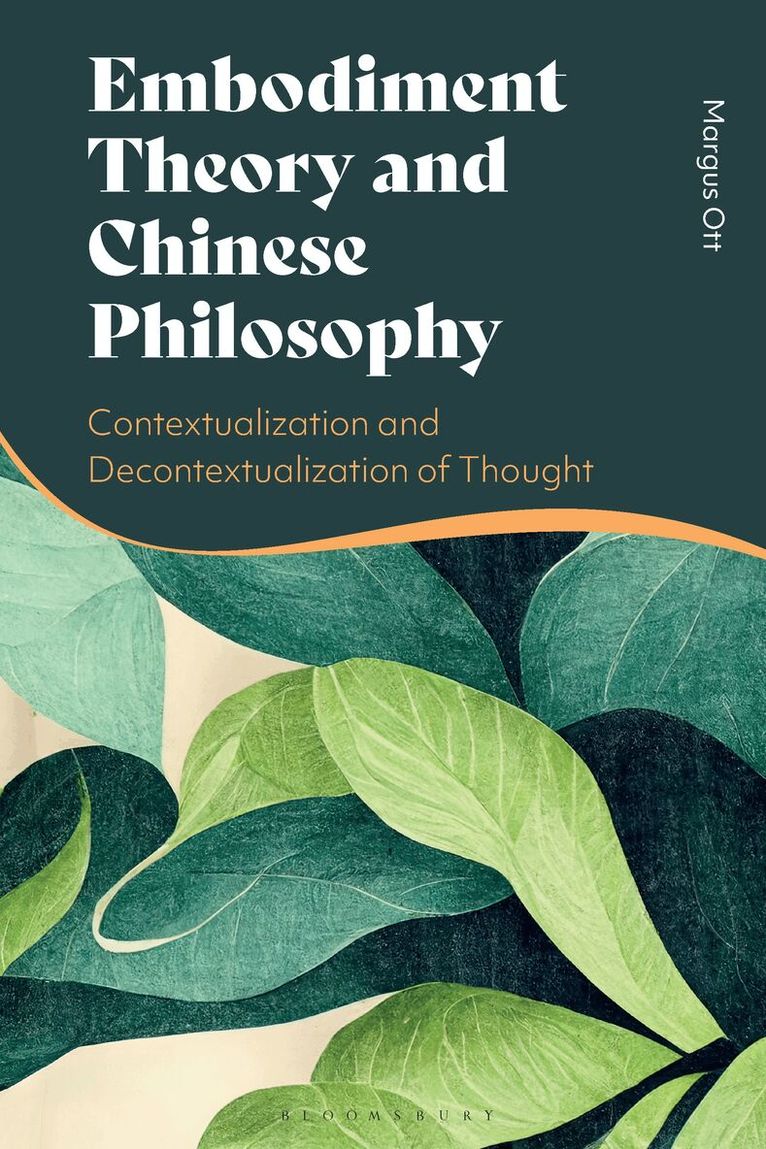
    Embodiment Theory and Chinese Philosophy

    Contextualization and Decontextualization of Thought

    AvMargus Ott

    Inbunden, Engelska, 2024

    1 256 kr

    Beställningsvara. Skickas inom 10-15 vardagar. Fri frakt över 249 kr.

    Fler format och utgåvor

    E-bok

    438 kr

    E-bok

    438 kr

    Häftad

    409 kr

    Beskrivning

    This book analyses some of the seminal texts of the Chinese tradition in light of the embodied tradition: the Analects of Confucius, the Zhuangzi, and the Treatise on Music. Margus Ott's study shows how they exemplify aspects of embodiment theory while highlighting others that have been neglected in contemporary work. Ott also develops far-reaching possibilities of an embodied philosophy.The embodied understanding did not go unchallenged in Ancient China. There were important counter-currents, most notably the Mohists and the so-called Legalists. It has been argued that this challenge set the Chinese philosophical tradition in motion. By using embodiment theory Ott demonstrates how these ideas can be seen as a decontextualizing tendency of thought that plays an important role in human affairs.

    Produktinformation

    • Utgivningsdatum:2024-08-22
    • Mått:162 x 238 x 18 mm
    • Vikt:500 g
    • Format:Inbunden
    • Språk:Engelska
    • Antal sidor:232
    • Förlag:Bloomsbury Publishing PLC
    • ISBN:9781350424142

    Utforska kategorier

    • Filosofiska discipliner inom Filosofi och religion

    Mer om författaren

    Margus Ott is a researcher at Tallinn University, Estonia. He has performed previous research in Taiwan and Xiamen with the National Taiwan University.

    Recensioner i media

    Margus Ott critically examines traditional Western epistemologies, noting their abstract, decontextualizing nature, and contrasts them with Chinese philosophy. He explores how knowledge intertwines with embodied context, revealing how transcending physical forms can lead to an integrated understanding of body and mind, offering alternative ways of experiencing and being in the world.

    Innehållsförteckning

    • Acknowledgments1. Introduction1.1. Contextualizing and Decontextualizing Thought1.2. Roots of Embodiment Theory (ET)1.3. Chinese Traditions and ET1.4. Content Summary2. Embodiment 2.1. Tenets of Disembodiment2.2. Embodiment2.3. Embeddedness2.4. Enactment2.5. Extendedness2.6. Affectivity2.7. Emergence2.8. Self-relation2.9. Other-relation2.10. Implicitness2.11. Guidance by Example2.12. Singularities and Intensities 2.13. Embodied Disembodiment2.14. Meaning of Disembodiment2.15. Conclusion3. Background3.1.Greek Socio-political Background3.2.Chinese Socio-political Background3.3. Ritual Background3.4. Rituals as Contextualizing3.5. Kurankos3.6. Hasidic Traditions3.7. Ritual Knowledge3.8. Conclusion4. Embodied Foundations: Confucius ??4.1. Embodied4.2. Singular and Ordinary4.3. Embedded4.4. Flexibility4.5. Enacted4.6. Extended4.7. Other-relation4.8. Emotive4.9. Implicitness4.10. Emergence4.11. Ease and Joy4.12. Self-cultivation4.13. Conclusion5. Mohist Disembodied Reaction: Mozi5.1. Introduction5.2. Disembodied Standards5.3. Extension of Subjectivity: All-inclusive Care5.4. Meritocracy5.5. Explicitness5.6. Conclusion6. Legalist Disembodied Reaction: Han Feizi 6.1. Introduction6.2. Laws6.3. General and Explicit6.4. Generality of Basic Preferences: Third-person View6.5. Staying “cool”6.6.New, Decontextualized Civic Morality6.7. Objectivity, Quantity6.8. Conclusion7. A Confucian Development of Embodiment: Record of Music (Yueji)7.1. Mencius7.2. Xunzi7.3. Record of Music7.4. Emotions7.5. Return to One’s Body: Individual Transformation of Emotions7.6.Social Embeddedness: Collective Transformation of Emotions7.7.Ontology of Energy and Veins7.8.Self-cultivation According to Energy and Veins7.9.Enacted Knowledge7.10. Music and Rituals: integration and differentiation7.11. Free Space7.12. Simplicity and Ease7.13. Cosmic Purport7.14. Conclusion8. A Daoist Development of Embodiment: Zhuangzi 8.1. Introduction8.2. A “knack”8.3. Stages of Practice8.4. Danger of Mechanical Mind in Extended Cognition8.5. Other-relation8.6. Transformation8.7. Sitting and Forgetting8.8. Free Roaming8.9. Knowing with Non-knowing8.10. Zhuangzian Ideas as Reflection on a Skill8.11. Zhuangzi and Decontextualization8.12. Conclusion9. ConclusionNotesReferencesIndex