• Fri frakt över 249 kr
  • •
  • Snabba leveranser
  • •
  • Billiga böcker
Kundservice

Du är på sajten för privatpersoner.

Företag, bibliotek eller offentlig verksamhet?

Du handlar på classic.bokus.com, där alla dina funktioner finns intakta.
Till classic.bokus.com
Bokus logotyp. Gå till startsidan.
  • Erbjudanden
  • Nyheter
  • Student
  • Topplistor
  • Barn & ungdom
  • Bokus Play
  • E-böcker
  • Pocketböcker
  • Spel & pussel

Må bättre, för mindre! Upp till 50% rabatt på hälsoböcker

Sidfot

Mina sidor

    Hjälp

    • Kundservice
    • Vanliga frågor och svar
    • Frakt och leverans
    • Retur vid ångerrätt
    • Reklamera vara
    • Betalning
    • Köpvillkor
    • Allmänna villkor
    • Information om webbplatsens tillgänglighet

    Om Bokus

    • Om oss
    • Pressrum
    • För studenter
    • För företag
    • För bibliotek och offentlig verksamhet
    • För leverantörer
    • Hållbarhet

    Populärt

    • Aktuella erbjudanden
    • Presentkort
    • Studentlitteratur
    • Nya böcker
    • Topplistor
    • Signerade böcker
    • Engelska böcker

    Inspiration

    • Boktips
    • BookTok
    • Populära bokserier
    • Barnbokskaraktärer
    • Populära författare
    Logotyp för Bokus
    Följ oss på Facebook (extern länk)Följ oss på Instagram (extern länk)Följ oss på YouTube (extern länk)Följ oss på TikTok (extern länk)
    bokus @ CookiesAnpassa cookiesIntegritetspolicyKöpvillkor
    Till Citymail hemsida (extern länk)Till Budbee hemsida (extern länk)Till Postnord hemsida (extern länk)Till Schenker hemsida (extern länk)Till Early Bird hemsida (extern länk)Till Walleys hemsida (extern länk)
    1. Kultur
    2. Konstböcker
    3. Konsthistoria

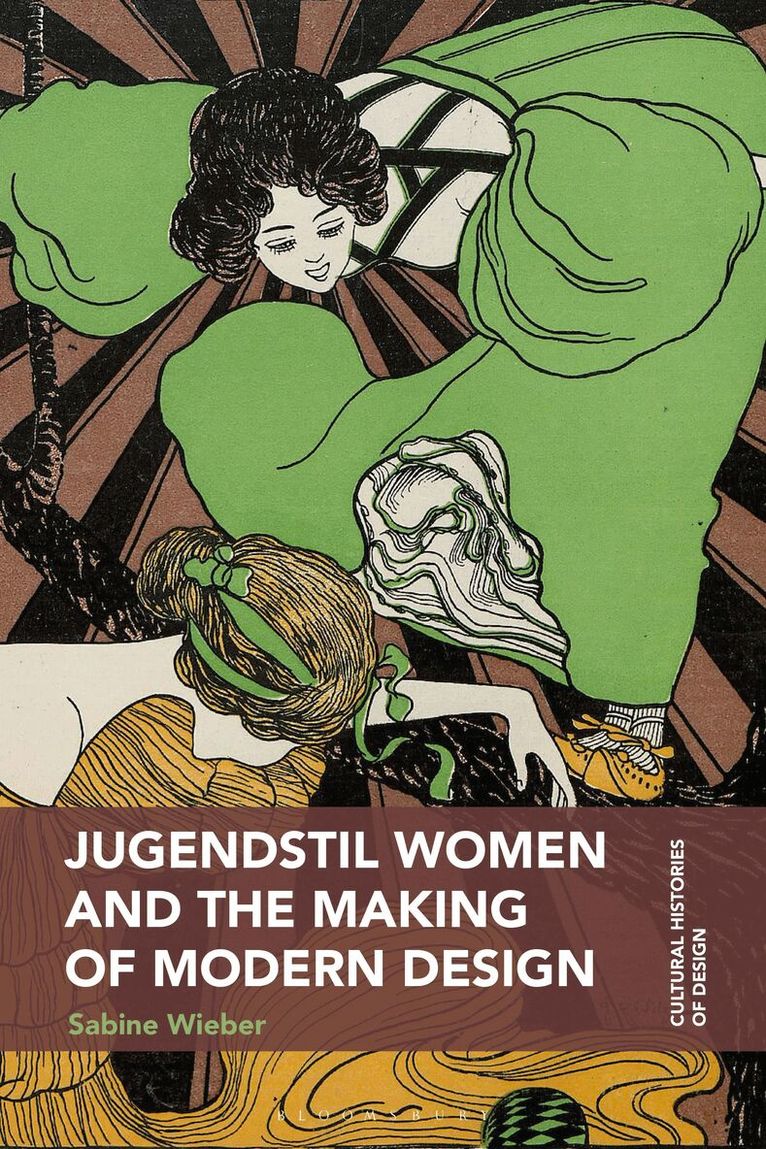
    Jugendstil Women and the Making of Modern Design

    AvSabine Wieber,Grace Lees-Maffei

    Häftad, Engelska, 2023

    Del i serien Cultural Histories of Design

    416 kr

    Beställningsvara. Skickas inom 5-8 vardagar. Fri frakt över 249 kr.

    Fler format och utgåvor

    Inbunden

    1 365 kr

    E-bok

    465 kr

    E-bok

    465 kr

    Beskrivning

    Jugendstil, that is Germany’s distinct engagement with the international Art Nouveau movement, is now firmly engrained in histories of modern art, architecture and design. Exhibitions and publications across the world explore Jugendstil’s key protagonists and artistic centres to firmly anchor their activities within the trajectories of German modernism. Women, however, continue to be largely absent from these revisionist accounts.Jugendstil Women and the Making of Modern Design shows that women in fact actively participated in the cultural and socio-economic exchanges that generated German design responses to European modernity. By drawing on previously unpublished archival material and a series of original case studies including Elsa Bruckmann's Munich salon, the Photo Studio Elvira and the Debschitz School, the book explores women’s important contributions to modern German culture as collectors, consumers, critics, designers, educators and patrons.This book offers a new interpretation of this vibrant period by considering diverse manifestations of historical female agency that pushed against historically entrenched conventions and gender roles. The book’s rigorous approach reshapes Jugendstil historiography by positing women’s lived experiences against dominant ideologies that emerged at this precise moment. In short, the book advocates women as an integral part of the emergence, dissemination and reception of Jugendstil and questions the deeply gendered histories of this key period in modern art, architecture and design.

    Produktinformation

    • Utgivningsdatum:2023-11-16
    • Mått:156 x 232 x 16 mm
    • Vikt:0 g
    • Format:Häftad
    • Språk:Engelska
    • Serie:Cultural Histories of Design
    • Antal sidor:248
    • Förlag:Bloomsbury Publishing PLC
    • ISBN:9781350427969

    Utforska kategorier

    • Konsthistoria inom Kultur
    • Designböcker inom Kultur
    • Genusvetenskap inom Samhälle och politik

    Mer om författaren

    Sabine Wieber is Lecturer in History of Art, Architecture and Design at the University of Glasgow, UK. She has contributed writing to various publications including Stitching the Self (Bloomsbury, 2020), Design and Agency (Bloomsbury, 2020) and Designing the Modern Interior (Berg, 2009), and has written for several journals including Journal of Design History and Rethinking History.

    Recensioner i media

    Discussing many actors not widely known outside specialist circles, Sabine Wieber demonstrates the important roles women played not only in questions of design and creative practice, but also in social and political reforms, feminism, and education...The structure of the book is well-conceived to consider the broader categories beyond artist or designer, allowing Wieber to weave a narrative around complex social and political questions without falling into tropes of design icons or individual hagiographies.

    Innehållsförteckning

    • List of Figures Acknowledgments Introduction: A New Style for a New Age?0.1 Modern Women0.2 The Cultural Geography of Munich around 19000.3 Munich – Berlin0.4 Prince Regent Luitpold 0.5 The Term Jugendstil0.6 Chapters Summary1. Maker: Margarethe von Brauchitsch and the United Workshops 1.1 Introducing Margarethe von Brauchitsch1.2 The Vereinigte Werkstätten für Kunst im Handwerk 1.3 The Kunstsalon Littauer 18961.4 The ‘Seventh International Art Exhibition’ at the Munich Glaspalast1.5 The United Workshops and Margarethe von Brauchitsch1.6 A New Direction for Embroidery1.7 The Materiality of Margarethe von Brauchitsch’s Embroideries1.8 Interiors and Textiles1.9 Machine Embroidery 1.10 Embroidery and Jugendstil Historiography1.11 Was Margarethe von Brauchitsch a Jugendstil Woman?1.12 Relegated to the Sidelines2. Activists: The Elvira Photography Studio and Munich Feminist Politics 2.1 August Endell’s First Commission2.2 August Endell and Munich Jugendstil2.3 The Building and Its Facade2.4 The Interior2.5 The Patrons: Antia Augspurg and Sophia Goudstikker2.6 Studio Photography in Munich around 19002.7 The Photo-Studio Elvira and Munich’s Women’s Movement2.8 The Association for Women’s Interests (1894)2.9 Going their Separate Ways2.10 Jugendstil Experimentation and Political Advocacy 2.11 Postscript3. Students: Education Women at the Debschitz School3.1 The Debschitz School at Dresden3.2 Hermann Obrist (1862-1927)3.3 Wilhelm von Debschitz (1871-1948)3.4 The Lehr- und Versuchsatelier für Angewandte und Freie Kunst3.5 The Curriculum3.6 Women at the Debschitz School 3.7 Art and Design Education in Munich around 19003.8 The Royal Applied Arts School (1868)3.9 The weibliche Abteilung at the Royal School of Applied Arts (1872)3.10 The Munich Women Artists’ Association and its Frauenakademie 3.11 Women at the Debschitz School3.12 Emilie Butters (1879-1961)3.13 Modernism’s Paradox4. Patron: Fashionable Taste at Elsa Bruckmann’s Salon4.1 Elsa Bruckmann (1865-1946)4.2 Munich-Vienna: The Todesco Palais4.3 Marrying into a Publishing Empire4.4 The Bruckmanns’ New Headquarters4.5 Munich-Glasgow: The Dining Room4.6 Munich-London: Hermann and Anna Muthesius4.7 Elsa Bruckmann’s Debut as Salonnière4.8 A Brief History of Salon Culture4.9 The Mackintosh Dining Room-cum-Salon4.10 Salon Culture and Gender 4.11 Elsa Bruckmann’s ‘Enhanced Independence’5. Reformers: Dressing the Part5.1 What is Artistic Dress?5.2 Künstlerkleider and German Dress Reform5.3 Dress and Function5.4 Fashion/Anti-Fashion5.5 Maria van de Velde and Alfred Mohrbutter 5.6 Artistic Dress and Jugendstil Interiors5.7 Health and Beauty5.8 German Life Reform5.9 Dress Reform and Germany’s Women’s Movement 5.10 Jugendstil Women and Dress Reform5.11 Anna Muthesius and Else Oppler5.12 Artistic Dress and the Department Store5.13 The Kaufhaus Oberpollinger and the Warenhaus Hermann Tietz5.14 ShoppingConclusionBibliographyIndex