• Fri frakt över 249 kr
  • •
  • Snabba leveranser
  • •
  • Billiga böcker
Kundservice

Du är på sajten för privatpersoner.

Företag, bibliotek eller offentlig verksamhet?

Du handlar på classic.bokus.com, där alla dina funktioner finns intakta.
Till classic.bokus.com
Bokus logotyp. Gå till startsidan.
  • Erbjudanden
  • Nyheter
  • Student
  • Topplistor
  • Barn & ungdom
  • Bokus Play
  • E-böcker
  • Pocketböcker
  • Spel & pussel

Må bättre, för mindre! Upp till 50% rabatt på hälsoböcker

Sidfot

Mina sidor

    Hjälp

    • Kundservice
    • Vanliga frågor och svar
    • Frakt och leverans
    • Retur vid ångerrätt
    • Reklamera vara
    • Betalning
    • Köpvillkor
    • Allmänna villkor
    • Information om webbplatsens tillgänglighet

    Om Bokus

    • Om oss
    • Pressrum
    • För studenter
    • För företag
    • För bibliotek och offentlig verksamhet
    • För leverantörer
    • Hållbarhet

    Populärt

    • Aktuella erbjudanden
    • Presentkort
    • Studentlitteratur
    • Nya böcker
    • Topplistor
    • Signerade böcker
    • Engelska böcker

    Inspiration

    • Boktips
    • BookTok
    • Populära bokserier
    • Barnbokskaraktärer
    • Populära författare
    Logotyp för Bokus
    Följ oss på Facebook (extern länk)Följ oss på Instagram (extern länk)Följ oss på YouTube (extern länk)Följ oss på TikTok (extern länk)
    bokus @ CookiesAnpassa cookiesIntegritetspolicyKöpvillkor
    Till Citymail hemsida (extern länk)Till Budbee hemsida (extern länk)Till Postnord hemsida (extern länk)Till Schenker hemsida (extern länk)Till Early Bird hemsida (extern länk)Till Walleys hemsida (extern länk)
    1. Filosofi och religion
    2. Filosofi
    3. Filosofiska discipliner
    • Nyhet

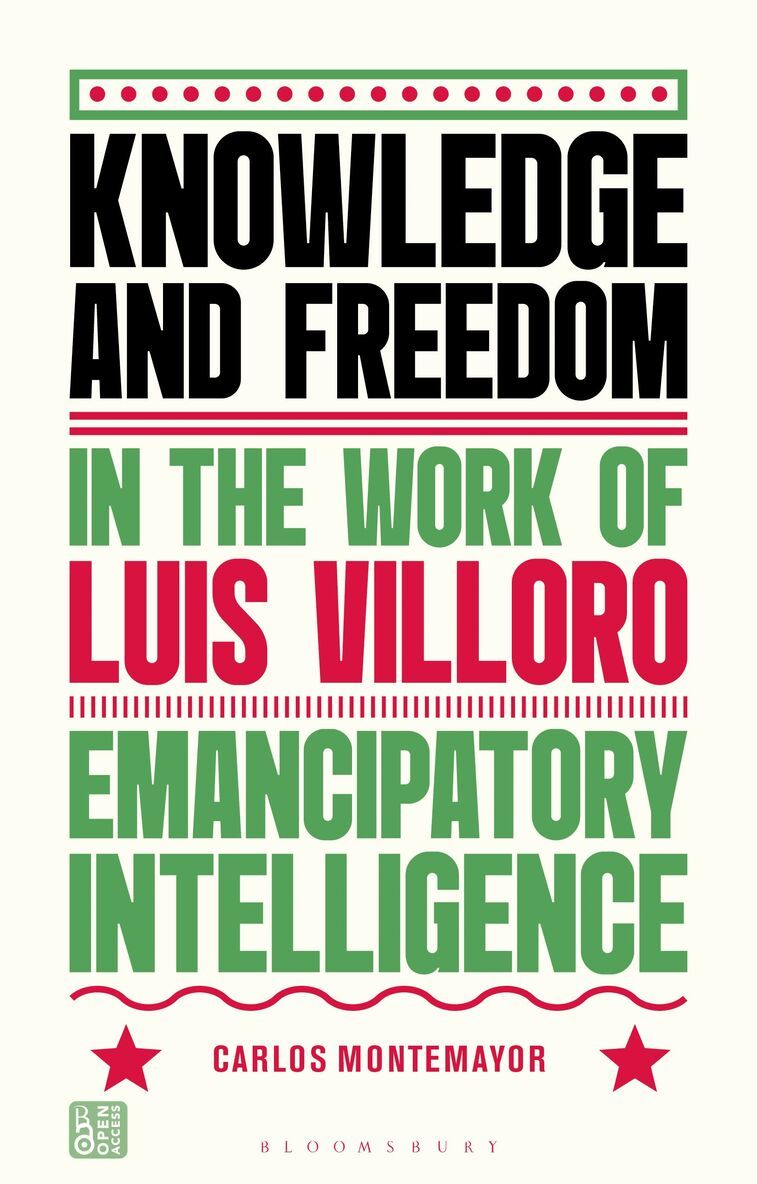
    Knowledge and Freedom in the Work of Luis Villoro

    Emancipatory Intelligence

    AvCarlos Montemayor

    Inbunden, Engelska, 2026

    909 kr

    Beställningsvara. Skickas inom 10-15 vardagar. Fri frakt över 249 kr.

    Fler format och utgåvor

    Häftad

    281 kr

    Beskrivning

    This open access introduction to the major Mexican philosopher and activist Luis Villoro shows how his ideas can reshape contemporary thought.Carlos Montemayor tells the story, through a philosophical lens, of this leading Mexican thinker and his quest for justice and freedom. At the heart of the book is Villoro’s liberational approach to knowledge production. He believed an education aimed at integrating freedom with knowledge stands in opposition to escapist epistemologies which unfortunately dominate our times.From Villoro’s early writings on epistemology and Mexican history to his involvement in Zapatismo, we find out how his ideas turned into actions. This is a compelling portrait of one of the most important figures in 20th-century Mexican philosophy. For anyone interested in Latin American perspectives it is an essential guide to the work of a philosopher who spent most of his life trying to understand the complexity of the American continent and its original habitants.The ebook editions of this book are available open access under a CC BY-NC-ND 4.0 licence on bloomsburycollections.com. Open access was funded by San Francisco State University.

    Produktinformation

    • Utgivningsdatum:2026-07-23
    • Mått:138 x 216 x 17 mm
    • Vikt:446 g
    • Format:Inbunden
    • Språk:Engelska
    • Antal sidor:248
    • Förlag:Bloomsbury Publishing PLC
    • ISBN:9781350527928

    Utforska kategorier

    • Filosofiska discipliner inom Filosofi och religion

    Mer om författaren

    Carlos Montemayor is Professor of Philosophy at San Francisco State University, USA.

    Recensioner i media

    Genuine philosophy is radical and disruptive." With this line begins Carlos Montemayor's important study of Latin American philosopher Luis Villoro. That this is the first comprehensive account of Villoro's work already establishes its importance. That the book provides a rich and compelling survey of the enormous breadth of Villoro's work makes it all the more interesting for philosophers from any variety of traditions. Montemayor shows us the stakes of Villoro's breadth of engagements with Continental philosophies like phenomenology, Anglophone methodologies like conceptual analysis and pragmatic inquiry, as well as his later philosophical engagements with the Zapatista movement. In providing an understanding of Villoro's pluralistic philosophical contributions, Montemayor offers the reader an inside view of the philosophical intimacy between ethics and epistemology that was central to Villoro's social epistemology. This book will be essential for students of Latin American philosophy, and will also be compelling and rewarding for philosophical pragmatists, phenomenologists, and analytic philosophers interested in the internal relations between ethics and epistemology.

    Innehållsförteckning

    • List of FiguresForewordAcknowledgmentsIntroductionChapter 1: From the cubicle to Zapatista territoryIndigenous MexicoThe question of Mexican identity: the Hiperión groupThe unity of thought and actionPhilosophy and intellectual commitmentPolitical activismChapter 2: The practice of non-exclusion: A linguistic analogyThe concreteness and situatedness of non-exclusionA linguistic analogySocial epistemology: Rationality, cooperation, and reasonablenessToward an ethics of attentionChapter 3: Truth, knowledge, and freedomThe claim of reasonThe origins of reason and meaning: Villoro on WittgensteinJoint attention and common ground: the case of mathematicsWittgenstein and Turing on the instruments of reasonAutomatism, spontaneity, and purpose in actionChapter 4: Reforming intelligenceThe concreteness and familiarity of the worldOn genuine philosophyBelief and reasonable communicationCommunication and concreteness Attention and reasonablenessChapter 5: Pragmatism, attentive engagement, and contemporary epistemologyA pragmatic account of beliefA pragmatic account of truth and knowledgeStrong belief and the figure of the world: Ortega y Gasset and WittgensteinWestern epistemology turned inwards: a diagnosisChapter 6: The figure and mind of the world: Ideology and collective memoryEpistemology, ethics, and politicsThe figure of the world and the mind of the worldVilloro, Rawls, and the politics of languageCollective memory and collective attentionChapter 7: True revolutions: A bureaucracy of intimacyIntellectual upheavals and the importance of clarity in opposing ideologyTrue revolutions: politics and cultureA bureaucracy of intimacy: Villoro’s capability approach