• Fri frakt över 249 kr
  • •
  • Snabba leveranser
  • •
  • Billiga böcker
Kundservice

Du är på sajten för privatpersoner.

Företag, bibliotek eller offentlig verksamhet?

Du handlar på classic.bokus.com, där alla dina funktioner finns intakta.
Till classic.bokus.com
Bokus logotyp. Gå till startsidan.
  • Erbjudanden
  • Nyheter
  • Student
  • Topplistor
  • Barn & ungdom
  • Bokus Play
  • E-böcker
  • Pocketböcker
  • Spel & pussel

10% rabatt på allt med kod: NYSTART10 →

Sidfot

Mina sidor

    Hjälp

    • Kundservice
    • Vanliga frågor och svar
    • Frakt och leverans
    • Retur vid ångerrätt
    • Reklamera vara
    • Betalning
    • Köpvillkor
    • Allmänna villkor
    • Information om webbplatsens tillgänglighet

    Om Bokus

    • Om oss
    • Pressrum
    • För studenter
    • För företag
    • För bibliotek och offentlig verksamhet
    • För leverantörer
    • Hållbarhet

    Populärt

    • Aktuella erbjudanden
    • Presentkort
    • Studentlitteratur
    • Nya böcker
    • Topplistor
    • Signerade böcker
    • Engelska böcker

    Inspiration

    • Boktips
    • BookTok
    • Populära bokserier
    • Barnbokskaraktärer
    • Populära författare
    Logotyp för Bokus
    Följ oss på Facebook (extern länk)Följ oss på Instagram (extern länk)Följ oss på YouTube (extern länk)Följ oss på TikTok (extern länk)
    bokus @ CookiesAnpassa cookiesIntegritetspolicyKöpvillkor
    Till Citymail hemsida (extern länk)Till Budbee hemsida (extern länk)Till Postnord hemsida (extern länk)Till Schenker hemsida (extern länk)Till Early Bird hemsida (extern länk)Till Walleys hemsida (extern länk)
    1. Skönlitteratur
    2. Dramatik
    • Nyhet

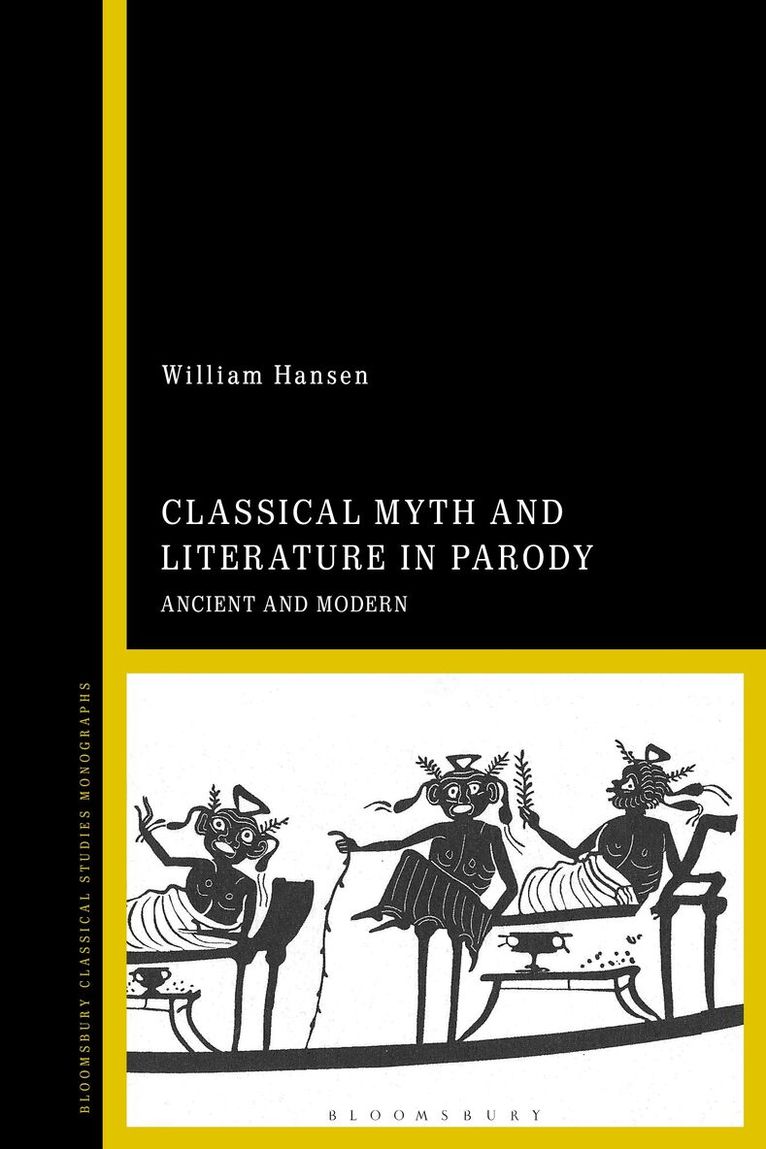
    Classical Myth and Literature in Parody

    Ancient and Modern

    AvWilliam F. Hansen

    Inbunden, Engelska, 2026

    1 364 kr

    Beställningsvara. Skickas inom 10-15 vardagar. Fri frakt över 249 kr.

    Fler format och utgåvor

    E-bok

    1 475 kr

    E-bok

    1 475 kr

    Beskrivning

    This book examines the evolution of classical parody, from its origins in ancient Greece and Rome to its resurgence in modern times. The book explores two key periods: the first from the sixth century BCE to the second century CE, and the second beginning in the 17th century, continuing today. In antiquity, writers like Aristophanes and Lucian parodied their own culture, relying on audiences' deep knowledge of Greek and Roman texts. This “insider” parody faded with the rise of Christianity and changes in language.The second era of classical parody emerged during the Renaissance, as classical texts were rediscovered and studied in schools. Writers like Charles Cotton in England created “outsider” parody, mocking ancient literature learned in the classroom. This book focuses on English-language works, including The Comic Latin Grammar and Victorian burlesque theatre, which drew on classical mythology and history. The book also addresses the social and educational changes that shaped classical parody, such as the invention of the printing press and the influence of Renaissance humanism. It is the first comprehensive study of anglophone classical parody, revealing how authors through the centuries have reimagined and distorted classical texts for humorous effect.

    Produktinformation

    • Utgivningsdatum:2026-07-09
    • Mått:164 x 236 x 22 mm
    • Vikt:580 g
    • Format:Inbunden
    • Språk:Engelska
    • Antal sidor:296
    • Förlag:Bloomsbury Publishing PLC
    • ISBN:9781350548039

    Utforska kategorier

    • Dramatik inom Skönlitteratur
    • Litteraturvetenskap inom Skönlitteratur

    Mer om författaren

    William Hansen is Professor Emeritus of Classical Studies and Folklore at Indiana University, USA.

    Recensioner i media

    A welcome survey of Greek and Roman, medieval, and English parody with texts from each period. Hansen provides well-informed introductions to the genre, the periods, the authors and the texts. This book can be read with pleasure from the beginning or consulted on particular authors or works.

    Innehållsförteckning

    • List of IllustrationsPrefaceAcknowledgementsList of AbbreviationsIntroduction PART I. CLASSICAL PARODY IN ANTIQUITY1. Aristophanes, Scenes from Old Comedy2. Matron of Pitane, Attic Dinner-Party3. Pseudo-Homer, Battle of the Frogs and Mice 4. Plautus, Amphitruo 5. Ovid, Metamorphoses 6. Lucian of Samosata, Gout and A True Story, plus Lucian's Hoaxes7. Visual ParodiesExcursus 1INTERMEZZO8. Medieval Latin Parody9. Byzantine ParodyExcursus 2PART II. THE REINVENTION OF CLASSICAL PARODY 10. Classical Parody Redivivus11. [Charles Cotton], Scarronides: or, Virgil Travestie. A Mock Poem on the First and Fourth Books of Virgil’s Æneis, in English, Burlesque 12. [Jonathan Swift], Baucis and Philemon; A Poem. On the ever lamented Loss of the two Yew-Trees, in the Parish of Chilthorne, Near the County Town of Somerset 13. [Thomas Bridges], A Burlesque Translation of Homer 14. Musical Theatre15. Mock Textbooks16. Anonymous, “Carmen Possum” 17. A. E. Housman, “Fragment of a Greek Tragedy”PART III. CLASSICAL PARODY TODAY18. Maurice Baring, Unreliable History 19. W. C. Sellar and R. J. Yeatman, And Now All This 20. Will Cuppy, The Decline and Fall of Practically Everybody 21. Richard Armour, The Classics Reclassified22. John Bailey, “Holp!” 23. Regius Professor of Greek, “A Note on the Use of the Strong Aorist Optative Passive of p???? by Attic Poets of the Middle and New Comedies”24. William Hansen, “The Structural Study of Myth, or Oedipus at the Sorbonne” 25. Anonymous, “A Warm, Fuzzy Story”26. Light VerseOverviewBibliographyIndex