• Fri frakt över 249 kr
  • •
  • Snabba leveranser
  • •
  • Billiga böcker
Kundservice

Du är på sajten för privatpersoner.

Företag, bibliotek eller offentlig verksamhet?

Du handlar på classic.bokus.com, där alla dina funktioner finns intakta.
Till classic.bokus.com
Bokus logotyp. Gå till startsidan.
  • Erbjudanden
  • Nyheter
  • Student
  • Topplistor
  • Barn & ungdom
  • Bokus Play
  • E-böcker
  • Pocketböcker
  • Spel & pussel

10% rabatt på allt med kod: NYSTART10 →

Sidfot

Mina sidor

    Hjälp

    • Kundservice
    • Vanliga frågor och svar
    • Frakt och leverans
    • Retur vid ångerrätt
    • Reklamera vara
    • Betalning
    • Köpvillkor
    • Allmänna villkor
    • Information om webbplatsens tillgänglighet

    Om Bokus

    • Om oss
    • Pressrum
    • För studenter
    • För företag
    • För bibliotek och offentlig verksamhet
    • För leverantörer
    • Hållbarhet

    Populärt

    • Aktuella erbjudanden
    • Presentkort
    • Studentlitteratur
    • Nya böcker
    • Topplistor
    • Signerade böcker
    • Engelska böcker

    Inspiration

    • Boktips
    • BookTok
    • Populära bokserier
    • Barnbokskaraktärer
    • Populära författare
    Logotyp för Bokus
    Följ oss på Facebook (extern länk)Följ oss på Instagram (extern länk)Följ oss på YouTube (extern länk)Följ oss på TikTok (extern länk)
    bokus @ CookiesAnpassa cookiesIntegritetspolicyKöpvillkor
    Till Citymail hemsida (extern länk)Till Budbee hemsida (extern länk)Till Postnord hemsida (extern länk)Till Schenker hemsida (extern länk)Till Early Bird hemsida (extern länk)Till Walleys hemsida (extern länk)
    1. Naturvetenskap och teknik
    2. Teknik och industri
    3. Miljöteknik

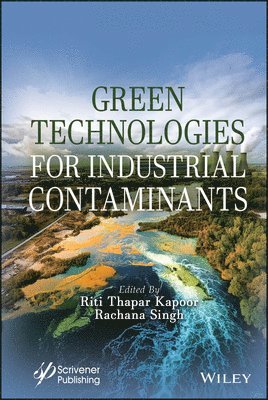
    Green Technologies for Industrial Contaminants

    AvRiti Thapar Kapoor,Rachana Singh

    Inbunden, Engelska, 2025

    2 637 kr

    Beställningsvara. Skickas inom 5-8 vardagar. Fri frakt över 249 kr.

    Beskrivning

    Green Technologies for Industrial Contaminants is essential for understanding innovative, eco-friendly solutions to combat the pressing challenges of pollution and water scarcity faced by our planet. Increasing population, environmental pollution, rampant industrialization, and scarcity of water are all major global threats. Significant amounts of pollutants are released from various industries such as textile, paper, leather, rubber, plastic, cosmetics, food, pharmaceuticals, and petroleum industries. A lack of proper treatment facilities has proliferated the discharge of effluents enriched with toxic pollutants such as dyes, heavy metals, organic compounds, and other hazardous chemicals in the environment. Water is a natural treasure and availability of safe and clean water is essential for human health, ecosystems, and sustainable development. The continuous decline of the groundwater table and deterioration of water quality are matters of serious concern. The presence of color in water poses a serious threat to the environment, affecting light penetration and reducing photosynthesis and dissolved oxygen. Most dyes and heavy metals are toxic in nature, which may cause skin irritation, allergies, respiratory disease, mental disorders, tumors, and cancer. Different physical and chemical methods are available for the treatment of industrial effluents but due to their high cost, low efficiency, and sludge generation, these methods are not feasible at large scale. The synergistic approaches of biochar and microbes have an edge over other techniques, including being eco-friendly, cost-competitive and efficient, achieving complete mineralization, and showing low-waste production. Therefore, the combined application of biochar and microbes for pollutant degradation can be a viable option as it is a low-cost and sustainable effluent treatment system for industries. Green Technologies for Industrial Contaminants provides useful information and applications of microbes (bacteria, algae, fungi) and biochar for the removal of contaminants from industrial effluent and reutilization of waste sludge in the production of biofuel and bioenergy.

    Produktinformation

    • Utgivningsdatum:2025-03-21
    • Vikt:680 g
    • Format:Inbunden
    • Språk:Engelska
    • Antal sidor:384
    • Förlag:John Wiley & Sons Inc
    • ISBN:9781394159284

    Utforska kategorier

    • Miljöteknik inom Naturvetenskap och teknik

    Mer om författaren

    Riti Thapar Kapoor, PhD, is an assistant professor at the Amity Institute of Biotechnology, Amity University, India with 14 years of teaching and research experience. She has published five books and over 80 research papers in various journals of national and international repute. Additionally, she has visited eight countries to participate in various academic programs and has supervised and mentored a number of research projects funded by different governmental funding agencies. Rachana Singh, PhD, is a professor at the Amity Institute of Biotechnology, Amity University, India with over 21 years of teaching and research experience in analytical and environmental chemistry. She has published one book and more than 50 research articles and chapters in reputed national and international journals. She has also filed six patents and been granted one patent in India. Additionally, she has supervised and mentored a number of research projects funded by different governmental funding agencies.

    Innehållsförteckning

    • Preface xiii1 Membrane-Assisted Technologies for Treating Pulp and Paper Industry Wastewater 1Richa Aggrawal, Jitender Dhiman, Anshu, Shrutikona Das, Kumar Anupam and Ashwani Kumar Dixit1.1 Introduction 21.2 Membrane-Based Technologies for Wastewater Treatment 81.3 Membrane Classification 131.4 Application of Membrane Technology in the Pulp and Paper Industry 151.5 Conclusion 222 Review of Recent Advances in Hazardous Waste Management of Chemical and Textile Industries Using Microbial-Assisted/Algae-Based Technologies 27Bibhab Kumar Lodh2.1 Introduction 282.2 Different Types of Waste from Chemical and Textile Industries 332.3 Microalgae and their Various Uses 332.4 Waste Treatment Using Microbial-Assisted/Algae-Based Technologies 352.5 Mechanisms of Remediation and the Factors which Influence them 382.6 Application of Various Bioremediation in Managing Industrial Pollution 412.7 Conclusion and Future Aspects for Waste Treatment Using Algae-Based Biomass 423 Environmental Contaminants: Sources, Types and Future Challenges: An Update 51Ravi Kumar Gangwar, Neha Singh, Pashupati Nath, Anamika Agarwal and Jaspal Singh3.1 Introduction 523.2 Algal and Cyanobacterial Toxins 543.3 Novel Brominated Flame Retardants 563.4 Disinfection by-Products 573.5 Per- and Polyfluoroalkyl Substances (PFAS) 623.6 Hormones and Endocrine-Disrupting Compounds (EDCs) 643.7 Pharmaceuticals and Personal Care Products 663.8 Surfactants and Their Metabolites 693.9 Benzotriazoles and Dioxane 713.10 Plasticizers and Pesticides 733.11 Consequences of Current Trends of Environmental Contaminants 763.12 Future Challenges 774 Efficacy of Microbes in the Removal of Pesticides from Watershed System 83Prasann Kumar, Debjani Choudhury and Padmanabh Dwivedi4.1 Introduction 834.2 Remediation of Pesticides through the Biological Pathway--A Green and Prospective Approach 884.3 Enzymatic Degradation of Pesticide 904.4 Mechanism and Molecular Advancement of Pesticide Degradation 964.5 In-Vitro Treatment Using Microbial Consortium 1055 Emerging Environmental Contaminants: Sources, Consequences and Future Challenges 119Neetu Talreja, Chitrakara Hegde, Enamala Manoj Kumar and Murthy Chavali5.1 Introduction to Environmental Contaminants 1205.2 Sources of Environmental Contaminants 1235.3 Emerging Micro-Pollutants from Various Sources 1275.4 Consequences of Emerging Environmental Contaminants 1305.5 Contaminations and Their Routes 1385.6 Types of Environmental Contaminants 1405.7 Conclusion 1436 Microbial Degradation of Textile Dyes: A Sustainable Approach for Treatment of Industrial Effluents 151Shivanshi Tyagi, Rachana Singh and Riti Thapar Kapoor6.1 Introduction 1526.2 Textile Dyes 1536.3 Toxicity of Textile Dyes 1546.4 Decolourization and Degradation of Textile Dyes 1556.5 Microbial Degradation of Dyes 1576.6 Fungal Dye Degradation 1586.7 Dye Degradation by Fungal Consortia 1626.8 Dye Degradation by Co-Microbial Cultures (Bacterial-Fungal Consortia) 1626.9 Recent Advances and Future Prospects 1636.10 Conclusion 1647 Environmental Cleanup: Xenobiotic Degradation with Enzymes as Decontaminating Agents 171Sonia Sethi and Gokulendra Singh Bhatti7.1 Introduction 1727.2 Classification of Xenobiotics 1727.3 Catabolic Enzymes of Degradation Pathways 1767.4 Hydrocarbon Degradation 1777.5 Bioremediation Potential of Microorganisms for Xenobiotic Compounds 1787.6 Enzymes 1827.7 Conclusion 1968 Removal of Microplastics from Wastewater: An Approach towards a Sustainable Ecosystem 203Neha Rana and Piyush Gupta8.1 Introduction 2048.2 Detection Methods for MPs 2068.3 Removal Techniques for MPs 2108.4 Recent Techniques for Removal of MPs 2178.5 Challenges and Future Perspectives 2208.6 Conclusion 2209 Endocrine-Disrupting Chemicals: Current Technologies for Removal from Aqueous Systems 225Neha Rana and Piyush Gupta9.1 Introduction 2269.2 Common Forms of EDCs 2289.3 Wastewater Treatment and EDCs Removal 2309.4 Treatment Technologies for EDCs 2319.5 Future Prospects 2419.6 Conclusion 24210 Current Status on Emerging Soil Applications of Biochar 247Piyush Gupta and Neha Rana10.1 Introduction 24710.2 Biochar and Its Contents 25010.3 Potential of Biochar to Influence Different Chemical Properties of Soil 25110.4 Pyrolyzing Conditions, Nutrient Supplying Capacity, and Decomposition of Biochar 25510.5 Impact of Biochar on Physical and Hydrological Properties of Soil 25610.6 Effect of Biochar on Soil Biological Properties and Greenhouse Gases Emission 26010.7 Influence of Biochar on Crop Yields 26510.8 Biochar as a Slow Release Fertilizer 26610.9 Conclusion 26811 Microalgal Biorefineries: An Ingenious Framework towards Wastewater Treatment Coupled with Biofuel Production 277Poulomi Ghosh and Saprativ P. Das11.1 Introduction 27711.2 Microalgal Cultivation System 27911.3 Generation of Value-Added Products Deploying Microalgae 28511.4 Biorefinery Development through Microalgae 29011.5 Microalgae-Mediated Wastewater Treatment 29511.6 Integrated Wastewater Treatment and Algal Biofuel Production 29811.7 Future Prospects 30411.8 Conclusions 30612 Plastic Pollution: Microbial Degradation of Plastic Waste 311Sushma Rani Tirkey, Remojit Biswas, Trisha Rajsi Topno, Aswathi K., Nagachandra Reddy C., Shristi Ram and Dineshkumar Ramalingam12.1 Introduction 31212.2 Plastic Degradation Methods 31412.3 Mechanism Involved in Plastic Degradation 33112.4 Genetic Engineering for Plastic Degradation 33312.5 Conclusion 335References 335Index 349