Rachana Singh - Böcker
Visar alla böcker från författaren Rachana Singh. Handla med fri frakt och snabb leverans.
4 produkter
4 produkter
2 151 kr
Skickas inom 10-15 vardagar
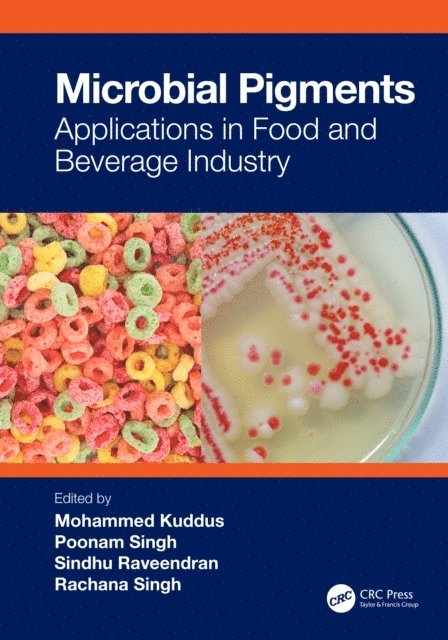
Microbial Pigments: Applications in Food and Beverage Industry offers a comprehensive and updated review of the impact of microbial pigments as value-added products in the food and beverage industry. Microbes produce a range of valuable pigments such as carotenoids, flavins, melanins, quinines, and violacein. The book explores the use of microbial pigments as additives, antioxidants, color intensifiers, and functional food ingredients. It discusses pigment isolation and processing technologies. It covers a range of applications across products like jams, spreads, frozen desserts, and beverages. The book also discusses food safety and toxicology aspects.Key featuresExplores the various microbial pigments and their sourcesReviews the pigment isolation, production, and processing techniquesDiscusses the potential application of pigments across a range of products in the food and beverage industryIncludes the latest innovations and patents awarded in use of microbial pigments as value-added food productsThe book is meant for researchers, academic and industry experts in food biotechnology, food processing, and food microbiology.
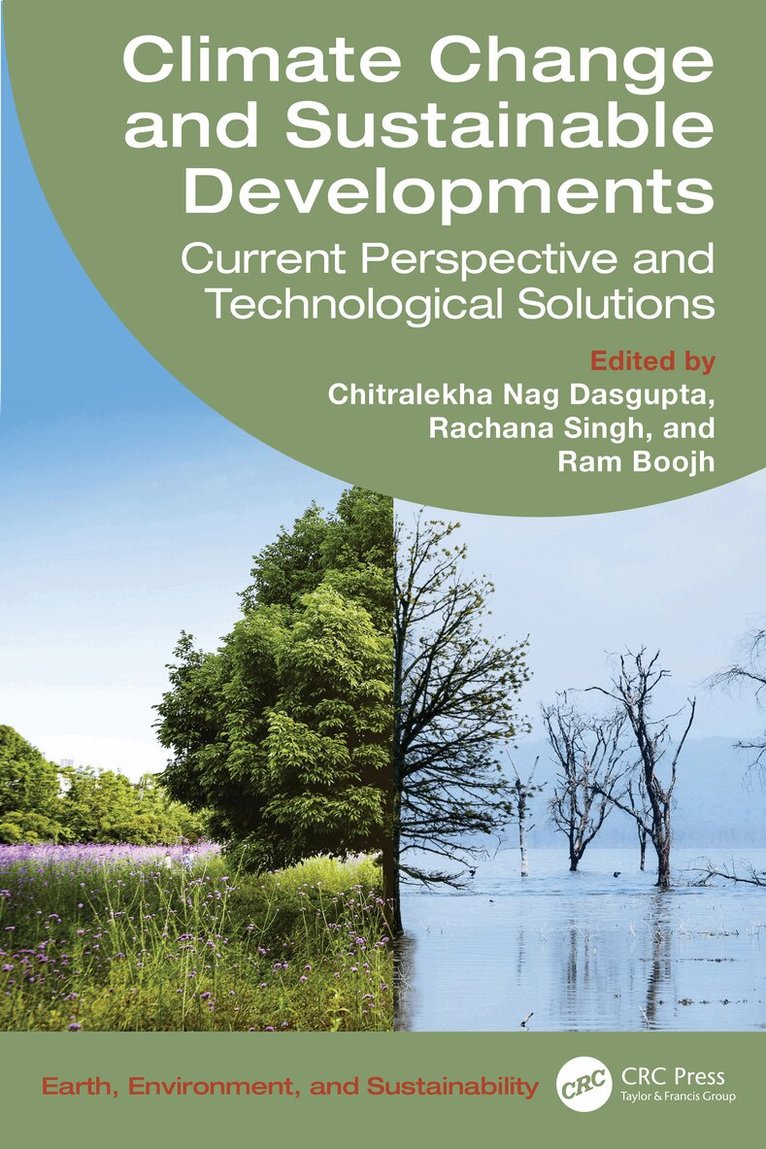
Climate Change and Sustainable Developments
Current Perspective and Technological Solutions
Inbunden, Engelska, 2025
1 753 kr
Skickas inom 10-15 vardagar
This book focusses on climate change and sustainable scientific and technological solutions. It includes topics related to environmental pollution, extreme environments, greenhouse gases and global warming, effects of climate change on water resources and forest resources, depletion of fossil fuels and generation of renewable energy, human health, agriculture and food security as per the UNSDGs. It covers wastewater management, production of renewable energy carriers, and climate change policies developed by international bodies.The following are its features: Covers the current perspective and technological solutions to climate change with sustainable development model.Aims to address causes and impacts of the climate crisis with its long-term implication on the ecosystem.Addresses the key aspects related to current climate crisis and its sustainable interventions.Includes focused case studies based on technological solutions especially 'green solutions'.Describes all aspects of the climate crises including air, water and energy sectors.This book is aimed at graduate students and researchers in environmental engineering, renewable energy, climate change and sustainable development.
2 115 kr
Skickas inom 5-8 vardagar
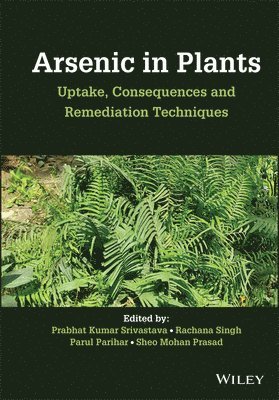
Arsenic in Plants Comprehensive resource detailing the chemistry, toxicity and impact of arsenic in plants, and solutions to the problem Arsenic in Plants: Uptake, Consequences and Remediation Techniques provides comprehensive coverage of the subject, detailing arsenic in our environment, the usage of arsenicals in crop fields, phytotoxicity of arsenic and arsenic’s impact on the morphology, anatomy and quantitative and qualitative traits of different plant groups, including their physiology and biochemistry. The work emphasizes the occurrence of arsenic, its speciation and transportation in plants, and differences in mechanisms of tolerance in hyper-accumulator and non-accumulator plants. Throughout the text, the highly qualified authors delve into every facet of the interaction of arsenic with plants, including the ionomics, genomics, transcriptomics and proteomics in relation to arsenic toxicity, impact of exogenous phytohormones and growth-regulating substances, management of arsenic contamination in the soil-plant continuum, phytoremediation of arsenic toxicity and physical removal of arsenic from water. General discussion has also been included on subjects such as the ways through which this metalloid affects plant and human systems. Topics covered include: Introduction and historical background of arsenic and the mechanism of arsenic transport and metabolism in plantsArsenic-induced responses in plants, including impact on biochemical processes and different plant groups, from cyanobacteria to higher plantsThe role of phytohormones, mineral nutrients, metabolites and signaling molecules in regulating arsenic-induced toxicity in plantsGenomic, proteomic, metabolomic, ionomic and transcriptional regulation during arsenic stressStrategies to reduce the arsenic contamination in soil-plant systems and arsenic removal by phytoremediation techniquesResearchers, academics, and students of plant physiology, biotechnology, and agriculture will find valuable information in Arsenic in Plants to understand this pressing subject in full, along with its implications and how we can adapt our strategies and behaviors to promote reduced contamination through practical applications.
2 406 kr
Skickas inom 7-10 vardagar
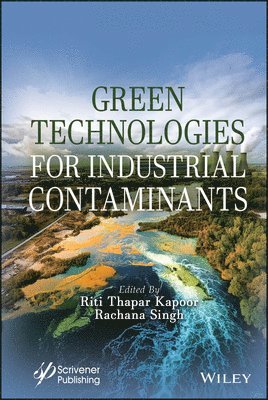
Green Technologies for Industrial Contaminants is essential for understanding innovative, eco-friendly solutions to combat the pressing challenges of pollution and water scarcity faced by our planet. Increasing population, environmental pollution, rampant industrialization, and scarcity of water are all major global threats. Significant amounts of pollutants are released from various industries such as textile, paper, leather, rubber, plastic, cosmetics, food, pharmaceuticals, and petroleum industries. A lack of proper treatment facilities has proliferated the discharge of effluents enriched with toxic pollutants such as dyes, heavy metals, organic compounds, and other hazardous chemicals in the environment. Water is a natural treasure and availability of safe and clean water is essential for human health, ecosystems, and sustainable development. The continuous decline of the groundwater table and deterioration of water quality are matters of serious concern. The presence of color in water poses a serious threat to the environment, affecting light penetration and reducing photosynthesis and dissolved oxygen. Most dyes and heavy metals are toxic in nature, which may cause skin irritation, allergies, respiratory disease, mental disorders, tumors, and cancer. Different physical and chemical methods are available for the treatment of industrial effluents but due to their high cost, low efficiency, and sludge generation, these methods are not feasible at large scale. The synergistic approaches of biochar and microbes have an edge over other techniques, including being eco-friendly, cost-competitive and efficient, achieving complete mineralization, and showing low-waste production. Therefore, the combined application of biochar and microbes for pollutant degradation can be a viable option as it is a low-cost and sustainable effluent treatment system for industries. Green Technologies for Industrial Contaminants provides useful information and applications of microbes (bacteria, algae, fungi) and biochar for the removal of contaminants from industrial effluent and reutilization of waste sludge in the production of biofuel and bioenergy.