• Fri frakt över 249 kr
  • •
  • Snabba leveranser
  • •
  • Billiga böcker
Kundservice

Du är på sajten för privatpersoner.

Företag, bibliotek eller offentlig verksamhet?

Du handlar på classic.bokus.com, där alla dina funktioner finns intakta.
Till classic.bokus.com
Bokus logotyp. Gå till startsidan.
  • Erbjudanden
  • Student
  • Topplistor
  • Barn & ungdom
  • Bokus Play
  • E-böcker
  • Ljudböcker
  • Pocketböcker
  • Spel och pussel

Skapa nya rutiner – hälsoböcker upp till 50% →

Sidfot

Mina sidor

    Hjälp

    • Kundservice
    • Vanliga frågor och svar
    • Frakt och leverans
    • Retur vid ångerrätt
    • Reklamera vara
    • Betalning
    • Köpvillkor
    • Allmänna villkor
    • Information om webbplatsens tillgänglighet

    Om Bokus

    • Om oss
    • Pressrum
    • För studenter
    • För företag
    • För bibliotek och offentlig verksamhet
    • För leverantörer
    • Hållbarhet

    Populärt

    • Aktuella erbjudanden
    • Presentkort
    • Studentlitteratur
    • Nya böcker
    • Topplistor
    • Signerade böcker
    • Engelska böcker

    Inspiration

    • Boktips
    • BookTok
    • Barnbokskaraktärer
    • Populära författare
    Logotyp för Bokus
    Följ oss på Facebook (extern länk)Följ oss på Instagram (extern länk)Följ oss på YouTube (extern länk)Följ oss på TikTok (extern länk)
    bokus @ CookiesAnpassa cookiesIntegritetspolicyKöpvillkor
    Till Citymail hemsida (extern länk)Till Budbee hemsida (extern länk)Till Postnord hemsida (extern länk)Till Schenker hemsida (extern länk)Till Early Bird hemsida (extern länk)Till Walleys hemsida (extern länk)
    1. Naturvetenskap och teknik
    2. Teknik och industri
    3. Energiteknik

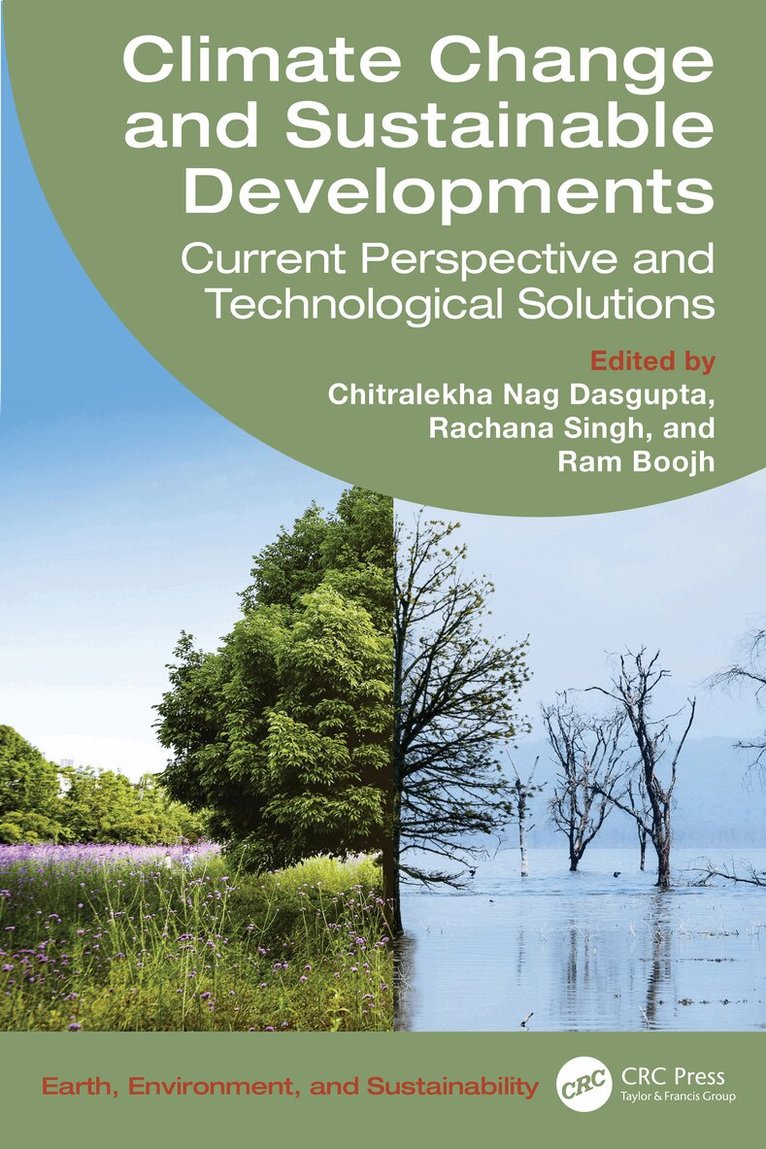
    Climate Change and Sustainable Developments

    Current Perspective and Technological Solutions

    AvChitralekha Nag Dasgupta,Rachana Singh

    Inbunden, Engelska, 2025

    Del i serien Earth, Environment, and Sustainability

    2 052 kr

    Beställningsvara. Skickas inom 10-15 vardagar. Fri frakt över 249 kr.

    Beskrivning

    This book focusses on climate change and sustainable scientific and technological solutions. It includes topics related to environmental pollution, extreme environments, greenhouse gases and global warming, effects of climate change on water resources and forest resources, depletion of fossil fuels and generation of renewable energy, human health, agriculture and food security as per the UNSDGs. It covers wastewater management, production of renewable energy carriers, and climate change policies developed by international bodies.The following are its features: Covers the current perspective and technological solutions to climate change with sustainable development model.Aims to address causes and impacts of the climate crisis with its long-term implication on the ecosystem.Addresses the key aspects related to current climate crisis and its sustainable interventions.Includes focused case studies based on technological solutions especially 'green solutions'.Describes all aspects of the climate crises including air, water and energy sectors.This book is aimed at graduate students and researchers in environmental engineering, renewable energy, climate change and sustainable development.

    Produktinformation

    • Utgivningsdatum:2025-08-24
    • Mått:156 x 234 x 20 mm
    • Vikt:690 g
    • Format:Inbunden
    • Språk:Engelska
    • Serie:Earth, Environment, and Sustainability
    • Antal sidor:264
    • Förlag:Taylor & Francis Ltd
    • ISBN:9781032689807

    Utforska kategorier

    • Energiteknik inom Naturvetenskap och teknik
    • Referensverk och tvärvetenskap inom Samhälle och politik
    • Miljövetenskap och miljöpolitik inom Naturvetenskap och teknik

    Mer om författaren

    Chitralekha Nag Dasgupta is currently working as Assistant Professor at Amity University Uttar Pradesh, Lucknow Campus, India. She is an honorary Research Assistant Professor of Energy Institute of Louisiana, University of Louisiana at Lafayette, USA. Her academic journey is distinguished by a strong foundation in biotechnology and bioenergy research. She has gained more than 20 years of research experience at different internationally acclaimed laboratories, both in India and abroad such as University of Calcutta, IIT Kharagpur, CSIR- National Botanical Research Institute, INSERM Paris, INRA Versailles France.Rachana Singh is an accomplished academic and researcher, currently serving as an Assistant Professor III at the Amity Institute of Biotechnology, Amity University Uttar Pradesh, Lucknow. With a strong academic foundation, she holds her Ph.D. in Plant Virology from CSIR-National Botanical Research Institute. With over 25 years of combined teaching and research experience, Dr Rachana has made significant contributions to the field of Plant Virology, and Microbiology.Ram Boojh is an accomplished environment and sustainability professional with rich experience of over 40 years in diverse fields with the Government, university system, civil society and the United Nations. He is currently the Adviser/CEO at the Mobius Foundation, a Delhi based sustainability organization. He has previously worked with UNEP on a transboundary landscape initiative involving Bhutan, India and Nepal. He headed the Natural Sciences (ecology) division of the UNESCO South Asia office in New Delhi for over a decade and also convened the South & Central Asia MAB Network (SACAM).

    Innehållsförteckning

    • ContentsPreface ..................................................................................................................... xiiiAbout the Editors ..................................................................................................... xvList of Contributors ................................................................................................ xvii Chapter 1 A scientific discussion on global climate change ................................. 1Z. Fuat Toprak1.1 Introduction .............................................................................. 11.2 Numerical comparison of scientific studies onthe subject by years .................................................................. 21.3 Reflection of the problem to the public .................................... 21.4 A brief review of the literature performed onthe subject ................................................................................ 31.5 Problem solution ...................................................................... 51.6 Results and discussion ............................................................. 6References ............................................................................................ 6Chapter 2 Climate crisis: issues, concerns and solutions for asustainable planet ................................................................................10Ram Boojh2.1 Introduction .............................................................................102.2 Climate crisis ..........................................................................112.2.1 Climate crisis to climate/planetaryemergency .................................................................122.2.2 Global climate agreements .......................................142.2.3 Emissions Gap Report ..............................................142.2.4 The net zero ..............................................................152.2.5 Crisis of pollution and waste ....................................162.2.6 Crisis of oceans ........................................................172.2.7 Nature and biodiversity ............................................172.2.8 Ecosystem services and nature-basedsolutions ....................................................................192.2.9 Natural sites, protected areas ...................................212.2.10 Wetlands as carbon sinks ........................................ 232.3 Population sustainability ........................................................ 242.4 Sustainability and climate change education ......................... 252.5 Climate justice: reaching out to the unreachable ................... 262.6 Climate sustainability solutions and technologies ................. 27References .......................................................................................... 31Chapter 3 Contribution of microalgae biorefineries to climatechange mitigation ................................................................................35M. Victoria Busi, Julieta Barchiesi, and M. Ayelén Pagani3.1 Introduction .............................................................................353.2 Carbohydrates from microalgae ............................................ 383.2.1 Variables that modify the carbohydrate content ....... 383.2.2 Genetic engineering strategies .................................413.2.3 Biomass hydrolysis processes ...................................413.3 Biofuels ...................................................................................433.3.1 Bioethanol .................................................................433.3.2 Biodiesel ...................................................................453.3.3 Biohydrogen and biogas............................................473.4 Wastewater: a convenient source of water, carbon,nutrients (and xenobiotics) ..................................................... 483.4.1 Wastewater origins and the need forbioprospection ......................................................... 493.4.2 Consortia for organic pollutant degradation ............ 503.4.3 Heavy metal detoxification and phycomining ..........513.4.4 Biomass harvest ....................................................... 543.5 Conclusion .............................................................................. 54Acknowledgments .............................................................................. 55Conflict of interest .............................................................................. 55References .......................................................................................... 55Chapter 4 Microalgal bioremediation of arsenic-contaminatedenvironments: opportunities and limitations.......................................71Chitralekha Nag Dasgupta and Rachana Singh4.1 Introduction .............................................................................714.2 Physico-chemical methods of arsenic removal .......................734.2.1 Coagulation and flocculation ....................................734.2.2 Ionic absorption ........................................................754.2.3 Nanotechnology and nanoparticles ..........................754.2.4 Chemical methods ....................................................754.3 Arsenic detoxification by microalgae .....................................764.3.1 Mechanism of arsenic detoxification by microalgae ..... 774.4 Factors affecting heavy metal remediation by microalgae ...... 834.4.1 Algal species selection ............................................ 844.4.2 Biosorption potential ............................................... 844.4.3 Environmental conditions........................................ 844.4.4 Concentration of heavy metals ................................ 844.4.5 Biomass concentration ............................................. 854.4.6 Genetic and physiological factors ............................ 854.5 Future prospects ..................................................................... 85References .......................................................................................... 86Chapter 5 Innovations in bioplastic production .................................................. 95Mariana Martín and Diego F. Gomez-Casati5.1 Introduction ............................................................................ 955.2 Navigating plastic pollution: toward sustainable solutions ....... 955.3 Types of bioplastics ................................................................ 965.4 Production methods ............................................................... 975.4.1 Microbial fermentation ............................................ 975.4.2 Chemical synthesis .................................................. 975.4.3 Production of biodegradable blends ........................ 995.5 Advancements and prospects in algae-based bioplastics:a sustainable alternative to conventional plastics................. 1005.6 Environmental considerations—biodegradation ..................1025.7 Challenges and future directions ..........................................103References ........................................................................................ 104Chapter 6 Bioplastics for sustainable food packaging application as aclimate change solution .....................................................................108L. Susmita Devi, Shrawan Kumar, Ram Boojh, and Santosh Kumar6.1 Introduction ...........................................................................1086.2 Categories and types of bioplastics .......................................1106.2.1 Bioplastics from biomass ........................................1106.2.2 Bioplastics from microorganisms ...........................1116.2.3 Bioplastics from fossil resources ............................1126.3 Conversion techniques of bioplastics into food packaging ......1136.3.1 Injection molding ....................................................1136.3.2 Blow molding .........................................................1146.3.3 Extrusion ................................................................1156.3.4 Thermoforming ......................................................1166.4 Applications of bioplastics in food packaging ......................1166.4.1 Fresh produce .........................................................1176.4.2 Muscle foods ...........................................................1176.4.3 Bakery and dairy products .....................................1186.5 End-of-life options of bioplastics ..........................................1196.5.1 Recycling ................................................................1196.5.2 Composting .............................................................1206.5.3 Anaerobic digestion ................................................1206.5.4 Incineration .............................................................121Chapter 7 Advancements in biofuels: a comprehensive analysis ofbio-renewable energy ........................................................................127Vineeta Singh, Ram Niwas, and Shalini Singh Visen7.1 Introduction ...........................................................................1277.2 Generations of biofuel ...........................................................1287.2.1 First-generation biofuels .........................................1287.2.2 Second-generation biofuels.....................................1327.2.3 Third-generation biofuel .........................................1417.2.4 Fourth generation or future of biofuel ....................1477.3 Conclusion .............................................................................148References ........................................................................................ 149Chapter 8 Algal biofuel: commercial viability—dream or reality?...................153Komal Pandey and Chitralekha Nag Dasgupta8.1 Introduction ...........................................................................1538.2 Algae biofuel R&D: expectation and disappointment ..........1548.3 Energy balance issue .............................................................1578.4 Scaling up by companies ......................................................157Solazyme (Now TerraVia), USA .......................................... 157Sapphire Energy, USA ......................................................... 158Algenol, Florida, USA ......................................................... 158ExxonMobil and Synthetic Genomics, USA ....................... 158Cellana, Hawaii .................................................................... 158Algae.Tec, Australia ............................................................. 159AlgaEnergy, Spain ............................................................... 159OriginOil (Now OriginClear), Florida, USA ....................... 159Reliance Industries, India ..................................................... 1598.5 The promise of algal biofuel .................................................1598.6 Current state of algal biofuel technology ..............................1598.7 Conclusion .............................................................................163References ........................................................................................ 164Chapter 9 Environment and health: effect of climate change on globaleconomic growth ...............................................................................169Naina Dwivedi, Durgesh Kumar, Ravi K. Deshwal,and Sujeet Pratap Singh9.1 Introduction ...........................................................................1699.2 Theoretical framework ..........................................................1699.3 The contribution of healthcare systems to climate change ......1719.3.1 Sectors polluting the most within thehealthcare system ...................................................1729.3.2 Hospital care ...........................................................1729.3.3 Pharmaceutical and medical products ....................1729.3.4 Reducing food waste in healthcare facilities ..........1729.3.5 Improving medical-supply chains ..........................1739.3.6 Healthcare system-level sustainability strategies ......1739.3.7 Containing the demand for care .............................1739.3.8 Innovating medical practice ...................................1739.3.9 Fostering systemic approaches ...............................1749.4 Challenges for change ...........................................................1749.5 The science and politics of climate change global issues ........1769.6 Hot spots in climate change and health ................................1769.6.1 Health impacts of climate change and ozonedepletion .................................................................1769.6.2 Responses to the environmental healthimpacts of climate change ......................................1779.7 Conclusion .............................................................................179References ........................................................................................ 179Chapter 10 Sustainable menstrual waste management: interconnectionsbetween technologies, policies, and stakeholders .............................182Nivedita Banerjee, Vijayaraghavan M. Chariar,and Divya Srivastava10.1 Introduction ...........................................................................18210.2 Problems in the existing treatment process of sanitarywastes and its environmental effect ......................................18310.2.1 Current issues related to handlingmenstrual waste ......................................................18310.2.2 Taboos, myths, misconceptions, and factsversus menstrual hygiene management andwomen’s dignity ......................................................18410.3 Sustainable approaches toward menstrualwaste management ................................................................18510.3.1 Technological innovation ........................................18510.3.2 Initiatives taken by government/organizations/institute/NGOs .................................18810.3.3 Role of stakeholders ...............................................18910.4 Conclusion .............................................................................191References ........................................................................................ 193Chapter 11 Evaluating GMOs environment: a comprehensive study ..................195Sayak Sanyal and Somali Sanyal11.1 Introduction ...........................................................................19511.2 Potential dangers associated with the utilization ofgenetically modified organisms in terms of theecological equilibrium of the GMO ......................................19611.3 Engagement in competition with native species ...................19711.4 The inability to conduct subsequent monitoringor follow-up ...........................................................................19811.5 Genetic contamination by cross-breeding ............................19811.6 Effects on the ecosystem .......................................................19811.7 Lateral transfer of engineered genes todifferent microorganisms ......................................................19911.8 GMOs and superweeds .........................................................19911.9 Potential benefit associated with the utilization ofgenetically modified organisms in terms of theecological equilibrium ......................................................... 20011.10 Effects on human health .......................................................20111.11 Conclusion ............................................................................ 202References ........................................................................................ 203Chapter 12 Genetically modified organisms and environment .......................... 206Sunil Kumar Verma, Devendra Singh, Minakshi Pandey,and Prashant Kumar12.1 Introduction .......................................................................... 20612.2 History of GMOs ................................................................. 20812.3 Types of GMOs .................................................................... 20912.3.1 Microorganisms as GMOs..................................... 20912.3.2 Plants as GMOs ......................................................21312.3.3 Animal as GMOs ....................................................21812.3.4 Human as GMOs ....................................................21912.4 GMO production ...................................................................21912.5 GMO food labeling .............................................................. 22012.6 GMO irregularity ................................................................. 22012.7 GM controversies ..................................................................22112.8 GMO toxicity ........................................................................22112.9 GMO benefit-risk assessment .............................................. 22212.9.1 Increased food production ..................................... 22212.9.2 Human antibiotic resistance .................................. 22212.9.3 GMO-resistant weeds ............................................ 22212.9.4 Increased cancer rates ........................................... 22312.10 GMO detection techniques .................................................. 22312.10.1 Real-time (RT) PCR .............................................. 22312.10.2 Differential quantitative PCR ................................ 22312.10.3 Multiplex PCR ....................................................... 22312.10.4 Loop-Mediated Isothermal Amplification(LAMP) ................................................................. 22312.10.5 Pyrosequencing ..................................................... 22412.10.6 Microarray ............................................................. 22412.11 Future of GMO .................................................................... 224References ........................................................................................ 225Chapter 13 Anti-erosion and spill closing techniques for restoration ofRiver Basin: a case study of Sharda River, Uttar Pradesh, India ......... 228Lalit Kumar Singh and Divya Srivastava13.1 Introduction .......................................................................... 22813.2 Study area ............................................................................ 23013.3 Methods ............................................................................... 23013.3.1 Boulder pitching .....................................................23113.3.2 Geo-bags .................................................................23113.3.4 Design .....................................................................23113.4 Result and analysis ................................................................23313.5 Conclusion ............................................................................ 234References ........................................................................................ 234Chapter 14 Analytical methodologies for environmental analysis ......................237Shruti Srivastava and Uma Shanker Maurya14.1 Introduction ...........................................................................23714.2 Some commonly used analytical techniques inenvironmental analysis .........................................................23714.2.1 Chromatography .....................................................23714.2.2 Ion chromatography ................................................23914.2.3 Spectrophotometry ................................................ 24014.2.4 Inductively coupled plasma mass spectrometry ...... 24214.2.5 X-ray fluorescence ................................................. 24214.2.6 Polymerase chain reaction ..................................... 24314.3 Role of remote sensing in environmental monitoring ......... 244References ........................................................................................ 246Chapter 15 Blueprints for a greener future: unraveling architecturecontribution in CO2 mitigation strategies ......................................... 250Swetika Porwal, Tarun Pant, Sharad Chandra,and Paras Porwal15.1 Introduction .......................................................................... 25015.2 Global warming and its impact .............................................25115.3 Significance of architecture in CO2 mitigation .....................25215.3.1 Green roof to mitigate global warming impact ........25215.3.2 Water reuse to reduce energy consumptionand carbon emission ...............................................25315.3.3 Use of sustainable building material inconstruction sector ..................................................25315.3.4 Operation and demolition of waste material ..........25515.3.5 Sustainable architectural design ............................ 25615.3.6 Biophilic design ......................................................25715.4 Conclusion and future perspective ........................................257References ........................................................................................ 257Index .......................................................................................................................261
    Hoppa över listan

    Du kanske också är intresserad av

    Sanjeev Kumar, Susmita Karmakar, Anita Rani, Ritu Singh - Adaptive Agro-Management for Environmental Sustainability, Inbunden

    Adaptive Agro-Management for Environmental Sustainability

    Sanjeev Kumar, Susmita Karmakar, Anita Rani, Ritu Singh

    Inbunden, 2025

    1 758 kr

    Richa Kothari, Neeta Rani, Anita Singh - G20 and Energy Security, Inbunden

    G20 and Energy Security

    Richa Kothari, Neeta Rani, Anita Singh

    Inbunden, 2026

    2 640 kr

    Mery Biswas, Adrija Raha, Paramita Halder - Riverscape Dynamics and Contemporary Hazards, Inbunden

    Riverscape Dynamics and Contemporary Hazards

    Mery Biswas, Adrija Raha, Paramita Halder

    Inbunden, 2026

    1 463 kr

    Ram Boojh, Rachana Singh, Chitralekha Nag Dasgupta - Climate Change and Sustainable Developments, E-bok

    Climate Change and Sustainable Developments

    Ram Boojh, Rachana Singh, Chitralekha Nag Dasgupta

    E-bok
    2025

    989 kr

    Ram Boojh, Rachana Singh, Chitralekha Nag Dasgupta - Climate Change and Sustainable Developments, E-bok

    Climate Change and Sustainable Developments

    Ram Boojh, Rachana Singh, Chitralekha Nag Dasgupta

    E-bok
    2025

    989 kr

    J. Sundaresan, S. Sreekesh, AL Ramanathan, Leonard Sonnenschein, Ram Boojh - Climate Change and Island and Coastal Vulnerability, Inbunden

    Climate Change and Island and Coastal Vulnerability

    J. Sundaresan, S. Sreekesh, AL Ramanathan, Leonard Sonnenschein, Ram Boojh

    Inbunden, 2012

    1 081 kr

    Ram Boojh, Leonard Sonnenschein, AL Ramanathan, S. Sreekesh, J. Sundaresan - Climate Change and Island and Coastal Vulnerability, E-bok

    Climate Change and Island and Coastal Vulnerability

    Ram Boojh, Leonard Sonnenschein, AL Ramanathan, S. Sreekesh, J. Sundaresan

    E-bok
    2013

    1 413 kr

    Debabrata Das, Namita Khanna, Chitralekha Nag Dasgupta - Biohydrogen Production, Inbunden

    Biohydrogen Production

    Debabrata Das, Namita Khanna, Chitralekha Nag Dasgupta

    Inbunden, 2014

    4 419 kr

    Santosh Kumar, Ram Boojh, Joydeep Dutta - Sustainable Food Systems and the Circular Economy, Inbunden

    Sustainable Food Systems and the Circular Economy

    Santosh Kumar, Ram Boojh, Joydeep Dutta

    Inbunden, 2028

    2 451 kr

    Chitralekha Nag Dasgupta, Namita Khanna, Debabrata Das - Biohydrogen Production, E-bok

    Biohydrogen Production

    Chitralekha Nag Dasgupta, Namita Khanna, Debabrata Das

    E-bok
    2014

    1 844 kr