• Fri frakt över 249 kr
  • •
  • Snabba leveranser
  • •
  • Billiga böcker
Kundservice

Du är på sajten för privatpersoner.

Företag, bibliotek eller offentlig verksamhet?

Du handlar på classic.bokus.com, där alla dina funktioner finns intakta.
Till classic.bokus.com
Bokus logotyp. Gå till startsidan.
  • Erbjudanden
  • Nyheter
  • Student
  • Topplistor
  • Barn & ungdom
  • Bokus Play
  • E-böcker
  • Pocketböcker
  • Spel & pussel

10% rabatt på allt med kod: NYSTART10 →

Sidfot

Mina sidor

    Hjälp

    • Kundservice
    • Vanliga frågor och svar
    • Frakt och leverans
    • Retur vid ångerrätt
    • Reklamera vara
    • Betalning
    • Köpvillkor
    • Allmänna villkor
    • Information om webbplatsens tillgänglighet

    Om Bokus

    • Om oss
    • Pressrum
    • För studenter
    • För företag
    • För bibliotek och offentlig verksamhet
    • För leverantörer
    • Hållbarhet

    Populärt

    • Aktuella erbjudanden
    • Presentkort
    • Studentlitteratur
    • Nya böcker
    • Topplistor
    • Signerade böcker
    • Engelska böcker

    Inspiration

    • Boktips
    • BookTok
    • Populära bokserier
    • Barnbokskaraktärer
    • Populära författare
    Logotyp för Bokus
    Följ oss på Facebook (extern länk)Följ oss på Instagram (extern länk)Följ oss på YouTube (extern länk)Följ oss på TikTok (extern länk)
    bokus @ CookiesAnpassa cookiesIntegritetspolicyKöpvillkor
    Till Citymail hemsida (extern länk)Till Budbee hemsida (extern länk)Till Postnord hemsida (extern länk)Till Schenker hemsida (extern länk)Till Early Bird hemsida (extern länk)Till Walleys hemsida (extern länk)
    1. Naturvetenskap och teknik
    2. Teknik och industri
    3. Teknik: allmänt

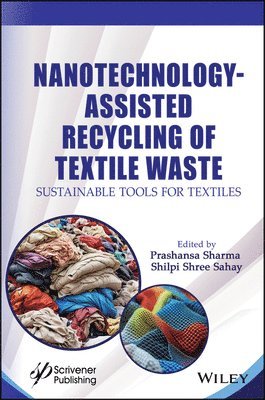
    Nanotechnology-Assisted Recycling of Textile Waste

    Sustainable Tools for Textiles

    AvPrashansa Sharma,Shilpi Shree Sahay

    Inbunden, Engelska, 2025

    2 391 kr

    Beställningsvara. Skickas inom 5-8 vardagar. Fri frakt över 249 kr.

    Beskrivning

    Discover how innovative nanotechnology can turn waste into opportunity, offering insights and strategies to create a greener, more eco-friendly textile industry. This book investigates nanotechnology-assisted sustainable solutions and their potential to transform waste into opportunity by fostering innovative designs and in-depth knowledge of sustainable waste management and nanotechnology applications. Divided into four comprehensive parts, comprising 16 chapters, Nanotechnology Assisted Recycling of Textile Waste, provides insights into the potential of nanotechnology in revolutionizing textile recycling and shaping the future of sustainable textiles. Part I sets the stage with an insightful overview of textile waste and management, exploring the conceptual dimensions and challenges in handling and organizing textile waste. It also describes the innovative realm of textile recycling. In Part II, the spotlight shines on comprehensive, sustainable, and productive recycling of waste using nanotechnology. Here, readers are invited to explore the transformative contributions of nanotechnology in shaping sustainable textile design and characterizing functional properties of novel recycled nano-textiles. Future perspectives of nanotechnology in textile applications, particularly concerning waste recycling, are also examined. Part III explores deeper into the advanced application of recycled and nano-assisted novel textiles generated through waste. From sports textiles to technical textiles, this section explores the diverse applications of recycled waste, bolstered by nano-engineered innovations. Finally, Part IV addresses the critical aspects of quality control and regulatory compliance in the realm of advanced nano-textile materials through an exploration of global legislation, schemes, and standards. Readers will find in this book: research findings and innovative approaches to cope with the challenges and issues of textile waste;systematic and scientific knowledge on textile waste recycling techniques using nanotechnology;knowledge of complex scientific research findings in a simple and understandable form;comprehensive coverage of a broad range of topics, including sustainable textile waste management. AudienceThe book will be read by a range of researchers, engineers and students in technical textiles, textile technology and engineering, textile chemistry, fiber science, textile processing technologies and manufacturing, fashion and apparel technology, materials science, environmental science. This book will help designers and clothing manufacturers, and all those in textile and environmental domains, who are engaged in waste management.

    Produktinformation

    • Utgivningsdatum:2025-03-21
    • Vikt:907 g
    • Format:Inbunden
    • Språk:Engelska
    • Antal sidor:528
    • Förlag:John Wiley & Sons Inc
    • ISBN:9781394174492

    Utforska kategorier

    • Teknik: allmänt inom Naturvetenskap och teknik

    Mer om författaren

    Prashansa Sharma, PhD, is an assistant professor in the Department of Home Science, MMV, Banaras Hindu University, Varanasi, Uttar Pradesh, India. With over ten years of experience in both teaching and research, her areas of expertise encompass nano-textiles, green synthesis, and the application of nanotechnology in textiles. She has contributed significantly to her field with numerous research papers, books, and book chapters. Shilpi Shree Sahay works in the Department of Home Science, Banaras Hindu University, Varanasi, Uttar Pradesh, India. She specializes in clothing and textiles, focusing on nano-textile science and eco-friendly textile finishing. With a master’s degree from BHU, her research interests include developing nanoparticles and enhancing textile functionality.

    Innehållsförteckning

    • Preface xxiPart I: Overview of Textile Waste and Management 11 Overview of Textile Waste 3Amisha Singh, Shilpi Shree Sahay and Prashansa Sharma1.1 Introduction 41.2 Textile Waste 61.3 Classification of Textile Waste 71.4 Pre-Consumer Textile Waste 71.5 Post-Consumer Textile Waste 141.6 Soft and Hard Waste 161.7 Major Reasons for Textile Waste Production 171.8 Textile Waste--Associated Environmental Hazards 201.9 Future Prospect 241.10 Conclusion 252 Challenges in Handling and Systematically Organizing Textile Waste 29A.K. Choudhary and Prashant Kumar2.1 Introduction 302.2 Types of Textile Waste 322.3 Textile Waste Management 342.4 Major Challenges in Managing Textile Waste 352.5 Challenges in Textile Recycling (Solid Waste) 382.6 Challenges in Different Methods for Recovering Waste from the Textile Industry 453 Overview of Textile Recycling (Solid Waste) 59Debarati Maity, Akash Borkar, Suvojit Ghosh and Anagha S. Sabnis3.1 Introduction 613.2 Overview of Textile Recycling 633.3 Circular Economy 643.4 Waste Management 663.5 Applications of Recycled Fabrics 733.6 Challenges in Fabric Recycling 843.7 Technologies and Innovation Involved in Textile Recycling 843.8 Conclusions 874 Nanoparticle-Facilitated Treatment of Wastewater Containing Textile Dye 97Anirban Roy and Sampa Chakrabarti4.1 Introduction 994.2 Aim, Objectives, and Scope 1034.3 Nanoparticle-Based Adsorption Processes for Treatment of Textile Wastewater 1034.4 Nano-Photocatalysts and Their Application for Treatment of Textile Wastewater 1064.5 Membrane Processes Involving Nanotechnology for Treatment of Textile Wastewater 1124.6 Bioremediation Involving Nanomaterials 1144.7 Ecotoxicological Impact of Using Nanoparticles for Textile Wastewater Treatment 1174.8 Real-Life Textile Wastewater Treatment Using Nanoparticles 1184.9 Conclusion 1195 Innovative Approaches to Recover Waste in the Textile Sector 129Dipak Kumar Sahu and Goutam Rath5.1 Introduction 1305.2 Innovative Approaches for Solid Waste Management 1345.3 Case Studies of Successful Innovations 1435.4 Innovative Approaches for Liquid Textile Waste Management 1445.5 Nanofibers for Dye Separation 1525.6 Waste Cotton Recycling 1535.7 Mixed Solid Waste Recycling 1545.8 Challenges and Prospects 1555.9 Conclusion 157Part II: Comprehensive, Sustainable and Productive Recycling of Waste Using Nanotechnology 1716 Role of Nanotechnology in Recycled Textiles 173Muhammad Jahanzaib, Shambhavi Sharma and Duckshin Park6.1 Introduction 1746.2 Textile Waste Reuse or Recycle 1766.3 Challenges in Textile Recycling 1806.4 Nanotechnology in Textiles 1826.5 The Circular Economy and Nanotechnology: The Case of Recycled Textile Waste 1886.6 Environmental Hazards Associated with Nanomaterials in the Textile Industry 1926.7 Nanomaterials From Textile Industry and Health Effects 1956.8 Industrial Applications of Recycled Textiles 1976.9 Conclusion 1987 Contribution of Nanotechnology in Shaping Sustainable Textile Design and Future Fashion Trends 207Shilpi Shree Sahay, Prashansa Sharma and Amisha Singh7.1 Introduction 2097.2 Sustainable Design Principles 2117.3 Promoting Conscious Fashion Choices 2137.4 Sustainable Practices in Textile Production 2147.5 Role of Technological Advancements in Achieving Sustainability 2167.6 Technological Innovations in Material Production 2197.7 Nanotechnology in Fabric Production 2237.8 Innovations in Nanotechnology Transforming Textile Sector 2257.9 Nanotextile Market Trend 2287.10 Emerging Technologies and Future Trend 2297.11 Conclusion 2308 Understanding and Characterization of Functional Properties of Novel Recycled Nano-Textile 235Chet Ram Meena8.1 Introduction 2368.2 Current and Future Trends in Novel Nano-Textiles 2378.3 Nanotechnology (NT) 2398.4 Nanomaterials (NMs) 2408.5 Synthesis of Nanomaterials (NMs) 2448.6 Characterization of Nanomaterials 2468.7 Applications of Nanotechnology 2538.8 Novel Nano-Textile 2588.9 Environmental and Health Concerns Connected with Nanomaterials 2598.10 Overpowering the Threats Connected with Nanomaterials 2618.11 Conclusion 2629 Future Perspective of Nanotechnology in Relation to Textile Applications Using Textile Waste 265Ruchi Kholiya, Shefali Massey and Mansi Hans9.1 Introduction 2669.2 Nanotechnology and Its Emergence 2679.3 What is Textile Waste? 2729.4 Potential of Nanotechnology in the Utilization of Textile Waste 2759.5 Environmental, Health, and Safety Concerns of Nanotechnology 2789.6 Conclusion 279Part III: Advanced Application of Recycled and Nano-Assisted Novel Textile Generated Through Waste 28510 Utilizing Textile Waste in the Production of Nanotechnology-Based Sports Textiles 287Janmay Singh Hada10.1 Introduction 28910.2 Integration of Textile Waste and Nanotechnology 29110.3 Sport Textiles 29210.4 Nanotechnology and Nanomaterials in Sport Textiles 29310.5 Textile Waste 29910.6 Health and Safety Measures 30110.7 Present Scenario 30210.8 Composites 30410.9 Nanotechnology is Applied to Enable Self-Cleaning Properties in Textile Waste 30510.10 Innovations 30510.11 Conclusion 30611 Functional Textiles from Agro-Industrial Waste 311Shubham Joshi, Neelu Kambo and Saurabh Dubey11.1 Introduction 31211.2 Socio-Economic Perspective 31511.3 Agro-Industrial Waste 31611.4 Extraction and Formulation of Natural Compounds 32311.5 Functional Properties of Agro-Industrial Waste-Based Formulations 32911.6 Future and Challenges 34411.7 Conclusion 34512 Potential Application of Recycled Waste in Technical Textiles 351Blesson Tom Mathew, Advitiya Kumar and Archana Samanta12.1 Introduction 35212.2 Overview of Technical Textiles 35312.3 Textile Waste: Sources and Challenges 35412.4 Recycling Technologies 35612.5 Benefits of Using Recycled Waste in Technical Textiles 35712.6 Application of Recycled Waste in Technical Textiles 35812.7 Environmental and Economic Impact 37012.8 Conclusion 37113 Nano-Engineered Protective Textiles Using Recycled Wastes 379Rupayan Roy and Pravin P. Chavan13.1 Introduction 38013.2 Recycled Waste Materials for Protective Textiles 38513.3 Nano-Engineering in Protective Textiles 38713.4 Characterization of Nano-Engineered Protective Textiles Using Recycled Wastes 38913.5 Applications of Nano-Engineered Protective Textiles Using Recycled Wastes 39113.6 Future Prospects and Challenges 39314 Advanced Application of Recycled Textile Generated from Waste in Military Application Using Nanotechnology 403Rohit Rai and Prodyut Dhar14.1 Introduction 40414.2 Types and Sources of Waste 40814.3 Fiber Waste Recycling Procedures 40814.4 Approaches in Fiber Recycling 41014.5 Textile Modification with Nanotechnology for Military Applications 41414.6 Defense Applications of Nanotechnology-Based Textiles 42014.7 Utilization of Sustainable Nanotextiles for Military Applications 42614.8 Conclusions 429Part IV: Quality Control and Regulatory Aspects of Advanced Nano Textile Material with Respect to Industries 43515 Global Legislation, Schemes and Standards to Control Environmental Concern for Textile-Generated Waste 437Shambhavi Sharma, Muhammad Jahanzaib, Jooyeon Lee and Duckshin Park15.1 Introduction 43915.2 Textile Industry and Environmental Impact 43915.3 Global Legislation for Textile Waste Management 44115.4 International Schemes and Initiatives 44315.5 Standards and Certifications 44515.6 Challenges and Limitations 44715.7 Benefits and Impacts of Legislation and Standards 44915.8 Case Studies 45115.9 Future Prospects and Recommendations 45315.10 Conclusion 45516 Prevailing Eco-Parameters and Protocols for Nanotechnology in the Textile Industry 461Sanduru Sai Keerthana, Vivek Dave and Prashansa Sharma16.1 Introduction 46216.2 Environmental Implications of Nanotechnology 46316.3 Industrial Use of Nanotechnology in Textiles 46716.4 A Brief Note on Textile Recycling 46916.5 An Overview of the Industrial Process in Textile Industry 47016.6 Textile Waste and Its Environmental Problems 47116.7 Pollution Output 47416.8 Restricted Substances 47716.9 Protocols for Industrial Use of Nanotechnology 48116.10 Nanotechnology-Based Textiles and Nano-Safety Concerns 48216.11 Regulation Methods for Nanomaterials 48316.12 Principles for the Safe Handling of Nanomaterials 48516.13 Risk Management and Assurance in Quality for Nano-Coated Textile Products 48616.14 Good Practices and Test Guidelines 48716.15 Applications for Nanotextiles 48816.16 Conclusion 490References 491Index 497