• Fri frakt över 249 kr
  • •
  • Snabba leveranser
  • •
  • Billiga böcker
Kundservice

Du är på sajten för privatpersoner.

Företag, bibliotek eller offentlig verksamhet?

Du handlar på classic.bokus.com, där alla dina funktioner finns intakta.
Till classic.bokus.com
Bokus logotyp. Gå till startsidan.
  • Erbjudanden
  • Nyheter
  • Student
  • Topplistor
  • Barn & ungdom
  • Bokus Play
  • E-böcker
  • Pocketböcker
  • Spel & pussel

10% rabatt på allt med kod NYSTART10 →

Sidfot

Mina sidor

    Hjälp

    • Kundservice
    • Vanliga frågor och svar
    • Frakt och leverans
    • Retur vid ångerrätt
    • Reklamera vara
    • Betalning
    • Köpvillkor
    • Allmänna villkor
    • Information om webbplatsens tillgänglighet

    Om Bokus

    • Om oss
    • Pressrum
    • För studenter
    • För företag
    • För bibliotek och offentlig verksamhet
    • För leverantörer
    • Hållbarhet

    Populärt

    • Aktuella erbjudanden
    • Presentkort
    • Studentlitteratur
    • Nya böcker
    • Topplistor
    • Signerade böcker
    • Engelska böcker

    Inspiration

    • Boktips
    • BookTok
    • Populära bokserier
    • Barnbokskaraktärer
    • Populära författare
    Logotyp för Bokus
    Följ oss på Facebook (extern länk)Följ oss på Instagram (extern länk)Följ oss på YouTube (extern länk)Följ oss på TikTok (extern länk)
    bokus @ CookiesAnpassa cookiesIntegritetspolicyKöpvillkor
    Till Citymail hemsida (extern länk)Till Budbee hemsida (extern länk)Till Postnord hemsida (extern länk)Till Schenker hemsida (extern länk)Till Early Bird hemsida (extern länk)Till Walleys hemsida (extern länk)
    1. Samhälle och politik
    2. Politik och statsskick
    3. Politisk aktivism

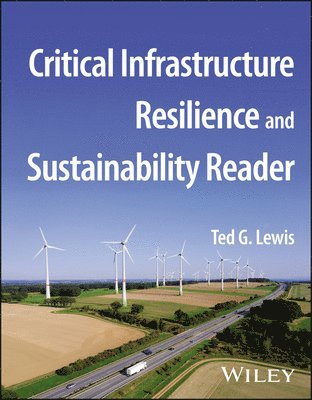
    Critical Infrastructure Resilience and Sustainability Reader

    AvTed G. Lewis

    Häftad, Engelska, 2023

    783 kr

    Beställningsvara. Skickas inom 5-8 vardagar. Fri frakt över 249 kr.

    Fler format och utgåvor

    E-bok

    984 kr

    E-bok

    945 kr

    Beskrivning

    Critical Infrastructure Resilience and Sustainability Reader Identify and protect critical infrastructure from a wide variety of threats In Critical Infrastructure Resilience and Sustainability Reader, Ted G. Lewis delivers a clear and compelling discussion of what infrastructure requires protection, how to protect it, and the consequences of failure. Through the book, you’ll examine the intersection of cybersecurity, climate change, and sustainability as you reconsider and reexamine the resilience of your infrastructure systems. The author walks you through how to conduct accurate risk assessments, make sound investment decisions, and justify your actions to senior executives. You’ll learn how to protect water supplies, energy pipelines, telecommunication stations, power grids, and a wide variety of computer networks, without getting into the weeds of highly technical mathematical models. Critical Infrastructure Resilience and Sustainability Reader also includes: A thorough introduction to the daunting challenges facing infrastructure and the professionals tasked with protecting itComprehensive explorations of the proliferation of cyber threats, terrorism in the global West, climate change, and financial market volatilityPractical discussions of a variety of infrastructure sectors, including how they work, how they’re regulated, and the threats they faceClear graphics, narrative guides, and a conversational style that makes the material easily accessible to non-technical readersPerfect for infrastructure security professionals and security engineering firms, Critical Infrastructure Resilience and Sustainability Reader will also benefit corporate security managers and directors, government actors and regulators, and policing agencies, emergency services, and first responders.

    Produktinformation

    • Utgivningsdatum:2023-09-29
    • Mått:213 x 272 x 20 mm
    • Vikt:635 g
    • Format:Häftad
    • Språk:Engelska
    • Antal sidor:288
    • Förlag:John Wiley & Sons Inc
    • ISBN:9781394179527

    Utforska kategorier

    • Politisk aktivism inom Samhälle och politik

    Mer om författaren

    Ted G. Lewis is an author, speaker, and computer scientist with expertise in applied complexity theory, homeland security, infrastructure systems, and early-stage startup strategies. He is a member of the Oregon State University Engineering Hall of Fame and has held high-ranking positions in government, industry, and academia over his lengthy career.

    Innehållsförteckning

    • Preface xiii1 The Challenge 11.1 The Evolution of Critical Infrastructure Protection 21.1.1 In the Beginning 21.1.2 Natural Disaster Recovery 41.1.3 What Is Critical? 51.1.4 Public–Private Cooperation 71.1.5 Federalism: Whole of Government 81.2 Defining CIKR Risk and Resilience 111.2.1 Risk Strategy 121.2.2 Resilience Strategy 131.2.3 Sustainability Strategy 141.2.4 The Four Horsemen 151.3 Weather/Climate Change/Global Warming 161.3.1 The Carrington Event 171.3.2 Black Bodies 181.3.3 The Lightening Rod 191.4 Consequences 201.4.1 Accidents/Aging/Neglect 211.4.2 The Report Card 211.4.2.1 The Domino Effect 221.4.3 Terrorism/Extremists 221.4.4 Cyber Exploits/Criminals 251.4.4.1 Black Hats 251.4.4.2 Cybercrime Pays 261.4.5 The Soft War 271.4.6 Cyberattacks and CIKR 271.5 Discussion 29References 292 What is a Catastrophe? 302.1 Theories of Collapse 312.1.1 Normal Accident Theory (NAT) 322.1.2 Punctuated Equilibrium Theory (PET) 332.1.3 How Uncertain are Avalanches? 332.1.4 Self-Organized Criticality 352.2 Complex Systems Theory 362.2.1 Tragedy of the Commons (TOC) 362.2.2 Paradox of Enrichment (POE) 382.2.3 Competitive Exclusion Principle (CEP) 412.2.4 Paradox of Redundancy (POR) 432.3 General Systems Theory 432.3.1 Emergence 432.3.2 Self-Organization 442.3.3 Preferential Attachment 442.4 Vulnerable Industrial Commons 462.4.1 TOC Failure 462.4.2 POE Failure 472.4.3 CEP Failure 472.4.4 POR Failure 472.5 Resilience Versus Sustainability 482.5.1 Black Swans 482.5.2 Catastrophe’s Long Tail 492.6 Discussion 49References 493 Energy Transition 513.1 A Sector Under Transition 513.2 Energy Fundamentals 523.2.1 Understanding Units and Measures 533.2.2 Consumption 543.3 Regulatory Structure of the Energy Sector 553.3.1 Evolution of Energy Sector Regulation 553.3.2 Energy Pipeline Regulations 553.3.3 The Energy ISAC 563.4 Legacy Fuels 563.4.1 Coal 573.4.2 The Rise of Oil and the Automobile 573.4.3 Natural Gas Middlemen 583.4.4 Nuclear Fuel 583.5 Legacy Energy Infrastructure 613.5.1 Oil Refineries 613.5.2 Oil Transmission and Distribution 623.5.3 Oil Storage 633.5.4 The Natural Gas Supply Chain 643.5.5 The Critical Gulf of Mexico Cluster 653.5.6 Critical Refineries 653.5.7 Critical Transmission Pipelines 663.6 Renewables 663.7 Solar – Photovoltaic (PV) 673.7.1 Wind 673.7.2 The Hydrogen Circle 683.7.3 Others 693.8 Batteries and Reservoirs 703.8.1 Modern Batteries 703.8.2 Grid Scale Storage – LDES 713.9 Discussion 71References 724 The Vulnerable Powergrid 734.1 What Is the Grid? 744.2 The North American Grid 764.2.1 Grid Structure 774.2.2 ACE and Kirchhoff’s Law 784.2.3 Anatomy of a Blackout 784.3 Threat Analysis 804.3.1 Attack Scenario 1: Disruption of Fuel Supply to Power Plants 804.3.2 Attack Scenario 2: Destruction of Major Transformers 814.3.3 Attack Scenario 3: Disruption of SCADA Communications 814.3.4 Attack Scenario 4: Creation of a Cascading Transmission Failure 824.4 From Death Rays to Vertical Integration 834.4.1 Early Regulation 834.4.2 Deregulation and EPACT 1992 854.4.3 Electricity Sector ES-ISAC 854.5 Out of Orders 888 and 889 Comes Chaos 864.5.1 Economics Versus Physics 884.5.2 What Increases SOC? 894.5.3 NIMBY Versus Environmentalism 904.5.4 A Change of Heart 914.6 The Architecture of Twenty-First Century Grids 914.6.1 The Future Is Storage 924.6.2 SOC Is Reduced 944.6.3 Economics of Electrification 954.7 Discussion 96References 965 Water and Water Treatment 975.1 A Vanishing Resource 975.1.1 From Germs to Terrorists 985.1.2 Safe Drinking Water Act 995.1.3 The WaterISAC 1005.2 Foundations: SDWA of 1974 1015.3 The Bio-Terrorism Act of 2002 1025.3.1 Is Water for Drinking? 1035.3.2 Climate Change and Rot – The New Threats 1035.4 The Architecture of Water Systems 1045.4.1 The Law of the River 1055.4.2 Resiliency of Water Pipeline Networks 1055.5 Hetch Hetchy Water 1065.5.1 Risk Analysis 1085.5.2 Resilience Analysis 1085.6 Threat Analysis 1085.6.1 The Rational Actor 1095.6.2 Hetch Hetchy Threat Analysis 1095.6.3 Chem-Bio 1095.6.4 Earthquakes 1105.7 Water Resilience 1105.7.1 Save the Pineapple Express 1105.7.2 Gray Water 1125.7.3 Desalination 1125.7.4 Exemplar Israel 1135.8 Discussion 113References 1136 Transportation Renewed 1146.1 Transitioning a Vast and Complex Sector 1146.1.1 Government Leads the Way 1156.1.2 Safety and Security 1156.2 Roads at TOC Risk 1166.2.1 The Road to Prosperity 1196.2.2 Economic Impact 1206.2.3 The National Highway System (NHS) 1206.2.4 The Interstate Highway Network is Resilient 1216.2.5 The NHS is Safer 1216.2.6 The Future is Electric 1226.3 Rail and Railroads 1226.3.1 Birth of Regulation 1236.3.2 Freight Trains 1256.3.3 Passenger Rail 1266.3.4 Terrorist Target Passenger Trains 1276.3.5 Economics of Rail 1276.4 Air Transportation 1296.4.1 Resilience of the Hub-and-Spoke Network 1306.4.2 Security of Commercial Air Travel 1326.4.3 How Safe and Secure is Flying in the United States? 1346.4.4 Drones 1346.4.5 eVTOLs 1356.4.6 Commercial Airline Impact on Global Warming 1356.5 Discussion 135References 1367 Supply Chains 1377.1 The World is Flat, but Tilted 1397.1.1 Supply Side Supply 1407.1.2 The Father of Containerization 1407.1.3 The Perils of Efficient Supply Chains 1417.2 The World Trade Web 1447.2.1 WTW and Economic Contagions 1457.2.2 Resilience Failures 1477.3 Twic 1487.3.1 Msram 1487.3.2 Protect 1507.4 Sustainable and Resilient Supply Chains 1517.4.1 Greening of Ships 1517.5 Are Supply Chains Secure? 1517.5.1 Encapsulation Works 1527.5.2 Who Owns the Trusted Path? 1527.6 Discussion 152References 1538 Communications and the Internet 1548.1 Early Years 1568.1.1 The Natural Monopoly 1578.1.2 The Communications Act of 1996 1588.2 Regulatory Structure 1588.2.1 The Most Important Person in Modern History 1598.2.2 The First (Modern) Critical Infrastructure 1598.3 The Architecture of the Communications Sector 1608.3.1 Physical Infrastructure 1618.3.2 Wireless Networks 1638.3.3 Extra-Terrestrial Communication 1638.3.4 Land Earth Stations 1658.3.5 Cellular Networks 1658.3.6 Cell Phone Generations 1668.3.7 Wi-Fi Technology 1668.4 Risk and Resilience Analysis 1678.4.1 Importance of Carrier Hotels 1688.4.2 The Submarine Cable Network 1698.4.3 HPM Threats 1698.4.4 Cellular Network Threats 1708.4.5 Physical Threats 1718.5 The Monoculture Internet 1718.5.1 The Internet Self-Organized 1728.5.2 The Original Sins 1738.5.2.1 The DNS 1748.5.2.2 More Original Sin 1758.5.3 The Hierarchical Internet 1768.5.4 Too Many Open Ports 1778.6 Internet Governance 1778.6.1 IAB and IETF 1788.6.2 ICANN Wars 1798.6.3 Isoc 1808.6.4 W3c 1808.6.5 Internationalization 1818.6.6 Regulation and Balkanization 1828.6.6.1 Rise of Regulation 1828.6.6.2 Criticality of the Internet 1838.7 Green Communications 1838.7.1 Solar Computing 1838.7.2 Quantum Communications 1848.7.3 Adiabatic Logic 1848.8 Discussion 184References 1859 Cyber Threats 1869.1 Threat Surface 1889.1.1 Script-kiddies 1919.1.2 Black Hats 1919.1.3 Weaponized Exploits 1929.1.4 Ransomware and the NSA 1939.2 Basic Vulnerabilities 1949.2.1 The First Exploit 1959.2.2 TCP/IP Flaws 1969.2.3 Open Ports 1989.2.4 Buffer Overflow Exploits 1999.2.5 DDoS Attacks 2009.2.6 Email Exploits 2019.2.7 Flawed Application and System Software 2019.2.8 Trojans, Worms, Viruses, and Keyloggers 2029.2.9 Hacking the DNS 2039.2.10 Hardware Flaws 2039.2.11 Botnets 2049.3 Cyber Risk Analysis 2059.3.1 Kill Chain Approach 2069.3.2 Machine-learning Approach 2069.4 Analysis 2079.5 Discussion 208References 20810 Social Hacking 20910.1 Web 2.0 and the Social Network 21110.2 Social Networks Amplify Memes 21310.3 Topology Matters 21510.4 Computational Propaganda 21710.5 Beware the Echo Chamber 21810.6 Big Data Analytics 21910.6.1 Algorithmic Bias 22010.6.2 The Depths of Deep Learning 22110.6.3 Data Brokers 22110.7 Gdpr 22210.8 Social Network Resilience 22310.9 The Sustainable Web 22410.9.1 The Century of Regulation 22510.9.2 The NetzDG 22510.10 Discussion 226References 22711 Banking and Finance 22811.1 The Financial System 23111.1.1 Federal Reserve Versus US Treasury 23211.1.2 Operating the System 23311.1.3 Balancing the Balance Sheet 23311.1.4 Paradox of Enrichment 23411.2 Financial Networks 23511.2.1 FedWire 23511.2.2 Target 23611.2.3 Swift 23611.2.4 Credit Card Networks 23711.2.5 3-D Secure Payment 23711.3 Virtual Currency 23811.3.1 Intermediary PayPal 23811.3.2 ApplePay 23911.3.3 Cryptocurrency 23911.3.3.1 Nakamoto’s Revenge 24011.3.3.2 Double Spend Problem 24011.3.3.3 Crypto Challenges 24111.4 Hacking a Financial Network 24211.5 Hot Money 24411.5.1 Liquidity Traps 24411.5.2 The Dutch Disease 24511.6 The End of Stimulus? 24611.7 Fractal Markets 24611.7.1 Efficient Market Hypothesis (EMH) 24711.7.2 Fractal Market Hypothesis (FMH) 24811.7.3 Predicting Collapse 24811.8 The Threat is Existential 25011.9 Discussion 250References 25012 Strategies for a Changing World 25112.1 Whole of Government 25212.2 Risk and Resilience 25312.3 Complex and Emergent CIKR 25512.3.1 Communications and IT 25512.3.2 Internet and Cybersecurity 25612.4 Surveillance Capitalism 25612.5 Industrial Control Systems 25712.6 Global Pandemics 25712.7 Transportation and Supply Chains 25812.8 Banking and Finance 25812.9 An Integrated Infrastructure Strategy 25912.9.1 What to Do? 25912.9.2 The Plan 26012.9.3 Issues 26012.10 Discussion 261Index 262