• Fri frakt över 249 kr
  • •
  • Snabba leveranser
  • •
  • Billiga böcker
Kundservice

Du är på sajten för privatpersoner.

Företag, bibliotek eller offentlig verksamhet?

Du handlar på classic.bokus.com, där alla dina funktioner finns intakta.
Till classic.bokus.com
Bokus logotyp. Gå till startsidan.
  • Erbjudanden
  • Nyheter
  • Student
  • Topplistor
  • Barn & ungdom
  • Bokus Play
  • E-böcker
  • Pocketböcker
  • Spel & pussel

10% rabatt på allt med kod NYSTART10 →

Sidfot

Mina sidor

    Hjälp

    • Kundservice
    • Vanliga frågor och svar
    • Frakt och leverans
    • Retur vid ångerrätt
    • Reklamera vara
    • Betalning
    • Köpvillkor
    • Allmänna villkor
    • Information om webbplatsens tillgänglighet

    Om Bokus

    • Om oss
    • Pressrum
    • För studenter
    • För företag
    • För bibliotek och offentlig verksamhet
    • För leverantörer
    • Hållbarhet

    Populärt

    • Aktuella erbjudanden
    • Presentkort
    • Studentlitteratur
    • Nya böcker
    • Topplistor
    • Signerade böcker
    • Engelska böcker

    Inspiration

    • Boktips
    • BookTok
    • Populära bokserier
    • Barnbokskaraktärer
    • Populära författare
    Logotyp för Bokus
    Följ oss på Facebook (extern länk)Följ oss på Instagram (extern länk)Följ oss på YouTube (extern länk)Följ oss på TikTok (extern länk)
    bokus @ CookiesAnpassa cookiesIntegritetspolicyKöpvillkor
    Till Citymail hemsida (extern länk)Till Budbee hemsida (extern länk)Till Postnord hemsida (extern länk)Till Schenker hemsida (extern länk)Till Early Bird hemsida (extern länk)Till Walleys hemsida (extern länk)
    1. Medicin
    2. Kirurgi

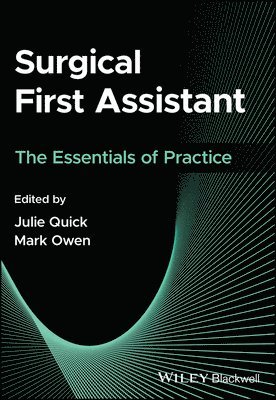
    Surgical First Assistant

    The Essentials of Practice

    AvJulie Quick,Julie Quick

    Häftad, Engelska, 2025

    432 kr

    Beställningsvara. Skickas inom 5-8 vardagar. Fri frakt över 249 kr.

    Beskrivning

    A critical examination of an increasingly vital role in surgical practice Surgical first assistants (SFAs) are registered nurses or operating department practitioners (ODPs) who play a crucial role in the operating theatre during surgical procedures. Under the direct supervision of the operating surgeon, an SFA provides continuous skilled assistance, performing a range of established responsibilities to assist the surgeon predominantly in the intraoperative phase of the patient’s journey, but also in the pre- and post-operative phases. The role affords theatre nurses and ODPs the opportunity to expand their clinical responsibilities and provide assistance for patients undergoing surgery by undertaking post-qualifying education. More recently, an understanding of the knowledge and skills of the SFA role has been embedded into the undergraduate curricula for ODPs. Surgical First Assistant: The Essentials of Practice provides a comprehensive and critical examination of the knowledge, skills and behaviours that are required by SFAs to ensure patient safety and quality care. Beginning with a historical overview of the SFA role, it proceeds to outline the legal, ethical and professional aspects of the role which allows the practitioner to critically reflect on SFA practice. It also offers an in-depth analysis of the SFA’s responsibilities as defined by the Perioperative Care Collaborative through each phase of the patient’s perioperative journey from pre-operative assessment to post-operative pain management. Surgical First Assistant readers will also find: A text aligned with UK national standards and best practiceDetailed discussion of topics including pre-operative preparation with the operating theatre, assisting with haemostasis, and many moreAn approach which explores both the technical and non-technical skills required by the SFASurgical First Assistant is ideal for registered nurses, ODPs, student and apprentice operating department practitioners.

    Produktinformation

    • Utgivningsdatum:2025-01-30
    • Mått:171 x 243 x 16 mm
    • Vikt:312 g
    • Format:Häftad
    • Språk:Engelska
    • Antal sidor:176
    • Förlag:John Wiley & Sons Inc
    • ISBN:9781394210824

    Utforska kategorier

    • Kirurgi inom Medicin
    • Omvårdnad inom Medicin

    Mer om författaren

    Julie Quick, MSc, NMP, SCP, RN, is Senior Lecturer in Operating Department Practice at Birmingham City University, Birmingham, UK. Mark Owen, SFA, ODP, is Senior Lecturer in Operating Department Practice at the University of Gloucestershire, Cheltenham, UK.

    Innehållsförteckning

    • List of Contributors xiForeword xiiiPreface xvAcknowledgements xviiPart I Essential Concepts of Surgical First Assistant Practice 1Chapter 1 The Historical Context of the Surgical First Assistant 3Julie Quick and Mark OwenThe Role of the Non-Medical Surgical Assistant During Conflict 3Lewin's Report 4Certification 5National Accreditation 5National Association of Assistants in Surgical Practice 6Call for Clarity Over Names 7A National SFA Toolkit 8Accredited University Courses 8The Responsibilities of the SFA 9References 10Chapter 2 Ethical, Legal and Professional Considerations of the SFA Role 13Mark Owen and Julie QuickAutonomy 14Beneficence 14Nonmaleficence 14Justice 14Case Studies 14Scenario 1 14Signpost 16Scenario 2 16Signpost 17Scenario 3 17Signpost 18Scenario 4 18Signpost 19References 19Part II The Perioperative Role of the SFA 21Chapter 3 Preoperative Assessment 23Jenny AbrahamPreoperative Assessment 24Patient Education 26Venous Thromboembolism Risk Assessment 29Tissue Viability 30Patient Mobility 31Ward Preparation – Patient Fasting 31Fasting Instructions for Adult Elective Surgery Patient 31Fasting Instructions for Adult Emergency Surgery Patient 31Fasting Instruction for Children 32Surgical Site Marking 32Decision-Making and Informed Consent 33References 35Chapter 4 Pre-operative Preparation of the Patient Within the Operating Theatre 41Dave LawsonIntroduction 41Team Brief 42Timeout 43Patient Positioning 43Skin Preparation 45Chlorhexidine Gluconate 45Povidone-Iodine 45Draping the Patient 46Conclusion 47References 47Chapter 5 Assisting with Surgical Incisions and Wound Closure 49Carolina BrittonSurgical Incisions 49Before Knife-to-Skin 49Site and Length of Incision 51Choice of Instruments for Surgical Incision 52Minimally Invasive Surgery 53Skin Marking 53Common Types of Surgical Incisions 54Assisting with the Surgical Incision 55Wound Closure 55Types of Surgical Wounds 56Wound Healing 56Wound Closure 57Techniques for Skin Closure 58Suturing 58Other Closing Devices 58Assisting with Wound Closure 58Closing a Surgical Wound 59Wound Drainage 60References 61Chapter 6 Assisting with Haemostasis During Surgery 65Georgina LewisIntroduction 65Pressure 66Suction and Visual Access 67Sutures 67Clips and Ties (Arterial Clamps) 67Single Use Clips 69Surgical Stapling Devices 69Diathermy 69Ultrasonic Devices 71Laparoscopic and Haemostasis 72Pharmacological Methods And Haemostatic Agents 72Conclusion 73References 73Chapter 7 Tissue Handling and Retraction 77Lee Rollason and Julie QuickIntroduction 77Tissue Viability Assessment 78Tissue Types 78Skin 78Adipose Tissue 78Muscle 79Organs 79Vasculature and Nerves 79Bone 79The Responsibilities of The Sfa 80Handling of Tissue 80Types of Retractor 81Retraction by Hand 81Hand-Held Retractors 82Self-Retaining Retractors 82Implications of Tissue Handling And Retraction 83References 83Chapter 8 Instrument Handling for the Surgical First Assistant 87Susan Hall and Mark RobertshawIntroduction 87The Use of Handheld Retractors 88Retracting Away from Oneself 90Retracting Towards Oneself 90Tissue Forceps 90Skin Hooks 91Handling Artery Forceps 91Suture Scissors 92Minimal Access Surgery 95Other Instruments Requiring Consideration 96The Practitioner with Extended Skills 97Toothed Dissecting Forceps 97Needle Holders 98References 98Chapter 9 Wound Management 99Julie Quick and Mark OwenIntroduction 99Acute and Chronic Wounds 100Wound Healing 100Phase 1 101Phase 2 101Phase 3 101Phase 4 101Haemostasis 101Inflammation 101Proliferation 102Remodelling/Maturation 102Local Factors 103Systemic Factors 103Biopsychosocial Factors 104Wound Care 104Patient Education 105Wound Assessment 105Anatomic Location and Type of Wound 105Degree of Tissue Damage 106Wound Bed and Edges 106Wound Size and Peri-wound 106Signs of Infection 106Pain 107Dressings 107Self-Adhesive Absorbent Dressings 107Soft Paraffin Gauze 107Alginates 108Negative Pressure Wound Therapy 108Conclusion 108References 108Chapter 10 Pain Management 111Felicia Cox and Nisha BhudiaIntroduction 111Defining Pain 111Classifying Pain 112Assessing Pain 114Tools 115Pain Assessment Questions Using PQRST 115Example of a Functional Activity Scale 116Managing Pain 116Approaches to Analgesia 117Unrelieved Pain 117Role of the Inpatient Pain Management Service 117Patient Education 118Analgesic Medicines 118Multimodal Analgesia 118Paracetamol 118Opioids 119Gabapentinoids 120Alpha-2 Agonists: Clonidine and Dexmedetomidine 121Ketamine 121Local Anaesthetics 121Nerve Blocks 122Neuraxial Analgesia 122Fascial Plane Blocks 122Conclusion 123References 123Part III Human Factors and Non-technical Skills 127Chapter 11 Human Factors 129Ally AckbarallyIntroduction 129Implications of Human Factors 130Patient Safety In Surgery 133Human Error 134Patient Safety Incident Response Framework 136SFA's well-being 136Conclusion 137References 137Chapter 12 Non-technical Skills 141Mandy Mangham and Julie QuickIntroduction 141Classification of Non-technical Skills 142Situation Awareness 142Communication and Teamwork 143Task Management 145Leadership and Decision-Making 145Managing Stress and Fatigue 146References 146Index 151