• Fri frakt över 249 kr
  • •
  • Snabba leveranser
  • •
  • Billiga böcker
Kundservice

Du är på sajten för privatpersoner.

Företag, bibliotek eller offentlig verksamhet?

Du handlar på classic.bokus.com, där alla dina funktioner finns intakta.
Till classic.bokus.com
Bokus logotyp. Gå till startsidan.
  • Erbjudanden
  • Student
  • Topplistor
  • Barn & ungdom
  • Bokus Play
  • E-böcker
  • Ljudböcker
  • Pocketböcker
  • Spel & pussel

Upp till 25% på utvalda nyheter →

Sidfot

Mina sidor

    Hjälp

    • Kundservice
    • Vanliga frågor och svar
    • Frakt och leverans
    • Retur vid ångerrätt
    • Reklamera vara
    • Betalning
    • Köpvillkor
    • Allmänna villkor
    • Information om webbplatsens tillgänglighet

    Om Bokus

    • Om oss
    • Pressrum
    • För studenter
    • För företag
    • För bibliotek och offentlig verksamhet
    • För leverantörer
    • Hållbarhet

    Populärt

    • Aktuella erbjudanden
    • Presentkort
    • Studentlitteratur
    • Nya böcker
    • Topplistor
    • Signerade böcker
    • Engelska böcker

    Inspiration

    • Boktips
    • BookTok
    • Populära bokserier
    • Barnbokskaraktärer
    • Populära författare
    Logotyp för Bokus
    Följ oss på Facebook (extern länk)Följ oss på Instagram (extern länk)Följ oss på YouTube (extern länk)Följ oss på TikTok (extern länk)
    bokus @ CookiesAnpassa cookiesIntegritetspolicyKöpvillkor
    Till Citymail hemsida (extern länk)Till Budbee hemsida (extern länk)Till Postnord hemsida (extern länk)Till Schenker hemsida (extern länk)Till Early Bird hemsida (extern länk)Till Walleys hemsida (extern länk)
    1. Naturvetenskap och teknik
    2. Geovetenskap
    3. Miljövetenskap och miljöpolitik

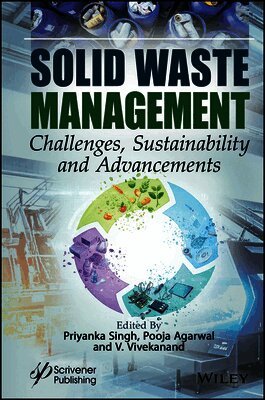
    Solid Waste Management

    Challenges, Sustainability and Advancements

    AvPriyanka Singh,Pooja Agarwal

    Inbunden, Engelska, 2026

    2 279 kr

    Beställningsvara. Skickas inom 5-8 vardagar. Fri frakt över 249 kr.

    Beskrivning

    Tackle the global challenge of environmental sustainability with this essential book, which provides a critical review of innovative and sustainable solid waste management strategies by leveraging advanced technologies like AI and geographic information system-based predictive models. Solid waste products are continuously generated due to rapid industrialization activities and population growth. These solid waste products severely affect the environment and societal health. An efficient management system for solid waste products requires appropriate transportation, infrastructure, and disposal facilities. Recently, conventional disposal techniques have encountered many challenges, including inadequate landfill disposal, management of hazardous solid waste, and operational inefficiencies. Advanced technologies based on predictive models of artificial intelligence and geographic information systems (GIS) are being used to address these concerns. Remote sensing GIS systems efficiently predict the nature and trends of waste generation areas using data captured by aerial photography, videography, and integrated sensors. Artificial intelligence-based methodologies are computationally designed to mimic the human mind and are successfully employed for the development of strategies for the generation, segregation, storage, and treatment of solid waste. This book explores recent trends, innovations, and recycling methods for a sustainable approach to managing solid waste products and provides a critical review of various approaches, process engineering economics, and sustainable valorization techniques for biological waste products, making it an invaluable resource for beginners and seasoned practitioners.

    Produktinformation

    • Utgivningsdatum:2026-01-23
    • Vikt:857 g
    • Format:Inbunden
    • Språk:Engelska
    • Antal sidor:480
    • Förlag:John Wiley & Sons Inc
    • ISBN:9781394267934

    Utforska kategorier

    • Miljövetenskap och miljöpolitik inom Naturvetenskap och teknik
    • Miljöteknik inom Naturvetenskap och teknik

    Mer om författaren

    Priyanka Singh, PhD is an Associate Professor at the Institute of Allied Medical Science and Technology at the National Institute of Medical Sciences University. She has published 31 research articles in peer-reviewed journals and ten book chapters in international book publications, and filed patent with the Government of India. She is actively engaged in research related to nanotechnology, bioprocess technology, and enzyme engineering. Pooja Agarwal, PhD is a Professor in the Department of Chemistry in the School of Basic and Applied Sciences at Galgotias University with more than 13 years of teaching experience. She has more than 18 research publications in reputed journals and book chapters and one edited book to her credit. Her research focuses on material science, biomaterials, nanomaterials, and composite materials. V. Vivekanand, PhD is an Assistant Professor and the Head of the Centre for Energy and Environment at the Malaviya National Institute of Technology. He has published more than 90 international research articles in journals of high repute and more than 30 articles in international conferences, and authored more than seven book chapters. He has a keen research interest in biomass pretreatment, bioprocessing, and its conversion for bioenergy applications.

    Innehållsförteckning

    • List of Figures xviiList of Tables xxiPreface xxiiiAbbreviations xxv1 Towards a Circular Future: Sustainable Management of Solid Waste Products 1Deep Gupta and Sudhir Kumar Gaur1.1 Introduction 21.2 Comprehending Solid Waste 71.3 Products Derived from Diverse Metabolic Processes in Live Organisms 171.4 Hospital Radioactive Waste Products 281.5 Electronic Source Waste Products 311.6 Global Trends in the Formation and Management of Solid Waste 331.7 Challenges in Solid Waste Management 351.8 Emerging Trends and Technologies in Solid Waste Management 401.9 Policy Recommendations for Fostering a Circular Economy 411.10 Strategies for Promoting Sustainable Consumption and Waste Prevention 42Conclusion 44References 452 Sustainable Integrated Waste Management 49Paridhi, Sameer and Subhalaxmi Pradhan2.1 Introduction 502.2 Sustainable Waste Management in Practices 532.3 Composting 572.4 Waste Sorting and Division 592.5 Extended Producer Responsibility (EPR) 602.6 Community Participation and Education 612.7 Barriers in Sustainable Waste Management 642.8 Solid Waste Management 722.9 Role of Integrated Sustainable Waste Management 792.10 Progress, Challenges and Path Forward 832.11 Conclusion 85References 863 An Insight into the Management of the Biomedical Waste Produced During a Pandemic Like Covid- 19 93Deeksha Ranjan, Roopali Sharma, Anjali Bhati and Choudhary R.3.1 Introduction 943.2 Biomedical Waste During the Pandemic 973.3 Steps Involved in Bio-Medical Waste Management 993.4 Segregation of BMW 1003.5 Treatment, Disinfection and Disposal Methods of Covid- 19 Bmw 1033.6 Economical and Sustainable Methods of BMW Management 1063.7 Challenges During Management of COVID-19 Biomedical Waste Management 1073.8 Conclusion and Future Perspectives 110References 1124 Role of Artificial Intelligence in Waste Management 117Diksha Srivastava4.1 Introduction 1174.2 Artificial Intelligence as a Revolutionary Innovation in Waste Management 1204.3 Smart Bin Systems 1224.4 Waste Monitoring and Prediction 1254.5 Waste-Sorting Robots 1264.6 Chemical Analysis and Waste Treatment 1284.7 Recycling of Waste Using AI 1304.8 Limitation and Prospects 1314.9 Conclusion 132Bibliography 1335 Application of Remote Sensing and GIS in Waste Management 139Tishar Chander and Divya Bajpai Tripathy5.1 Introduction 1395.2 AI in Environmental Management and Assessment (Chronology and Advancements) 1415.3 Environmental Evaluation: Explanation, Expansion, and Employment 1445.4 Different Approaches of AI in Environmental Remediations 1465.5 Data Analysis and Machine Learning 1535.6 Geo Spatial Analysis 1565.7 GIS Optimization and Various Uses 1585.8 Application of GIS in Optimizing Solid Waste Collection 1615.9 Role of GIS for Planning of Waste Disposal 1715.10 Conclusions 174References 1756 Process Engineering and Economical Aspects 183Priyanka Singh, Meena Choudhary and Ram Bhajan Sahu6.1 Informal Sector Recycling in Solid Waste Management 1846.2 Pretreatment Processes for Partially Hydrolysing Solid Waste 1866.3 Biological Approach for Pretreatment Process 1926.4 Role of Enzyme Immobilization and Genetic Engineering in Solid Waste Management 2006.5 Economical Aspects of Solid Waste Management 2026.6 Cost and Effectiveness of Informal SWM Activities 2046.7 Recommendations for Specific Policy and Practices 2066.8 Conclusions 207References 2077 Valorization of Biomass Wastes for Energy Production 213Ankit Tripathi, Anurag, Aarti, Subhalaxmi Pradhan and A. K. JainAbbreviations 2147.1 Introduction 2147.2 Classification and Potential of Biomass Waste 2157.3 Thermochemical Conversion Processes 2217.4 Bioethanol from Lignocellulose 2287.5 Biodiesel from Biomass 2307.6 Syngas from Biomass 2337.7 Biohydrogen from Biomass 2357.8 Biorefinery Approaches 2377.9 Economical and Environmental Aspects 2387.10 Conclusion 244References 2458 Valorization of Biowastes for Energy Production Using Halophiles 251Saloni Singh, Ayushi Goyal and Kakoli Dutt8.1 Introduction 2528.2 Biowaste and Its Types 2538.3 Conversion to Value-Added Products 2558.4 Biowastes as Energy Reservoir 2568.5 Niche of Halophiles in Biowaste Valorisation 2688.6 Conclusion 269References 2699 Valorization of Biological Solid Waste for Agricultural Sectors 277Indu Sharma, Komal Yadav, Khushboo Tamboli, Rajeev Kumar, Tanvi Taneja and Raj Singh9.1 Introduction 2789.2 Biomass Sources 2809.3 Sources and Availability of Biological Solid Waste in Agricultural Sectors 2869.4 Methods of Biological Solid Waste Management 2919.5 Valorization 2939.6 Value-Added Products 2949.7 Valuable Biomaterials 2959.8 Biorefinery for Agricultural Food Wastes/By-Products 2969.9 Biofuel 2969.10 Valorization of Biowastes for Production of Biofertilizer 2989.11 Agricultural Waste-Based Organic Fertilizers 2989.12 Bio-Waste-Derived Fertilizers: Properties and Benefits 3009.13 Vermicomposting 3079.14 Biofertilizers 3079.15 Bioenergy Biofuels 3089.16 Nanofertilizers 3099.17 Biofungicides and Valorization 3119.18 Nanofungicides 3139.19 Nanopesticides and Plant Protection 3149.20 Valorization of Biowaste into Biopolymers and Bioplastics 3149.21 Valorization of Biowaste into Biosurfactants 3179.22 Valorization Strategies 3189.23 Environmental Impacts of Biological Solid Waste 3199.24 Economic, Policy Considerations, Challenges and Opportunities in Biowaste Valorization 3199.25 Sustainable Solid Waste Management 3199.26 Benefits of Valorizing Biological Solid Waste for Agricultural Applications 3219.27 Nanotechnology for Sustainable Bioenergy Production 3229.28 Future Prospective and Limitations 3229.29 Conclusion 323References 32410 Nanotechnology for Waste Valorization of Sustainable Agriculture 335Vandana Jhalora, Sonika Kashyap, Riddhi Garg and Renu Bist10.1 Introduction 33610.2 Sustainable Agriculture through Advanced Waste Management 33710.3 Emerging Trends in Nanotechnology for Greener Farming Practices in Sustainable Agriculture 33910.4 Successful Applications of Nanotechnology in Agricultural By-Products Valorization 34410.5 Conclusion 349Bibliography 35011 Eco-Friendly Nanomaterial: A Sustainable Approach for Heavy Metals Removal from Industrial Wastewater 361Mahak Kushwaha, Astha Bisht, Yanshi Agrawal, Swati Agarwal and Suphiya Khan11.1 Introduction 36211.2 Industrial Wastewater 36411.3 Techniques Used to Remove Heavy Metals 36511.4 Types of Nanomaterials 36911.5 Types of Heavy Metals 37811.6 Regeneration of Nanomaterials 38211.7 Conclusion 387Acknowledgment 388References 38812 Regulatory Concerns for Solid Waste Management 397Anuradha Jayaraman, Sandeep Tripathi and Sanjeevi Ramakrishnan12.1 Introduction 39812.2 Current Challenges Associated with Solid Waste Management across Different Regions 40212.3 Challenges 40412.4 Waste to Energy 42212.5 Conclusion 425References 426About the Editors 431Index 433