• Fri frakt över 249 kr
  • •
  • Snabba leveranser
  • •
  • Billiga böcker
Kundservice

Du är på sajten för privatpersoner.

Företag, bibliotek eller offentlig verksamhet?

Du handlar på classic.bokus.com, där alla dina funktioner finns intakta.
Till classic.bokus.com
Bokus logotyp. Gå till startsidan.
  • Erbjudanden
  • Nyheter
  • Student
  • Topplistor
  • Barn & ungdom
  • Bokus Play
  • E-böcker
  • Pocketböcker
  • Spel & pussel

10% rabatt på allt med kod: NYSTART10 →

Sidfot

Mina sidor

    Hjälp

    • Kundservice
    • Vanliga frågor och svar
    • Frakt och leverans
    • Retur vid ångerrätt
    • Reklamera vara
    • Betalning
    • Köpvillkor
    • Allmänna villkor
    • Information om webbplatsens tillgänglighet

    Om Bokus

    • Om oss
    • Pressrum
    • För studenter
    • För företag
    • För bibliotek och offentlig verksamhet
    • För leverantörer
    • Hållbarhet

    Populärt

    • Aktuella erbjudanden
    • Presentkort
    • Studentlitteratur
    • Nya böcker
    • Topplistor
    • Signerade böcker
    • Engelska böcker

    Inspiration

    • Boktips
    • BookTok
    • Populära bokserier
    • Barnbokskaraktärer
    • Populära författare
    Logotyp för Bokus
    Följ oss på Facebook (extern länk)Följ oss på Instagram (extern länk)Följ oss på YouTube (extern länk)Följ oss på TikTok (extern länk)
    bokus @ CookiesAnpassa cookiesIntegritetspolicyKöpvillkor
    Till Citymail hemsida (extern länk)Till Budbee hemsida (extern länk)Till Postnord hemsida (extern länk)Till Schenker hemsida (extern länk)Till Early Bird hemsida (extern länk)Till Walleys hemsida (extern länk)
    1. Data och IT
    2. Systemvetenskap och AI
    3. Artificiell intelligens

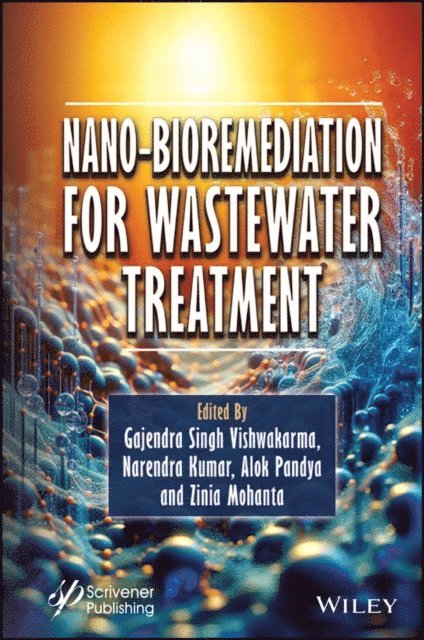
    Nano-Bioremediation for Wastewater Treatment

    AvGajendra Singh Vishwakarma,Narendra Kumar

    Inbunden, Engelska, 2025

    2 140 kr

    Beställningsvara. Skickas inom 5-8 vardagar. Fri frakt över 249 kr.

    Beskrivning

    Invest in Nano-Bioremediation for Wastewater Treatment to explore cutting-edge techniques that combine nanotechnology and bioremediation, equipping you with innovative solutions and expert insights needed to tackle global environmental pollution challenges effectively. The coupling of nanotechnology and bioremediation techniques holds great promise for addressing environmental pollution and contamination on a global scale. The process of bioremediation uses living organisms, such as bacteria, fungi, or plants, to degrade or detoxify pollutants in the environment. Nanotechnology involves manipulating materials at the nanoscale, typically at the scale of individual atoms and molecules, to create novel properties and functionalities. Today, research is focused on exploring the combined potential of nanomaterials and bioremediation for treating pollutants. Nano-Bioremediation for Wastewater Treatment will serve as a premier guide for nanotechnology in this field, providing information regarding the various challenges that arise from the coupling of nanotechnology and bioremediation techniques. Since very limited literature is available on this subject, the editors have compiled all the current assays and techniques that provide insights into this topic. This book will also cover different fabrication methods and methods for decorating microbial cells on the surface of nanomaterials, which is a key factor for synthesizing microbial conjugation, as well as prototype designing and integrating developed materials into water purification systems. Unlock the potential of cutting-edge nano-bioremediation techniques for wastewater treatment, with practical applications, expert insights, and sustainable solutions that set you apart in the field. Audience Environmental engineers, chemists, biotechnologists, microbiologists, nanotechnologists, environmental consultants, researchers, academics, and policymakers focused on developing and implementing innovative solutions for wastewater treatment and environmental remediation.


    Produktinformation

    • Utgivningsdatum:2025-03-28
    • Format:Inbunden
    • Språk:Engelska
    • Antal sidor:384
    • Förlag:John Wiley & Sons Inc
    • ISBN:9781394271610

    Utforska kategorier

    • Artificiell intelligens inom Data och IT

    Mer om författaren

    Gajendra Singh Vishwakarma, PhD, is an assistant professor in the Ecosystem and Environment Management Department at the Indian Institute of Forest Management. He has published over 16 research papers, six book chapters, and four patents. He has dedicated his expertise to monitoring environmental pollutants in groundwater and soil, overseeing the quality of industrial wastewater and leachate, and contributing to solid waste management practices that encourage the growth and dissemination of scientific knowledge in his field. Narendra Kumar, PhD, is the Dean of Academics and an associate professor in the Department of Biotechnology and Bioengineering, Institute of Advanced Research, The University for Innovation, Gujarat, India with over nineteen years of research and teaching experience. He has more than 45 publications to his credit, including research papers, conference papers, and book chapters. He has also edited three internationally published books. Alok Pandya, PhD, is an interdisciplinary researcher and assistant professor in the Department of Biotechnology and Bioengineering, Institute of Advanced Research, Gujarat, India. He has published over 70 research articles in highly reputed international journals, 12 book chapters, and four books, and has been granted four patents. His research work includes nanobiotechnology, nanochemistry, forensic nanotechnology, and the development of affordable nanodevices for disease monitoring, agricultural nano-products, and products for societal use. Zinia Mohanta, PhD, is a postdoctoral fellow in the Department of Radiology at Kennedy Krieger Institute, Johns Hopkins School of Medicine, working on several collaborative projects with multiple labs across the United States. She has authored six research articles and three review papers in reputed international journals and has been invited to numerous presentations. Her research interests include biomedical instrumentation, nanomaterials, and their applications as magnetic resonance imaging contrast agents.

    Innehållsförteckning

    • Preface xv1 Nano-Bioremediation and Scale-Up Techniques for Wastewater Treatment 1Ananya Tiwari, Isha Dharsandia, Dharni Parekh, Alok Pandya, Narendra Kumar, Shubhita Tripathi and Gajendra Singh Vishwakarma1.1 Introduction 21.2 Basics of Nanobioremediation 41.3 Basics of Wastewater Treatment Plant 41.3.1 Treatment Methods 51.3.1.1 Primary Treatment 61.3.1.2 Secondary Treatment 61.3.1.3 Disinfection-Filtration Treatment 61.3.1.4 Sludge Treatment 71.4 Secondary Treatment Systems 71.4.1 Types of Secondary Treatment 81.4.1.1 Aerobic and Activated Sludge Treatment 81.4.1.2 Anaerobic Treatment 91.4.1.3 Anoxic Treatment 101.5 Different Matrix for the Microbes and Nano-Conjugate Fabrication 101.5.1 Conjugation Criteria for Nanoparticles 121.5.2 Conjugation Criteria for Microbes 121.6 Factors of Scale-Up of Water Treatment Plant 131.6.1 Reverse Osmosis (RO) 131.6.1.1 Overview of Nanofiltration Membranes 141.6.2 Techniques for Fabricating Nanofiltration Membranes 141.6.3 Microfiltration Membrane 151.6.3.1 Ceramic Membranes 151.6.3.2 Polymeric Membrane 161.7 Existing Studies on Scale-Up Techniques and Design Principles 161.8 Cost Reduction, Energy Efficiency, and Improved Performance 201.9 Conclusions 22References 222 Nanomaterials and Microbial Compatibility: Synergistic and Antagonistic Mechanisms 35Sajith Sathyamoorthy, Aswathy Venugopal, Lenin M. J., Shreya Tirkey and Murugan Sevanan2.1 Introduction 362.1.1 Overview of Nanomaterials 362.1.2 Understanding Microbial Compatibility and Effective Utilization in Wastewater Treatment 382.1.3 Nano-Adsorbents 402.1.4 Nano-Catalysts 402.1.5 Nano-Membranes 412.2 Mechanisms of Microbial Interaction with Nanomaterials 422.2.1 Mechanism of Action 422.2.2 Responses of Bacteria–Nanomaterial Interactions 452.2.3 Responses of Fungus–Nanomaterial Interactions 462.3 Synergistic Effects of Nanomaterials on Microbial Activities 462.3.1 Utilizing Microbes and Nanoparticles for the Transformation of Waste Into Value-Added Products 472.3.2 Enhancement of Microbial Growth or Metabolic Activities 492.4 Antagonistic Responses: Microbial Tolerance and Resistance 512.4.1 Mechanisms Employed by Microbes to Tolerate Nanomaterial Exposure 512.4.2 Development of Microbial Resistance to Specific Nanomaterials 522.4.3 Implications for Antimicrobial Resistance and Environmental Persistence 532.5 Impact on Microbial Communities and Ecosystems 552.5.1 Nanomaterial Exposure and Its Impact on Microbial Diversity 552.5.1.1 Effects of NPs in Aquatic Microbial Community 552.5.1.2 Effects of NPs on Soil Microbial Community 572.5.2 Effect of Nanomaterials on Microbial Community Structure and Diversity 582.5.2.1 Application of Nanoparticles in Wastewater Treatment 592.5.2.2 Dendrimer in Water Treatment 612.6 Metal Nanoparticles in Water Treatment 622.6.1 Zeolite in Water Treatment 632.6.2 Carbonaceous Nanoparticle in Water Treatment 632.7 Future Prospects 632.8 Discussion and Conclusion 64References 663 Physical and Chemical Characterization of Microbes and Nanoconjugates 73Dhruvesh Maiya and Tvarit Patel3.1 Introduction to Nano-Bioremediation 743.2 Physical and Chemical Properties of Microbes and Nanoconjugates 753.3 Microscopic Structural Analysis 763.3.1 Scanning Electron Microscopy Technique (SEM) 773.3.2 Transmission Electron Microscopy 813.3.3 Atomic Force Microscopy 833.4 Spectroscopic Chemical Analysis 863.4.1 Fourier Transform Infrared Spectroscopy 863.4.2 X-Ray Photoelectron Spectroscopy 873.4.3 UV-Vis Spectroscopy 883.5 Characterization Techniques and Their Role in Nano-Bioremediation 903.6 Conclusion 99References 1004 Microbes and Nanoconjugate-Assisted Removal of Heavy Metals from Water Resources 107Bhargav Raval, Nishra Joshi, Riddhi M. Kathrotiya, Shivani Yagnik Raval and Vikram Hiren Raval4.1 Introduction 1084.2 Effects on Human Health and Environment 1094.3 Physicochemical Methods for Metal Remediation 1134.3.1 Ion Exchange 1134.3.2 Precipitation 1134.3.3 Reverse Osmosis 1144.3.4 Filtration 1144.3.5 Chemical Oxidation 1144.3.6 Chemical Leaching 1144.3.7 Electrochemical Treatment 1144.4 Bioremediation: A Solution to Pollution 1154.5 Mechanisms of Bioremediation 1174.5.1 Biosorption/Bioadsorption 1174.5.2 Bioaccumulation 1184.5.3 Bioprecipitation 1184.5.4 Bioleaching 1194.6 Utilization of Nanoconjugates in Heavy Metal Remediation 1214.6.1 Properties of Nanoparticles 1224.6.2 Synthesis of Nanoparticles 1234.6.2.1 Synthesis of Nanoparticles by Bacteria 1244.6.2.2 Synthesis of Nanoparticles by Fungi and Yeast 1254.6.2.3 Synthesis of Nanoparticles by Algae 1264.6.2.4 Synthesis of Nanoparticles by Plants 1264.6.3 Application of Nanotechnology in the Bioremediation of Heavy Metals and Metalloids 1274.7 Future Aspects 1324.8 Conclusion 133References 1335 New Dimensions and Innovations in Microbes and Nanoconjugate-Based Bioremediation Technology 147Priya Vithalani, Priti Mahla, Jahnvi Padhiar, Uday Bhanushali and Nikhil Bhatt5.1 Introduction 1485.2 Organic Pollutants Exposure to the Environment and Its Consequences 1495.3 Microorganisms Mediated Remediation of Organic Pollutants 1515.4 Advancement in Biodegradation Approach 1535.4.1 Genetic Engineering of Microorganisms 1535.4.2 Omics Technologies 1555.5 Nanobioremediation Approach for Organic Pollutants 1575.6 Microbes–Nanoconjugates Combined Approach for Remediation 1595.7 Conclusion and Future Aspects 162References 1636 Application of Microbes and Nanoconjugates in the Removal of Inorganic Pollutants from Wastewater 171Jahnvi Padhiar, Uday Bhanushali, Priya Vithalani, Priti Mahla and Nikhil Bhatt6.1 Introduction 1726.2 Inorganic Pollutants 1726.2.1 Types of Inorganic Pollutants 1736.2.2 Environment and Health Risk 1736.3 Microbes as Remediators 1746.3.1 Biosorption 1766.3.2 Bioaugmentation 1766.3.3 Biotransformation 1776.4 Nanoconjugates 1786.4.1 Types of Nanoconjugates 1786.4.2 Nanoconjugates in Removing Inorganic Pollutants 1796.5 Synergistic Approach of Microbes and Nanoconjugates for Removing Inorganic Pollutants 1806.6 Future Trends 1816.7 Conclusion 181References 1817 Degradation of Dyes and Organic Pollutants via Microbes and Nanoconjugates from Textile Wastewater 189Shaveta Singh, Isha Sharma, Prasant Arya and Pankaj Kumar7.1 Introduction 1907.2 Textile Waste and Its Harmful Impact 1917.2.1 Synthetic Dyes 1917.2.2 Organic Pollutants 1927.3 Microbes for Bioremediation of Textile Wastewater 1937.3.1 Bioremediation of Textile Wastewater by Bacteria 1947.3.2 Bioremediation of Textile Wastewater by Fungi 1947.4 Role of Nanotechnology in Bioremediation of Textile Wastewater 1957.4.1 Microbial-Based Nanoconjugates Bioremediation of Textile Wastewater 1957.4.2 Mechanism of Microbial-Based Nanoconjugates in Bioremediation of Textile Wastewater 1977.4.3 Application of Microbial-Based Nanoconjugates in Bioremediation of Textile Wastewater 1977.5 Conclusion 1987.6 Future Perspectives 199References 1998 Microbes and Nanoconjugated Assistants for Sensing and Detecting Pollutants in Wastewater 203Keyur Bhatt, Jaymin Parikh, Krunal Modi and Brij Mohan8.1 Introduction 2048.2 Molecular Sensors 2068.3 Nanosensors 2088.4 Environmental Applications 2118.5 Summary and Outlook 215References 2179 Nanobioremediation: A Sustainable Reclamation Method for Future Deployment 221Sanjeeb Kumar Mandal, Alekhya Pasumarthy, Dhruv Tadikonda, Bishwambhar Mishra, B. Sumithra, Sumithra Salla, Mahaboob Basha D. and Ashoutosh Panday9.1 Introduction 2229.1.1 How does Nanobioremediation Differ from Traditional Bioremediation Methods? 2249.1.2 Why is Nanobioremediation Considered to be a Sustainable Reclamation Method? 2259.1.3 Potential Applications of Nanobioremediation 2269.1.4 Future Outlook for Nanobioremediation 2279.2 Types of Nanomaterials Used in Nanobioremediation 2299.2.1 Metallic Nanoparticles 2299.2.2 Carbon-Based Nanomaterials 2309.2.3 Metal Oxide Nanoparticles 2319.2.4 Other Nanomaterials 2349.3 Mechanisms of Nanobioremediation 2359.3.1 Biosorption 2359.3.2 Biocatalysis 2369.3.3 Biotransformation 2369.3.4 Biomineralization 2379.4 Factors Affecting the Effectiveness of Nanobioremediation 2389.4.1 Type of Nanomaterial 2389.4.2 Properties of the Nanomaterial 2389.4.3 Concentration of the Nanomaterial 2399.4.4 Presence of Other Contaminants 2399.4.5 Environmental Conditions 2399.5 Case Studies of Nanobioremediation 2409.5.1 Remediation of Heavy Metals 2409.5.2 Remediation of Organic Pollutants 2409.5.3 Remediation of Radioactive Contaminants 2409.6 Challenges and Future Directions in Nanobioremediation 2419.6.1 Toxicity of Nanomaterials 2419.6.2 Environmental Fate of Nanomaterials 2419.6.3 Public Perception of Nanomaterials 2419.6.4 Development of New Nanomaterials for Nanobioremediation 2419.6.5 Optimization of Nanobioremediation Processes 2429.7 Conclusion 242References 24310 Nanoparticle-Assisted Microbial Removal of Arsenic (As) from Drinking Water Sources 249Mayuri Bhagawati, Badal Kr Datta, Rajib Newar, Sukanya Sonowal, Kabyashree Buragohain, Dulumoni Tamuly and Ratul Nath10.1 Introduction 25010.2 Microbe-Based Removal of Arsenic 25610.2.1 Oxidation-Reduction of Arsenic 25810.2.2 Methylation 25910.3 Nanoparticles and Microbial-Synthesized Nanoparticles (MSNs) 26010.3.1 What is the Need for MSNs? 26210.3.2 Synthesis Mechanisms of MSNs 26410.3.3 Synergistic Approaches 26710.3.4 Comparison Between Conventional Nanoparticles and Microbial-Synthesized Nanoparticles 26810.4 Future Perspectives 26910.4.1 Oxidation 27010.4.2 Coagulation–Flocculation 27010.4.3 Membrane Techniques 27110.4.4 Adsorption and Ion-Exchange 27110.4.5 Phytoremediation 27210.4.6 Community-Scale Treatment Plants 27310.4.7 Household Scale 27310.5 Conclusion 274Acknowledgement 275References 27511 Nanotechnology-Enabled Remediation of Oil Contamination in Polluted Water 291Payal Patel, Ajay Patel, Manisha Parmar, Aditee Pandya and Haren Gosai11.1 Introduction 29211.2 Nanotechnology for Bioremediation 29411.2.1 Uses of Nanoparticles and Nanomaterials 29511.2.2 Bioremediation of Pollutants 29611.2.3 Wastewater Treatment 29611.2.4 Air Purification 29711.2.5 Soil Bioremediation 29711.3 Applications of Nanotechnology for Oil–Water Separation 29811.3.1 Graphene Nanocomposites 30011.3.2 Nanocellulose Composites 30311.3.3 Magnetic Nanocomposites 30311.3.4 Nanoparticles 30411.4 Approaches for Conventional Oil–Water Separation 30511.4.1 Sponges and Foams 30611.4.2 Aerogels 30611.4.3 Clays 30611.4.4 Meshes 30711.4.5 Textiles 30811.5 Drawbacks and Limitations of Nanotechnology-Based Techniques 30911.6 Conclusion 311References 31112 Nano-Biocatalysis for Remediation of Pharmaceutical Micropollutants in Industrial Wastewaters 321Darshankumar Prajapati, Ashish Bhatt, Ravi Kachhadiya, Shreya Pandya and Akshaya Gupte12.1 Introduction 32212.2 Water Pollution and Sources of Micropollutants 32412.2.1 Micropollutants in Hospital Discharges 32812.2.2 Micropollutants in Domestic Discharges 32912.2.3 Micropollutants in Agricultural Discharges 32912.2.4 Micropollutants in Industrial Discharges 33012.3 Impact of Micropollutants on Environment and Human Health 33012.4 Nano-Biotechnology and Its Role in Bioremediation 33312.5 Bioremediation of Micropollutants Using Nano-Biocatalysis 33612.5.1 Magnetic Nanoparticles-Based Nano-Biocatalysis 33912.5.2 Porous, Metal, and Ceramic Nanoparticles Matrix-Based Nano-Biocatalysis 34012.5.3 Carbon Nanoparticles Matrix-Based Nano-Biocatalysis 34112.6 Conclusion and Future Prospects 342References 342Index 355