• Fri frakt över 249 kr
  • •
  • Snabba leveranser
  • •
  • Billiga böcker
Kundservice

Du är på sajten för privatpersoner.

Företag, bibliotek eller offentlig verksamhet?

Du handlar på classic.bokus.com, där alla dina funktioner finns intakta.
Till classic.bokus.com
Bokus logotyp. Gå till startsidan.
  • Erbjudanden
  • Nyheter
  • Student
  • Topplistor
  • Barn & ungdom
  • Bokus Play
  • E-böcker
  • Pocketböcker
  • Spel & pussel

10% rabatt på allt med kod NYSTART10 →

Sidfot

Mina sidor

    Hjälp

    • Kundservice
    • Vanliga frågor och svar
    • Frakt och leverans
    • Retur vid ångerrätt
    • Reklamera vara
    • Betalning
    • Köpvillkor
    • Allmänna villkor
    • Information om webbplatsens tillgänglighet

    Om Bokus

    • Om oss
    • Pressrum
    • För studenter
    • För företag
    • För bibliotek och offentlig verksamhet
    • För leverantörer
    • Hållbarhet

    Populärt

    • Aktuella erbjudanden
    • Presentkort
    • Studentlitteratur
    • Nya böcker
    • Topplistor
    • Signerade böcker
    • Engelska böcker

    Inspiration

    • Boktips
    • BookTok
    • Populära bokserier
    • Barnbokskaraktärer
    • Populära författare
    Logotyp för Bokus
    Följ oss på Facebook (extern länk)Följ oss på Instagram (extern länk)Följ oss på YouTube (extern länk)Följ oss på TikTok (extern länk)
    bokus @ CookiesAnpassa cookiesIntegritetspolicyKöpvillkor
    Till Citymail hemsida (extern länk)Till Budbee hemsida (extern länk)Till Postnord hemsida (extern länk)Till Schenker hemsida (extern länk)Till Early Bird hemsida (extern länk)Till Walleys hemsida (extern länk)
    1. Naturvetenskap och teknik
    2. Teknik och industri
    3. Teknik: allmänt

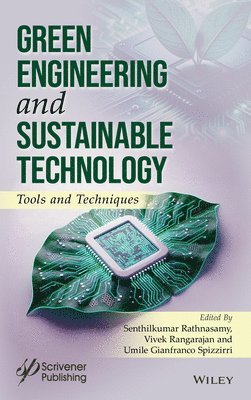
    Green Engineering and Sustainable Technology

    Tools and Techniques

    AvSenthilkumar Rathnasamy,Vivek Rangarajan

    Inbunden, Engelska, 2026

    1 973 kr

    Beställningsvara. Skickas inom 5-8 vardagar. Fri frakt över 249 kr.

    Beskrivning

    Secure your place at the forefront of the green revolution with this authoritative, expert-led guide to the latest innovations in green solvents, energy storage, and sustainable processes to transform industrial efficiency. Modern sustainable development revolves around green engineering for designing processes and technologies that minimize environmental impact while maximizing efficiency. This book is an authoritative resource that presents the latest sustainable engineering innovations on materials, processes, and methods that reduce environmental consequences. It provides a holistic account of advances in sustainable engineering, delving into tools and techniques driving sustainable engineering. It demonstrates how we can minimize environmental impacts from industry by enhancing industrial efficacy. The book highlights green solvents such as deep eutectic solvents and ionic liquids, which have significance across energy storage, electrochemistry, and subsequent extraction, that emphasize sustainable fermentation, nano-emulsions, glycan separation, and green electrolytes for energy storage. Whether you are designing green infrastructure, designing energy-efficient products, or are involved in battery technologies, this essential guide provides several necessary tools and insights to catalyze inspiration and innovation to develop a cleaner and more sustainable future. Readers will find the volume: Bridges the gap between green engineering concepts and practical applications, providing insights into how green principles are developed into sustainable technology;Focuses on green engineering practices that provide innovative solutions to existing problems and leading to new processes and products that uphold sustainability;Delves into groundbreaking developments in environmentally and economically advantageous sustainable technology.Audience Sustainability, chemical and civil engineers, environmental researchers, biotechnologists, environmental scientists who think beyond conventional practices and seek technologically advanced solutions to sustainability.

    Produktinformation

    • Utgivningsdatum:2026-03-17
    • Vikt:680 g
    • Format:Inbunden
    • Språk:Engelska
    • Antal sidor:320
    • Förlag:John Wiley & Sons Inc
    • ISBN:9781394303403

    Utforska kategorier

    • Teknik: allmänt inom Naturvetenskap och teknik

    Mer om författaren

    Senthilkumar Rathnasamy, PhD is a researcher and developer of green engineering solutions with more than two decades of academic and research experience. He serves as a Senior Assistant Professor in the School of Chemical and Biotechnology, SASTRA Deemed to be University, Thanjavur, India, and has made significant contributions to the fields of biochemical engineering, bioseparation, and protein purification, focusing on sustainability-driven innovations. Vivek Rangarajan, PhD is an Assistant Professor in the Department of Chemical Engineering at the Birla Institute of Technology and Science, Pilani KK Birla Goa Campus, Sancoale, India. He has authored more than 55 research and review articles in peer-reviewed journals and numerous book chapters. His extensive expertise spans the customization and fabrication of task-specific separation facilities, including high-pressure extractors, hybrid reactors, and pilot-scale chromatography columns. Umile Gianfranco Spizzirri, PhD is an Assistant Professor in the Ionian Department of Law, Economics, and Environment, the University of Bari Aldo Moro, Taranto, Italy. He has published more than 130 articles in peer-reviewed international journals, 30 book chapters, 88 abstracts for national and international conferences, eight editorials, and eight edited volumes. His main research interests focus on the recovery and valorization of agro-industrial by-products for the development of functional foods, the validation of innovative analytical methods for detecting natural and xenobiotic contaminants in complex matrices, and the design and synthesis of macromolecular systems for applications in the food and environmental sector.

    Innehållsförteckning

    • Preface xv1 Introduction to Green Engineering: Principles, Approach, Applications, and Sustainability 1Neela Gayathri Ganesan, Rami A. Abdel-Rahem, Vivek Rangarajan, Sivalingam Ramesh, Cédric Delattre and K. Senthilkumar1.1 Definition of Green Engineering 21.2 Definition of Circular Economy 111.2.1 Linear vs. Circular Economies: Key Principles and Implications 121.2.2 Historical Development and Global Adoption of CE 151.3 Key Principles of the Circular Economy 161.3.1 Design Out Waste and Pollution 161.3.2 Keep Products and Materials in Use 161.3.3 Regenerate Natural Systems 171.4 Circular Economy as Critical Factor of Green Engineering 171.5 Circular Economy and Green Engineering Case Studies 191.6 Prospects and Challenges in Synergy between Circular Economy and Green Engineering 231.6.1 Prospects of the Synergy 231.6.2 Challenges in Synergy 251.7 Emerging Scope of Green Engineering and Circular Economy 251.7.1 Scope of Green Engineering in Biotechnology 261.7.2 Scope of Green Engineering in Industries 261.7.3 Scope of Green Engineering in AI and IoT 271.8 Explicit Socio-Economic Contributions of Green Engineering 281.8.1 Industrial Application 281.8.2 Urban Development 291.8.3 Product Design 321.8.4 Sustainability in Resource Management 331.9 Expected Impacts and Possible Outcomes of Implementing Green Engineering 341.10 Conclusion 36References 382 Green Metrics 45Gracia Saral Gladison, Ramya Muniasamy and Senthilkumar Rathnasamy2.1 Introduction to Green Chemistry—Demand and Scope 452.2 Green Metrics—Pillars of Green Chemistry 472.2.1 Atom Economy and Reaction Mass Efficiency 492.2.1.1 The Atom Economy’s Significance 492.2.1.2 Atom Economy Examples 502.2.1.3 Significance of Reaction Mass Efficiency 512.2.1.4 Examples of RME 522.2.2 Process Mass Intensity and E-Factor 522.2.3 Eco-Scale and Waste Reduction Algorithm 552.2.3.1 Reduction of Waste Algorithm 562.2.4 Case Studies—Role of Green Metrics in Industrial Sustainability 572.3 Sustainable Development Goals—Foundations of Green Society 582.3.1 Prospects and Challenges of SDGs 612.3.1.1 Prospects of SDGs 612.3.1.2 Challenges of SDGs 622.3.2 Economic Aspects of SDGs 622.3.2.1 Challenges in Green Chemistry from an Economic Perspective 632.3.3 Societal Reforms Mandating SDGs 642.3.4 SDGs in Perspective—Lessons from Previous Executors 66References 673 Green Solvents: Fundamentals and Applications 71Sinchan Hait, Arshitha Mathew, Anushka Sharma, Akshita Jain and Upasana Mahanta3.1 Introduction 723.2 Ionic Liquids (ILs) 733.2.1 Properties of Ionic Liquids 753.2.1.1 Low Melting Point 753.2.1.2 High Thermal Stability 753.2.1.3 Low Vapor Pressure 753.2.1.4 Non-Flammability 753.2.1.5 Solubility and Miscibility 753.2.1.6 Electrical Conductivity 753.2.1.7 Chemical Stability 763.2.2 Applications of Ionic Liquids 763.2.2.1 Electrochemical Applications 763.2.2.2 Gas Absorption 773.2.2.3 Drug Delivery 783.2.2.4 Catalysis 783.3 Deep Eutectic Solvents (DESs) 813.3.1 Types of Deep Eutectic Solvents 813.3.1.1 Type I: (Salt + Metal Compound) 813.3.1.2 Type II: (Salt + Metal Compound + Water) 823.3.1.3 Type III: (Salt + Organic Molecule) 833.3.1.4 Type IV: (Salt + Organic Molecule + Metal Compound) 833.3.1.5 Type V: (Organic Molecule + Organic Molecule) 833.3.2 Properties of Deep Eutectic Solvents 833.3.2.1 Melting Point 833.3.2.2 Density and Viscosity 833.3.2.3 Ionic Charge 833.3.2.4 Ionic Conductivity 843.3.3 Preparation of Deep Eutectic Solvents 843.3.4 Applications of Deep Eutectic Solvents 853.3.4.1 Deep Eutectic Solvents for CO 2 Capture 853.3.4.2 Co 2 Capture Mechanism 873.3.5 Green Credentials 923.4 Terpenes and Their DES Derivatives 923.4.1 Characteristics of Terpene-Based DESs 943.4.1.1 Viscosity 943.4.1.2 Density 953.4.1.3 Refractive Index 953.4.1.4 Surface Tension and Contact Angle 953.4.1.5 Thermal Property 963.4.2 Terpene-Based DESs’ Applications 963.5 Some Other Green Solvents 973.5.1 Non-Toxic Liquid Polymers 973.5.2 Supercritical Fluids 973.5.3 Common Industrial Applications 983.6 Conclusion 98References 994 Intensification Strategies in Green Engineering 103Hanisha R., Dhanashree T.D., Sangeetha Priya R.B., Subanu M. and Gopinath M.4.1 Introduction 1044.2 Process Intensification in Green Engineering 1054.3 Importance of Green Engineering Benefits 1064.3.1 Reduced Environmental Impact 1064.3.2 Enhanced Process Efficiency 1074.3.3 Economic and Societal Benefits 1074.4 Examples of Process Intensification Techniques 1084.4.1 Microreactors 1084.4.2 Ultrasonic Processing 1094.4.3 Microwave Heating 1094.5 Frequently Employed Sustainable Extraction Techniques 1104.5.1 Microwave-Assisted Extraction 1104.5.1.1 Microwave-Assisted Extraction Principle 1104.5.1.2 Applications of MAE 1114.5.2 Ultrasound-Assisted Extraction 1124.5.2.1 Mechanism of Ultrasonic Technology 1124.5.2.2 Applications of Ultrasound-Assisted Extraction 1134.5.3 Supercritical Fluid Extraction 1144.5.3.1 Mechanism of Supercritical Fluid Extraction 1144.5.3.2 Principle of Supercritical Fluid Extraction (sfe) 1154.5.3.3 Application and Benefits of Supercritical Fluid Extraction 1154.5.4 Plasma-Assisted Extraction 1154.5.4.1 Principle of Plasma Technology 1164.5.4.2 Mechanism of Plasma-Assisted Green Engineering Extraction (PAE) 1174.5.4.3 Applications and Benefits of PAE 1174.6 Comparative Analysis of Extraction Methods 1184.6.1 Comparison of Extraction Mechanism 1184.6.1.1 Microwave-Assisted Extraction 1184.6.1.2 Ultrasound-Assisted Extraction 1184.6.1.3 Supercritical Fluid Extraction 1194.6.1.4 Plasma-Assisted Extraction 1194.6.2 Yield Efficiency and Cost-Effectiveness of Extraction Methods 1194.6.2.1 Microwave-Assisted Extraction (MAE) 1194.6.2.2 Ultrasound-Assisted Extraction (UAE) 1204.6.2.3 Supercritical Fluid Extraction (SFE) 1204.6.2.4 Plasma-Assisted Extraction (PAE) 1214.7 Integration of Multiple Extraction Techniques 1214.7.1 Hybrid Extraction Methods 1214.7.2 Synergistic Effects and Benefits 1224.8 Challenges and Limitations 1224.8.1 Technical Challenges 1224.8.2 Economic and Regulatory Issues 1234.9 Potential Solutions and Future Directions 1244.9.1 Recent Innovations in Green Extraction Techniques 1254.9.2 Case Studies and Real-World Applications 1274.10 Conclusion 128References 1295 Green Nanoemulsions for Sustainable Applications 135Ashwini Padole, Sreelakshmi K.P., Utpal Roy and Vivek Rangarajan5.1 Introduction 1365.2 Fundamentals of Nanoemulsions 1375.2.1 Composition and Types 1375.2.1.1 W/O Nanoemulsions 1375.2.1.2 O/W Nanoemulsions 1375.2.1.3 Bi-Continuous Nanoemulsions 1375.2.1.4 Size and Stability 1385.2.1.5 Optical Properties 1385.3 Benefits, Drawbacks and Key Attributes of Nanoemulsions 1385.4 Challenges and Limitations of Nanoemulsions 1395.4.1 High Cost of Formulation 1395.4.2 Environmental Sensitivity 1395.4.3 Limited Research 1405.4.4 Understanding of Interfacial Chemistry 1405.5 Synthesis and Characterization of Nanoemulsions 1405.5.1 Selection of Components 1405.5.2 Formulation and Preparation Method of Nanoemulsions 1425.5.2.1 High-Energy Emulsification Method 1425.5.2.2 High-Pressure Homogenization (HPH) 1425.5.2.3 Microfluidization 1425.5.2.4 Sonication 1425.5.2.5 Low-Energy Emulsification Method 1435.5.2.6 Spontaneous Methods 1435.5.2.7 Phase Inversion Method 1435.6 Characterization of Nanoemulsion 1445.6.1 Particle Size and Distribution 1445.6.1.1 Size Distribution 1445.6.1.2 Measurement Techniques 1445.6.2 Zeta Potential 1455.6.3 Viscosity and Rheology 1455.6.4 Stability Studies 1455.6.4.1 Accelerated Stability Testing 1455.6.4.2 Thermal Stability 1465.6.5 The Characteristics of Optics 1465.6.6 Turbidimetry 1465.6.7 Encapsulation Efficiency 1465.6.7.1 Chromatographic Methods (HPLC and GC) 1465.6.7.2 Spectroscopic Methods (Ultraviolet–Visible Spectroscopy (UV-Vis) and FTIR) 1475.6.7.3 pH and Conductivity Measurements 1475.6.8 In Vitro Permeation and Bioavailability Studies 1475.6.8.1 In Vitro Release Studies 1475.6.8.2 Cell Culture Studies 1485.7 Nanoemulsion for Stable Green Cosmetics 1485.8 Green Nanoemulsions 1485.9 Principles of Green Nanoemulsions 1495.9.1 Use of Renewable Resources 1495.9.2 Safer Solvents 1505.9.3 Energy Efficiency 1505.9.4 Design for Degradation 1505.10 Formulation of Green Nanoemulsions 1505.10.1 Oils, Both Plant-Based and Natural 1505.10.2 Bio-Based or Natural Surfactants 1515.10.3 Eco-Friendly/Green Solvents 1515.11 Applications 1515.12 Case Studies on Green Nanoemulsions 1535.12.1 Single Surfactant-Based Nanoemulsion System 1535.12.2 Two/Three Biosurfactant Systems: Improved Stability Mechanisms 1535.13 Conclusion and Future Perspectives 154Bibliography 1546 Cutting-Edge Eco-Conscious Technologies for Glycan Separation 161M. Aniskumar, C. Santhaseelan, K. Keerthiga, G. Jeyashree and M. A. Sundaramahalingam6.1 Introduction 1626.2 Fundamentals of Glycan Separation 1636.2.1 Types of Glycans 1636.2.2 Glycan Structure 1646.2.3 Glycan Separation Techniques 1656.3 Principles of Green Technologies in Glycan Separation 1676.4 Green Solvent and Solvent-Free Techniques 1756.4.1 Green Solvent Techniques 1756.4.1.1 Ionic Liquids 1756.4.1.2 Deep Eutectic Solvents 1756.4.2 Solvent-Free Extraction Method 1766.4.3 Industrial Applications of Green Solvent Techniques 1766.5 Membrane Technologies for Glycan Separation 1776.5.1 Membrane Filtration and Ultrafiltration 1776.5.2 Nanofiltration and Reverse Osmosis 1786.5.3 Green Membrane Materials and Applications 1786.6 Adsorption and Chromatographic Methods 1796.6.1 Green Adsorbents 1796.6.2 Green Stationary Phases 1806.6.3 High-Performance Liquid Chromatography 1806.6.4 Thin-Layer Chromatography 1806.6.5 Capillary Electrophoresis 1816.7 Biocatalytic and Enzymatic Approaches 1816.7.1 Enzyme-Based Glycan Modification and Separation 1816.7.2 Biocatalytic Processes for Eco-Conscious Glycan Purification 1826.7.3 Advances and Applications in Biotechnology 1836.8 Electrochemical and Electrophoretic Techniques 1836.8.1 Electrochemical Glycan Separation Principles 1846.8.2 Electrophoretic Methods for Green Glycan Analysis 1846.8.3 Emerging Technologies and Future Directions 1856.9 Integrated Green Technologies 1866.9.1 Hybrid and Integrated Approaches to Glycan Separation 1866.9.2 Synergistic Effects of Combined Green Techniques 1876.10 Future Trends and Prospects 1876.11 Conclusion 189References 1907 Sustainable Fermentation 195Shobika S. and Vijayakumar L.7.1 Introduction 1967.2 Organic Acids 1987.2.1 Lactic Acid (LA) 1987.2.2 Citric Acid (CA) 1997.2.3 Glucaric Acid (GA) 1997.3 Enzymes 2007.3.1 Amylases 2007.3.2 Proteases 2017.4 Secondary Metabolites 2027.4.1 Penicillin 2027.4.2 Griseofulvin 2037.5 Pigments 2037.5.1 Carotenoid 2037.5.2 Anthocyanins 2047.6 Fragrance Compounds 2057.6.1 Vanillin 2057.6.2 Limonene 2067.7 Comparative Analysis and Sustainability 2067.8 Conclusion 209References 2108 Green Electrolytes 215Lavanya Priyadarshini Ramalingam, Senthilkumar Rathnasamy, Balasubramanian Ramalingam and Parkavi Kathirvelu8.1 Introduction 2158.1.1 Electrolyte and Its Types 2188.1.2 The Evolution of Green Electrolytes 2198.2 Physicochemical and Electrochemical Behavior of DESs 2228.2.1 Ionic Conductivity 2228.2.2 Ion Transport 2238.2.3 Wide Electrochemical Window 2248.2.4 Low Volatility and Non-Flammability 2248.2.5 Thermal and Chemical Stability 2258.2.6 Biodegradability and Biocompatability 2268.2.7 Tunability 2268.2.8 Viscosity 2278.2.9 Density 2308.3 Advantage of DES as Electrolytes 2308.3.1 Computational Validation of DES Battery Electrolytes 2318.3.2 Role of DES in Batteries and Supercapacitors 2348.3.3 Key Electrical Properties of DES-Based Electrolytes 2348.4 DES-Based Eutectogels in Energy Storage 2388.5 Challenges and Future Prospects 2408.6 Conclusion 240References 2419 Life Cycle Assessment—A Systemic Tool in Sustainability Management 249Jayita Chopra9.1 Introduction 2509.2 Types of LCA 2529.3 Application of LCA in Green Processes 2539.4 Stages of LCA 2549.5 Methodologies 2579.6 Allocation 2589.7 Uncertainty and Sensitivity Analysis 2589.8 Case Study on LCA 2599.9 Limitations and the Way Forward 2609.10 Conclusion 261References 26110 Techno-Economic Analysis Perspective of Green Engineering 265Harishbabu Balaraman, Karishma Chandrasekaran and Senthilkumar Rathnasamy10.1 Introduction 26510.2 Economic Aspects of Biorefinery 26710.2.1 Economic Assessment of First-Generation Biorefinery 26710.2.2 Economic Assessment of Second Generation Biorefinery 26910.2.3 Economic Assessment of Third-Generation Biorefinery 27110.2.4 Role of Green Solvents in Economic Perspective of Biorefinery 27310.3 Economic Aspects of Bioactive Extraction 27410.3.1 Economic Perspective in Microwave-Based Extraction 27510.3.2 Economic Aspects of Ultrasound-Assisted Extraction 27710.3.3 Economic Aspects of Supercritical Fluid Extraction 27810.4 Conclusion 280References 28111 Conclusion and Future Trends in Sustainability 285Dhandapani Ramesh, Gracia Saral Gladison and Senthilkumar RathnasamyReferences 289Index 291