• Fri frakt över 249 kr
  • •
  • Snabba leveranser
  • •
  • Billiga böcker
Kundservice

Du är på sajten för privatpersoner.

Företag, bibliotek eller offentlig verksamhet?

Du handlar på classic.bokus.com, där alla dina funktioner finns intakta.
Till classic.bokus.com
Bokus logotyp. Gå till startsidan.
  • Erbjudanden
  • Nyheter
  • Student
  • Topplistor
  • Barn & ungdom
  • Bokus Play
  • E-böcker
  • Pocketböcker
  • Spel & pussel

10% rabatt på allt med kod: NYSTART10 →

Sidfot

Mina sidor

    Hjälp

    • Kundservice
    • Vanliga frågor och svar
    • Frakt och leverans
    • Retur vid ångerrätt
    • Reklamera vara
    • Betalning
    • Köpvillkor
    • Allmänna villkor
    • Information om webbplatsens tillgänglighet

    Om Bokus

    • Om oss
    • Pressrum
    • För studenter
    • För företag
    • För bibliotek och offentlig verksamhet
    • För leverantörer
    • Hållbarhet

    Populärt

    • Aktuella erbjudanden
    • Presentkort
    • Studentlitteratur
    • Nya böcker
    • Topplistor
    • Signerade böcker
    • Engelska böcker

    Inspiration

    • Boktips
    • BookTok
    • Populära bokserier
    • Barnbokskaraktärer
    • Populära författare
    Logotyp för Bokus
    Följ oss på Facebook (extern länk)Följ oss på Instagram (extern länk)Följ oss på YouTube (extern länk)Följ oss på TikTok (extern länk)
    bokus @ CookiesAnpassa cookiesIntegritetspolicyKöpvillkor
    Till Citymail hemsida (extern länk)Till Budbee hemsida (extern länk)Till Postnord hemsida (extern länk)Till Schenker hemsida (extern länk)Till Early Bird hemsida (extern länk)Till Walleys hemsida (extern länk)
    1. Naturvetenskap och teknik
    2. Teknik och industri
    3. Tillverkningsteknik

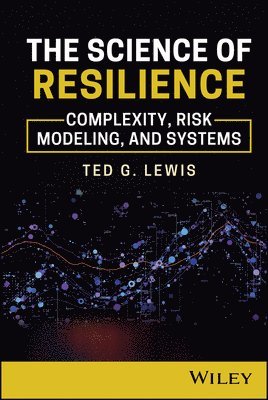
    Science of Resilience

    Complexity, Risk Modeling, and Systems

    AvTed G. Lewis

    Inbunden, Engelska, 2025

    1 265 kr

    Beställningsvara. Skickas inom 5-8 vardagar. Fri frakt över 249 kr.

    Fler format och utgåvor

    E-bok

    1 446 kr

    E-bok

    1 544 kr

    Beskrivning

    "This is a book that approaches resilience as a systems problem, examined through models, analogies and worked examples drawn from physics, ecology, engineering, finance and cyber security…  By using mathematical models and real-world examples, the book provides practical tools and strategies for designing resilient systems that can adapt and thrive in the face of uncertainty."- "Inspiration for Resilience Professionals." CIR Magazine, Q1 2026. https://www.cirmagazine.comStrategies for improving resilience, incorporating complexity theory, risk analysis, and systems thinking with a rigorous mathematical treatmentThe Science of Resilience delves into the fascinating field of resilience science, exploring how various systems, ranging from physical infrastructure to social networks, can withstand and recover from disruptions. This interdisciplinary subject combines principles from complexity theory, risk analysis, and systems thinking to understand and mitigate the impacts of events like natural disasters, cyber-attacks, and economic crises. By using mathematical models and real-world examples, the book provides practical tools and strategies for designing resilient systems that can adapt and thrive in the face of uncertainty.Written by a highly qualified author with significant experience in the field, this book: Covers synchronization, bottleneck analysis, epidemic modeling, social network disinformation and how to counter it, and restructuring a system to increase resilienceExplains phase change and shows how to apply it to general complex systemsIntegrates rigorous mathematical models with real-world applications through mini case studies and hypothetical examples covering physical, economic, and social systemsProvides tools and strategies to design resilient systems, analyze potential risks, and plain for resilienceAddressing an important gap in risk and resilience literature, this book offers valuable insights for engineering and systems design professionals, complexity science and risk analysis researchers, and graduate students in related fields, as well as anyone interested in the science of resilience.

    Produktinformation

    • Utgivningsdatum:2025-11-03
    • Mått:155 x 231 x 18 mm
    • Vikt:476 g
    • Format:Inbunden
    • Språk:Engelska
    • Antal sidor:224
    • Förlag:John Wiley & Sons Inc
    • ISBN:9781394354924

    Utforska kategorier

    • Tillverkningsteknik inom Naturvetenskap och teknik

    Mer om författaren

    Ted G. Lewis is an author and computer scientist with expertise in applied complexity theory, homeland security, infrastructure systems, and early-stage startup strategies. He was inducted into the Oregon State University Engineering Hall of Fame in 2021. He has served in government, industry, and academia over an extensive career. He has also served as the Editor-in-Chief of several periodicals including IEEE Computer Magazine and is a member of the IEEE Computer Society Board of Governors.

    Innehållsförteckning

    • Preface ix1 Sandpiles, Long Tails, and Complex Catastrophes 1The Many Faces of Resilience 4Sandpile as Metaphor 6Blocks and Springs 12Computing Exceedance Probability 14Two Versions of Exceedance 16Comments 20References 222 Wildfires, Self-Organization, and Phase Change 23California Wildfires 24Percolated Forests 27Why Does This Occur? 30Time Resilience 31Herd Immunity 33Gause’s Emergent Forest 33Punctuated Equilibrium 37Comments 39References 403 Nuclear Disaster, Fault Trees, and the Kill Chain 41PRA and Fault Trees 45The Hundred-Year Flood 47Modeling Threats 48Modeling TMI-2 Risk 49Minimization of Fault Tree Risk 51Maximizing Threat – The Rational Adversary 55Redundant TMI- 2 56Cyber Kill Chain 56Comments 594 Avalanches, Complex Network, and the Day Power Went Out 61What Happened on August 14th 62Network Basics 64Spectral Radius 68Network Avalanches 72Bottlenecks and Resilient Walks 78Blocking Node Resilience 81Networks That Sync 82Comments 85References 865 Surges, Overloads, and the Transformer Matrix 87The Transformer Matrix 89Surges and N-1 Testing 91Surges and Overloading 95Increasing Capacity and the Braess Paradox 97Estimating Vulnerability, V 100Comments 1026 Emergence, Optimization, and the Competitive Exclusion Principle 103Efficient Hubs 104Optimizing Links 106Maximizing Clusters 110Dynamic State Space 115Competitive Exclusion Principle is Degree-Emergence 118Resilient Sync Networks Cooperate 120A Theory of Heartbeat 120Comments 123References 1247 Population Resilience, Biological Avalanches, and the COVID- 19Pandemic 125Risk and Resilience 130Epidemics as Avalanches 132A Multi-Factor Model 132Comments 141References 1428 Flashmob Avalanches, Disinformation, and Herd Mentality 143A Digital Flashmob 145Resilience: Applying Control Theory to Disinformation 151Controlling Chaos 153Comments 155Reference 1569 Enrichment, Extinction, and the Tragedy of the Commons 157Too Much Money 159Predator and Prey 161Plausible Extinction Events 166Resilience of Predator–Prey Systems 167Minsky Moments 169Comments 173References 17410 Resilient Cyber Security and Fault Tree Resilience 177Correlation With Uptick in Physical Incidents 178Detecting Malware With YARA Patterns 180Fault Tree Resilience 181An Industrial Control System 183Increasing Resilience via Blocking Nodes 186Tracing Fault Tree Paths Along Avalanches 186Increasing Security by Investing in Vulnerability Reduction 188Comments 190Reference 19111 Distributed Resilience, Restructuring, and the Crash of 2008 193Too Connected to Fail 196Restructuring by Node Splitting 199Bushy versus Branchy Restructuring 200Improving Flow Resilience 202The Great Texas Freeze 204Comments 206Index 207