• Fri frakt över 249 kr
  • •
  • Snabba leveranser
  • •
  • Billiga böcker
Kundservice

Du är på sajten för privatpersoner.

Företag, bibliotek eller offentlig verksamhet?

Du handlar på classic.bokus.com, där alla dina funktioner finns intakta.
Till classic.bokus.com
Bokus logotyp. Gå till startsidan.
  • Erbjudanden
  • Student
  • Topplistor
  • Barn & ungdom
  • Bokus Play
  • E-böcker
  • Ljudböcker
  • Pocketböcker
  • Spel och pussel

5% studentrabatt – använd koden KURSBOK27 →

Sidfot

Mina sidor

    Hjälp

    • Kundservice
    • Vanliga frågor och svar
    • Frakt och leverans
    • Retur vid ångerrätt
    • Reklamera vara
    • Betalning
    • Köpvillkor
    • Allmänna villkor
    • Information om webbplatsens tillgänglighet

    Om Bokus

    • Om oss
    • Pressrum
    • För studenter
    • För företag
    • För bibliotek och offentlig verksamhet
    • För leverantörer
    • Hållbarhet

    Populärt

    • Aktuella erbjudanden
    • Presentkort
    • Studentlitteratur
    • Nya böcker
    • Topplistor
    • Signerade böcker
    • Engelska böcker

    Inspiration

    • Boktips
    • BookTok
    • Barnbokskaraktärer
    • Populära författare
    Logotyp för Bokus
    Följ oss på Facebook (extern länk)Följ oss på Instagram (extern länk)Följ oss på YouTube (extern länk)Följ oss på TikTok (extern länk)
    bokus @ CookiesAnpassa cookiesIntegritetspolicyKöpvillkor
    Till Citymail hemsida (extern länk)Till Budbee hemsida (extern länk)Till Postnord hemsida (extern länk)Till Schenker hemsida (extern länk)Till Early Bird hemsida (extern länk)Till Walleys hemsida (extern länk)
    1. Data och IT
    2. Systemvetenskap och AI
    3. Artificiell intelligens

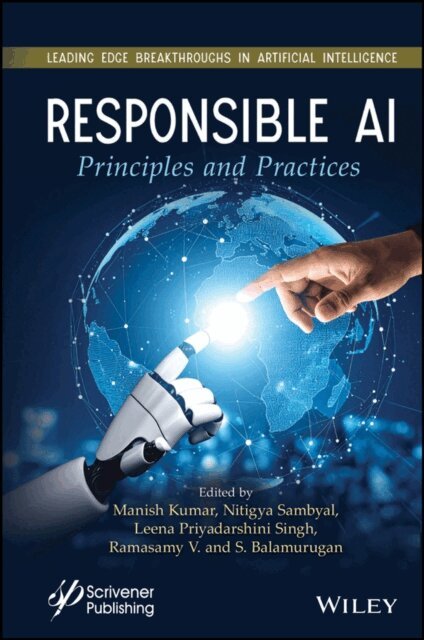
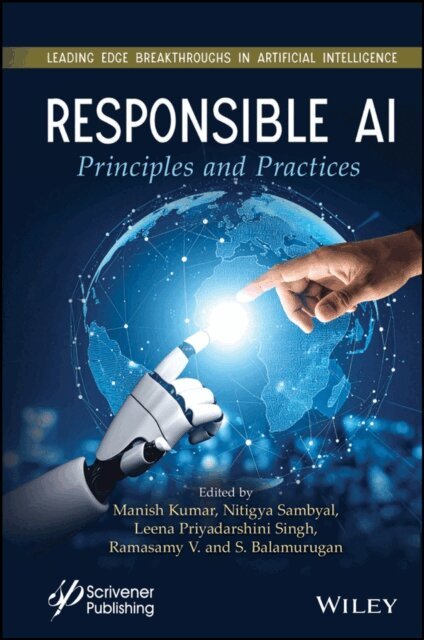
    Responsible AI

    Principles and Practices

    AvManish Kumar,Nitigya Sambyal

    Inbunden, Engelska, 2026

    2 351 kr

    Beställningsvara. Skickas inom 5-8 vardagar. Fri frakt över 249 kr.

    Beskrivning

    Bridge the gap between groundbreaking AI innovation and ethical responsibility with this comprehensive guide to the expert-led frameworks needed to navigate the complex legal, social, and moral landscapes of our digital future. Artificial Intelligence (AI) has emerged as a transformative force with the ability to bring new innovations to reshape economies, industries, and our daily lives. From advanced medical diagnostics to autonomous vehicles, AI systems are driving incomparable innovations in every sector. These advancements promise unmatched benefits and provide the potential to solve some of humanity’s most pressing challenges. However, there are many potential challenges and significant risks that come alongside the benefits provided by AI. This book offers a multidisciplinary viewpoint on how to develop and use AI systems responsibly by offering a deep dive into the ethical, legal, and societal ramifications of artificial intelligence. It explores important subjects such as algorithmic fairness, transparency, accountability, and governance through contributions from notable academics, engineers, and policy specialists. It highlights how crucial it is to match AI development with democratic norms and human values, offering both theoretical frameworks and workable implementation solutions for a range of industries. This comprehensive guide is an essential resource for scholars, professionals, and legislators dedicated to making sure that AI technology is created and applied in ways that are moral, inclusive, and advantageous to society. The reader will find the volume: Provides a multidisciplinary exploration of the ethical, legal, and social dimensions of AI;Bridges the gap between AI theory and real-world applications through practical frameworks;Covers key topics such as fairness, transparency, accountability, and governance;Serves as a valuable resource for researchers, practitioners, and policymakers aiming to build trustworthy AI systems.Audience AI practitioners, data scientists, developers, business leaders, and executives actively engaged in the development and implementation of AI systems.

    Produktinformation

    • Utgivningsdatum:2026-03-25
    • Vikt:812 g
    • Format:Inbunden
    • Språk:Engelska
    • Antal sidor:448
    • Förlag:John Wiley & Sons Inc
    • ISBN:9781394355440

    Utforska kategorier

    • Artificiell intelligens inom Data och IT

    Mer om författaren

    Manish Kumar, PhD is an Assistant Professor at the Thapar Institute of Engineering and Technology, India, with more than eight years of teaching experience. He has authored several scientific articles in international journals and conferences, as well as internationally published books and book chapters. His research interests include soft computing applications for bioinformatics problems and computational intelligence. Nitigya Sambyal, PhD is an Assistant Professor in the Department of Computer Science and Engineering at the Thapar Institute of Engineering and Technology, India. She is also a postdoctoral fellow in the Department of Information Technology at Uppsala University, Sweden. Her research interests include machine learning, deep learning, medical image analysis, and computer vision. Leena Priyadarshini Singh, PhD is an Assistant Professor in Organizational Behavior and Industrial Relations with more than 14 years of experience. She has published more than 30 research papers in refereed international journals and several chapters in edited books. Her research interests include quality of work life, work-life balance, strategic leadership, corporate governance, and corporate social responsibility. Ramasamy V., PhD is an Associate Professor in the Dr. Sagunthala Research and Development Institute of Science and Technology, Vel Tech Rangarajan, India. He is the author of several scholarly research papers in national and international journals and conferences and editor of several books. His areas of interest include mobile cloud computing, IoT, data science, artificial intelligence, and data mining. S. Balamurugan, PhD is the Director of Research at iRCS, an Indian Technological Research and Consulting firm with more than 20 years of experience. He has published more than 100 books, 300 papers in international journals and conferences, and 300 patents. He specializes in technology forecasting and decision-making for leading companies and startups.

    Innehållsförteckning

    • Series Preface xxiPreface xxiiiAcknowledgement xxvii1 AI for Social Good 1R. Srivats, Kalyanasundaram V., Abhiram Sharma, Deepika Roselind J. and Logeswari G.1.1 Introduction to AI for Social Good 21.2 AI in Healthcare 61.3 AI in Education 101.4 AI for Disaster Management and Response 141.5 AI in Culture 171.6 Conclusion and Future Work 242 Balancing Innovation and Patient Safety: Ethical AI Deployment in Healthcare 29Prajakta R. Patil, Sachin S. Mali, Riya R. Patil and Dhanashree R. Davare2.1 Introduction 292.2 The Promise of AI in Healthcare 342.3 Ethical Challenges in AI 362.4 Responsible AI Development and Deployment 392.5 Case Studies: Real-World Examples of Ethical AI in Healthcare 462.6 Strategies for Ensuring Ethical and Responsible Use of AI 522.7 The Future of Ethical AI in Healthcare 562.8 Conclusion 583 Responsible AI in Practice: Case Studies from Industry and Government 69Nabanita Roy, Sangita Roy and Shalini Kumari3.1 Introduction 693.2 Framework for Analyzing Responsible AI Implementation 713.3 Literature Review 723.4 Case Studies 723.5 Cross-Sector Analysis: Patterns in Responsible AI Implementation 743.6 Emerging Regulatory Landscape 753.7 Recommendations for Organizations 753.8 Discussion 783.9 Conclusion 794 An Efficient System for Skin Disease Detection and Localization Using Faster Region Based Convolutional Neural Networks with Inception Architecture 81Nitin Singh, Ankita Nanda, Keshav Garg, Varun Gupta, Nitigya Sambyal and Deepika Vikas Agrawal4.1 Introduction 824.2 Related Work 844.3 Proposed System 864.4 Results 964.5 Conclusion 1005 Detection of Machining Error Using Intelligent Hybrid Machine Learning Technique 105Ritu Maity5.1 Introduction 1065.2 Literature Review 1065.3 Models Used 1085.4 Methodology 1095.5 Results and Discussion 1135.6 Conclusion 1166 Ground Water Level Classification Using Machine Learning 119Charu Chaudhary, Khushi Passi, Taruna Saini, Ritika Dhaneshwar and Varun Gupta6.1 Introduction 1206.2 Related Work 1216.3 Data Description and Data Processing 1246.4 Results and Discussion 1306.5 Conclusion 1397 Sustainability in AI Development 143Riya R. Patil, Sandip A. Bandgar, Sachin S. Mali, Prajakta R. Patil and Dhanashree R. Davare7.1 Introduction 1447.2 Environmental Sustainability in AI 1487.3 Social Sustainability in AI 1527.4 Economic Sustainability in AI 1577.5 Governance and Policy for Sustainable AI 1597.6 Challenges and Future Directions 1647.7 Conclusion and Call to Action 1678 Integrating AutoML and Explainability: A Unified Approach for Decision-Making in Engineering and Social Sciences 175Ayush Dalmia and Chandramohan Dhasarathan8.1 Introduction 1768.2 Literature Study 1788.3 Proposed Model 1838.4 Evaluation of the Proposed System (Comparative Analysis/Justification with Acceptable Measures/Metrics) 1868.5 Observations 1958.6 Conclusion 1969 Trust Dynamics and Ethical Transparency in AI-Powered Mobile Apps: A Data‑Driven Exploration of User Perceptions 199Rachita Sambyal9.1 Introduction 2009.2 Review of Literature 2019.3 Research Methodology 2049.4 Results and Discussion 2049.5 Results and Recommendations 2129.6 Limitations and Future Scope 2129.7 Conclusion 21210 AI-Powered Advancements in Autonomous Vehicle Technologies 221Sachi Choudhary and Prashant Shukla10.1 Introduction 22210.2 Core AI Technologies for AVs 22410.3 Machine Learning and Deep Learning Techniques for AVs 22610.4 Computer Vision and Image Processing in AVs 22810.5 Sensor Fusion and Environmental Perception in AVs 23110.6 Object Detection and Classification in Autonomous Vehicles (AVs) 23310.7 Decision-Making and Path Planning in AVs 23510.8 AI's Role in Route Optimization, Path Planning, and Obstacle Avoidance 23910.9 Challenges of AI in Autonomous Vehicles 24010.10 Conclusion 24111 Data Security and Privacy Frameworks for AI Technologies 247Sangita Roy and Nabanita Roy11.1 Introduction 24811.2 Foundations of Data Security and Privacy in AI 24911.3 Challenges in AI-Specific Privacy and Security 25111.4 Privacy-Preserving AI Technologies 25111.5 Regulatory and Legal Frameworks 25511.6 Organizational Privacy and Security Frameworks 25811.7 Case Studies 25911.8 Designing Privacy-Centric AI Systems 26111.9 Future Directions 26411.10 Conclusion 26612 AI in Autonomous Systems 269Kalyanasundaram V., G. Prethija, Keerthi A.J., Yuvan Shankar Baabu and R. Srivats12.1 Introduction to AI in Autonomous Systems 27012.2 AI Technologies in Autonomous Systems 27412.3 Autonomous Vehicles and Real-Time Decision Making 27912.4 AI Innovations in Space and Healthcare Systems 28412.5 Safety, Ethical Considerations, and Challenges 28812.6 Future Directions and Conclusion 29113 Responsible Use of AI in Healthcare: Addressing Bias, Transparency, and Patient Trust 297Shubham Gupta13.1 Introduction 29813.2 Ethical Challenges in AI-Driven Healthcare 30013.3 Transparency in AI Systems 30613.4 Building and Maintaining Patient Trust 31113.5 Governance and Regulatory Oversight 31413.6 The Future of Ethical AI in Healthcare 31814 Advancing Healthcare with AI: Balancing Efficiency, Security, and Compliance 323Sivakumar Ramakrishnan14.1 Introduction 32414.2 Literature Review 32914.3 Identified Gaps in Literature and Future Directions 33214.4 Methodology 33314.5 Result and Discussion 34514.6 Case Studies and Real-World Examples 35114.7 Ethical Considerations in AI-Based Healthcare Fraud Detection 35314.8 Blockchain and Federated Learning: Securing AI-Based Healthcare Transactions Blockchain in Healthcare Transactions 35714.9 AI's Limitations and the Evolution of Fraud Strategies 35714.10 Conclusion 35915 AI Beyond the Veil: Techniques for Privacy Preservation 363D. Kalpanadevi15.1 Introduction 36415.2 Scope of Research 36415.3 Background 36515.4 Techniques for Privacy Preservation 36515.5 Implementation and Discussion 37315.6 Current Challenges 37515.7 Industry Adoption 37615.8 Future Directions 37715.9 Conclusion 377References 37816 VetAce – A Deep Learning Inspired Framework for Classification and Prediction of Pet Diseases 379Munish Saini, Vaibhav Arora and Harpreet Singh16.1 Introduction 38016.2 Related Work 38116.3 Analysis Methodology 38316.4 Results and Analysis 39116.5 Discussion 39516.6 Conclusion 396Bibliography 397Index 401