• Fri frakt över 249 kr
  • •
  • Snabba leveranser
  • •
  • Billiga böcker
Kundservice

Du är på sajten för privatpersoner.

Företag, bibliotek eller offentlig verksamhet?

Du handlar på classic.bokus.com, där alla dina funktioner finns intakta.
Till classic.bokus.com
Bokus logotyp. Gå till startsidan.
  • Erbjudanden
  • Nyheter
  • Student
  • Topplistor
  • Barn & ungdom
  • Bokus Play
  • E-böcker
  • Pocketböcker
  • Spel & pussel

10% rabatt på allt med kod: NYSTART10 →

Sidfot

Mina sidor

    Hjälp

    • Kundservice
    • Vanliga frågor och svar
    • Frakt och leverans
    • Retur vid ångerrätt
    • Reklamera vara
    • Betalning
    • Köpvillkor
    • Allmänna villkor
    • Information om webbplatsens tillgänglighet

    Om Bokus

    • Om oss
    • Pressrum
    • För studenter
    • För företag
    • För bibliotek och offentlig verksamhet
    • För leverantörer
    • Hållbarhet

    Populärt

    • Aktuella erbjudanden
    • Presentkort
    • Studentlitteratur
    • Nya böcker
    • Topplistor
    • Signerade böcker
    • Engelska böcker

    Inspiration

    • Boktips
    • BookTok
    • Populära bokserier
    • Barnbokskaraktärer
    • Populära författare
    Logotyp för Bokus
    Följ oss på Facebook (extern länk)Följ oss på Instagram (extern länk)Följ oss på YouTube (extern länk)Följ oss på TikTok (extern länk)
    bokus @ CookiesAnpassa cookiesIntegritetspolicyKöpvillkor
    Till Citymail hemsida (extern länk)Till Budbee hemsida (extern länk)Till Postnord hemsida (extern länk)Till Schenker hemsida (extern länk)Till Early Bird hemsida (extern länk)Till Walleys hemsida (extern länk)
    1. Naturvetenskap och teknik
    2. Matematik och naturvetenskap
    3. Naturvetenskap:allmänt

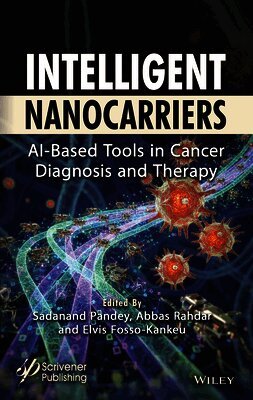
    Intelligent Nanocarriers

    AI-Based Tools in Cancer Diagnosis and Therapy

    AvSadanand Pandey,Abbas Rahdar

    Inbunden, Engelska, 2026

    2 887 kr

    Beställningsvara. Skickas inom 5-8 vardagar. Fri frakt över 249 kr.

    Beskrivning

    Transform the future of oncology with this groundbreaking volume, which details how the synergy of AI-driven machine learning and intelligent nanocarriers can bypass systemic toxicity and drug resistance to deliver the future of personalized cancer care.This groundbreaking volume explores the powerful intersection of nanotechnology and artificial intelligence in the fight against cancer. As traditional diagnostic and therapeutic strategies struggle with challenges like non-specific drug delivery, systemic toxicity, and drug resistance, this book presents a revolutionary alternative—intelligent nanocarriers enhanced by AI. These systems not only deliver drugs with remarkable precision and control, but also adapt and respond dynamically through machine learning algorithms, ushering in a new era of personalized, high-efficiency oncology. Structured across twelve expertly written chapters, the book covers foundational concepts, advanced applications, and future directions. Readers will gain deep insights into AI-assisted nanocarrier design, synthesis optimization, biomarker detection, and real-time diagnostic imaging. Real-world case studies, emerging innovations like AI-guided radiotherapy and quantum-enhanced analytics, and discussions on ethical and regulatory considerations make this book a comprehensive guide for both academic and industry professionals shaping the future of precision cancer therapy.Readers will find the volume: Explores the powerful synergy between artificial intelligence and nanocarrier technology in cancer care;Covers key nanostructures and AI tools, drawing from biomedical, clinical, and data sciences;Includes case studies and clinical insights to connect theory with practice;Highlights emerging trends like AI-guided radiotherapy and quantum computing in oncology.AudienceAcademics, researchers, biomedical engineers, nanotechnologists, materials scientists, oncologists, clinical researchers, and medical professionals involved in the design and development of drug delivery systems.

    Produktinformation

    • Utgivningsdatum:2026-04-27
    • Mått:155 x 231 x 38 mm
    • Vikt:975 g
    • Format:Inbunden
    • Språk:Engelska
    • Antal sidor:608
    • Förlag:John Wiley & Sons Inc
    • ISBN:9781394384860

    Utforska kategorier

    • Naturvetenskap:allmänt inom Naturvetenskap och teknik

    Mer om författaren

    Sadanand Pandey, PhD is a Professor in the School of Bioengineering and Food Technology at Shoolini University Solan, Himachal Pradesh, India, with more than 15 years of experience. He has authored more than 300 publications in peer-reviewed journals and contributed more than 30 book chapters for leading scientific publishers. His research spans polymer science, nanotechnology, and composite materials, with particular emphasis on nanocomposites and surface modifications. Abbas Rahdar, PhD is an Associate Professor in the Department of Physics at the University of Zabol, Iran. He has authored more than 400 publications in peer-reviewed journals and 15 book chapters. His major areas of research include nanoparticles synthesis and physical characterization and biomedical applications. Elvis Fosso-Kankeu, PhD is a Professor in the Department of Metallurgy at the University of Johannesburg, South Africa. He has published more than ten books and more than 250 papers, including journal articles, books, book chapters, and conference proceedings. His research focuses on the hydrometallurgical extraction of metal from solid phases, prediction of pollutants dispersion from industrial areas, and the development of effective and sustainable methods for the removal of inorganic and organic pollutants from polluted water.

    Innehållsförteckning

    • Preface xv1 Nanocarriers for Diagnosis and Treatment of Oncology 1Mohammad Javad Javid-Naderi, Fatemeh Akbarzadeh-Ebrahimi, Dora Iliana Medina and Abbas Rahdar1.1 Introduction 21.2 Types of Nanocarriers 31.2.1 Liposomes 41.2.2 Micelles 41.2.3 Polymer-Based Nanocarriers 51.2.4 Dendrimers 51.2.5 Carbon-Based Nanocarriers 61.3 Nanocarriers in Cancer Diagnosis 81.3.1 Imaging Techniques Enhanced by Nanocarriers 91.3.2 Theranostic Nanocarriers 131.4 Nanocarriers in Cancer Treatment 141.4.1 Targeted Drug Delivery Using Nanocarriers 141.4.2 Chemotherapy with Nanocarriers 181.4.3 Gene Therapy and RNA Delivery 201.4.4 Photothermal and Photodynamic Therapy 22Outlook and Conclusion 23References 242 Artificial Intelligence in Modern Healthcare 35Hamidreza Hosseini, Abbas Rahdar, Abolfazl Tabatabaei, Sadanand Pandey and Maryam Shirzad2.1 Introduction to AI 362.1.1 Role of AI in Medical Imaging and Diagnostics 472.2 Features of Medical Images 502.3 Leading CAD Systems 532.4 Recent Developments in the Field of dl 562.5 Clinical Requirements and Obstacles 582.6 Applications in the Area of Medicine and Healthcare 592.7 CAD Pulmonary Artery Occlusion 602.8 CAD (Computer-Aided Diagnosis) Compatible with Lung Nodules 612.8.1 AI in Imaging Modalities 76Conclusion 108References 1093 Foundation of AI-Enhanced Nanocarriers 121Pejman Zarbanooei, Sanaz Aliakbarzadeh, Abbas Rahdar and Maryam Shirzad3.1 Introduction 1223.2 Introduction to Intelligent Nanocarriers: Bridging AI and Nanomedicine 1243.2.1 Types of Nanocarriers 1243.2.1.1 Liposomes 1243.2.1.2 Micelles 1243.2.1.3 Polymer-Based Nanocarriers 1253.2.1.4 Dendrimers 1253.2.1.5 Carbon-Based Nanocarriers 1253.2.2 Nanocarriers in Cancer Diagnosis 1263.2.2.1 Imaging Techniques Enhanced by Nanocarriers 1263.2.2.2 Theranostic Nanocarriers 1273.2.3 Nanocarriers in Cancer Treatment 1273.2.3.1 Targeted Drug Delivery 1273.2.3.2 Chemotherapy with Nanocarriers 1283.2.3.3 Gene Therapy and RNA Delivery 1283.2.3.4 Immunotherapy with Nanocarriers 1293.3 Fundamentals of Artificial Intelligence in Oncology: A Primer 1293.3.1 Introduction to Artificial Intelligence 1293.3.2 Role of Artificial Intelligence in Precision Oncology 1343.3.3 Implementation of Artificial Intelligence in Cancer Imaging 1353.3.4 Artificial Intelligence and Translational Oncology 1393.3.5 Challenges and Limitations 1413.4 Nanocarriers in Cancer Therapy: An Overview of Traditional vs. AI-Enhanced Approaches 1433.5 Conclusion and Future Prospects 145References 1464 Design and Development of AI-Based Nanocarriers 157Ashkan Hajjafari, Narges Lotfalizadeh, Mansour Bayat, Abbas Rahdar, Maryam Shirzad and Guettari Moez4.1 Introduction 1584.2 Machine Learning Algorithms in Nanocarrier Design: Optimization and Innovation 1614.3 AI-Driven Predictive Modeling for Nanocarrier Efficacy and Safety 1674.4 Smart Materials (SMs) for Intelligent Nanocarriers: Integration of AI and Nanotechnology 1744.5 Future and Challenges 181Conclusion 183References 1845 Artificial Intelligence (AI) in Cancer Diagnosis and Targeting 195Fatemeh Momtaz, Elham Momtaz, Mahdieh Momtaz, M. Ali Aboudzadeh and Abbas Rahdar5.1 Introduction 1965.2 AI-Powered Imaging Techniques for Early Cancer Detection 1975.2.1 Ai 1975.2.2 Imaging Techniques 1995.2.3 Application of AI for Cancer Treatment 2015.2.4 Imaging Techniques Based on AI for Cancer Diagnosis 2025.3 Precision Targeting: AI’s Role in Nanocarrier‐Based Drug Delivery Systems 2055.3.1 Nanocarriers 2055.3.2 Targeting Delivery of Nanocarriers 2085.3.3 Precision Targeting: AIs Role in Nanocarrier-Based Drug Delivery Systems 2095.4 TME and AI: Enhancing Targeted Delivery of Nanocarriers 2125.4.1 Tme 2125.4.2 Stimulus-Responsive Nanocarriers 2145.4.3 Application of AI in TME 2175.5 Challenges and Opportunities 2185.6 Conclusion 219References 2206 Artificial Intelligence (AI)-Based Nanocarriers in Cancer Therapy 233Mahdieh Momtaz, Elham Momtaz, Fatemeh Momtaz, Zeinab Moafian, Suresh Ghotekar and Abbas Rahdar6.1 Introduction 2346.2 AI for Predicting Nanocarrier Performance 2356.2.1 Drug Encapsulation and Release Capacity 2356.2.2 Pharmacokinetics Drugs 2386.2.3 In Vitro/In Vivo 2396.2.4 AI for Predicting Nanocarriers Performance 2416.2.4.1 AI for Encapsulation 2426.2.4.2 AI for Drug Release 2436.2.4.3 AI for Pharmacokinetics and Pharmacodynamics 2436.2.4.4 AI for In Vivo/In Vitro 2446.3 AI-Powered High-Throughput Screening for Nanocarrier Formulation 2456.3.1 Nanocarriers 2456.3.2 Nanocarriers Formulation Optimization 2466.3.3 High-Throughput Design and Formulation of Nanocarriers 2476.3.3.1 Microfluidic Technology 2476.3.3.2 Virtual Library Screening Methods 2496.3.3.3 Molecular Dynamics (MD) Simulation 2496.3.4 The Role of AI in Nanocarrier Design and High‐Throughput Screening 2506.4 Role of AI in Stimuli-Responsive Nanocarriers 2516.4.1 Smart Nanocarriers 2516.4.1.1 Dendrimer 2516.4.1.2 Liposome 2526.4.1.3 Micelles 2526.4.1.4 Mesoporous Silica Nanoparticles (MSNs) 2526.4.1.5 Gold Nanoparticles 2536.4.1.6 Quantum Dots (QDs) 2536.4.1.7 Carbon Nanotubes (CNTs) 2546.4.2 Drug Release Control with Stimuli-Responsive Nanocarriers 2556.4.2.1 Internal Stimulus for Drug Delivery Systems 2556.4.2.2 External Stimulus for Drug Delivery Systems 2596.4.2.3 Nanocarriers Responsive to Multiple Stimuli 2626.4.3 Role of AI in Stimuli-Responsive Nanocarriers 2636.5 Challenges and Opportunities 2656.6 Conclusion 265References 2667 Artificial Intelligence (AI)-Enabled Nanocarriers in Cancer Diagnosis 283Zakieh Sadat Hoseini, Amir Mohammad Najafi, Fatemeh Nouri Rouzbahani, Renato Nery Soriano and Abbas Rahdar7.1 Introduction 2847.2 Advancements in Nanotechnology and AI: Transforming Diagnostic Imaging 2867.2.1 Traditional Medical Imaging and Its Limitations 2867.2.2 High-Resolution Imaging of Extracellular Vesicles Using Nanotechnology 2877.2.3 Nanoscale Imaging and AI Integration for Precise Disease Diagnosis 2907.3 Nanocarrier-Assisted AI for Liquid Biopsy: Enhancing Circulating Tumor Cell Detection and Biomarker Extraction 2947.3.1 Liquid Biopsy: Principles and Clinical Applications 2947.3.2 Nanomaterial-Based Strategies for CTC Isolation 2957.3.3 Artificial Intelligence Integration in Liquid Biopsy Data Analysis 2967.4 Nanoparticle-Integrated, AI-Enhanced Biosensors for Real-Time Cancer Diagnostics 3007.4.1 Biosensor Fundamentals and Nanoparticle Enhancement 3007.4.2 Nanoparticle Applications in Biosensor Platforms 3017.4.3 Integration of AI Algorithms in Biosensing 3027.5 Future Prospects of AI-Driven Nanocarriers in Cancer Detection 3067.6 Conclusion 307References 3088 AI-Based Nanocarriers in Gene Therapy and Immunotherapy 319Heshmat Razlansari, Mahtab Razlansari, Masoud Kahrizi, Mohsen Kahrizi and Abbas Rahdar8.1 Introduction 3208.1.1 AI-Guided Nanocarriers in Chemotherapy Delivery 3228.1.1.1 Revolutionizing Traditional Cancer Treatments with Targeted Systems 3268.1.2 Immunotherapy and AI-Assisted Nanocarriers 3298.1.2.1 Enhancing Immune Response Modulation with Intelligent Nanotechnologies 3338.1.3 AI-Based Nanocarriers in Gene Therapy for Cancer 3378.1.3.1 Innovations in Delivery of RNA/DNA-Based Therapeutics 339Conclusion 344References 3459 Clinical Applications and Case Studies 357Roghaieh Holghoomi, Abbas Rahdar and Renato Nery Soriano9.1 Introduction 3589.2 Clinical Applications of Artificial Intelligence-Enhanced Nanocarriers: Current Progress and Future Prospects 3629.2.1 AI’s Diagnostics Application 3639.2.1.1 AI in the Analysis of Molecular Profiling Identified through Nanotechnology 3639.2.1.2 AI’s Utilization in Advanced Nanosensors for the Profiling of Biomarkers 3669.2.2 AI’s Therapeutic Applications 3679.2.2.1 AI’s Utilization in the Development of Drug-Loaded Nanoparticles for Nanomedicine 3689.2.2.2 AI’s Utilization in Nanomedicine to Attain Therapeutic Synergism 3709.2.2.3 Artificial Intelligence in the Advancement of Nanomedicine for Personalized Drug Targeting and Dosage Optimization 3719.3 Case Studies: Artificial Intelligence-Driven Nanocarrier Systems in Personalized Cancer Therapy 3729.4 Overcoming Challenges: Artificial Intelligence and Nanocarrier Synergy in Complex Oncological Cases 3749.5 Conclusion 375References 37610 AI-Guided Radiotherapy and Nanocarrier Synergy to Treat Cancers 381Mehrab Pourmadadi, Zahra Omrani, Abbas Rahdar, Elvis Fosso-Kankeu and Sadanand Pandey10.1 Introduction 38210.2 Artificial Intelligence-Based Radiotherapy to Treat Cancers 38410.2.1 Radiotherapy 38410.2.2 Artificial Intelligence-Based Radiotherapy to Treat Cancers 38810.3 AI-Guided Radiotherapy and Nanocarrier Synergy to Treat Cancers: “Combining Radiotherapy with AI-Enhanced Nanocarriers to Improve Therapeutic Outcomes” 39510.4 Future Perspective 40110.5 Conclusion 402References 40311 Integrating Artificial Intelligence and Quantum Computing with Omics Data for Cancer Therapy and Diagnosis 413Ali Bakhshi, Mahya Bakhshi, Mojtaba Hosseine, Hossein Hasannezhad, Abbas Rahdar, Elvis Fosso-Kankeu and Sadanand PandeyAbbreviations 41411.1 Introduction 41711.2 What is Omics? 42211.2.1 Omics Technology 42311.2.2 Technology-Based Omics 42411.2.2.1 Sequencing-Based Omics 42411.2.2.2 MS-Based Omics 42611.2.3 Knowledge-Based Omics 42711.2.4 Multi-Omics 42811.3 Omics Data 43011.3.1 Data Types in Omics 43111.3.2 Datasets 43511.4 AI-Driven Multi-Omics Integration for Cancer Diagnosis 44411.4.1 Biomarker Discovery 44611.4.2 Imaging and Histopathology 44811.5 AI-Driven Multi-Omics Integration in Cancer Therapy 45311.5.1 Drug Repurposing and Combination Therapy Design 45411.5.2 Overcoming Resistance through AI-Driven Mechanistic Insights 46711.5.3 AI in Immunotherapy Optimization 47311.5.4 AI in Predicting Therapy-Related Adverse Effects 47611.6 Integration of Artificial Intelligence and Omics Technologies for Precision Oncology 47811.7 Quantum Artificial Intelligence in Oncology 48211.7.1 Quantum Algorithms in Drug Discovery and Molecular Simulations 48311.7.2 Quantum Machine Learning for Multi-Omics 48711.7.3 Quantum Artificial Intelligence for Biomedical Instrumentation 48711.7.4 Challenges Associated with Quantum Artificial Intelligence 49011.8 Challenges and Opportunities 49111.8.1 Challenges 49211.8.1.1 Data Standardization and Interoperability 49211.8.1.2 Computational Complexity and Scalability 49211.8.1.3 Ethical and Regulatory Concerns 49211.8.1.4 Validation and Clinical Translation 49311.8.2 Opportunities 49311.8.2.1 Advancements in Quantum Hardware and AI Models 49311.8.2.2 AI-Driven Precision Oncology 49311.8.2.3 Multi-Omics and Single-Cell Technologies 49311.8.2.4 AI-QAI Hybrid Approaches for Drug Discovery 49411.9 Future Perspective 494Conclusion 497References 49812 Ethical, Regulatory, and Future Perspectives 525Sanaz Aliakbarzadeh, Pejman Zarbanooei, Majid Abdouss, Abbas Rahdar and Luiz Fernando Romanholo Ferreira12.1 Introduction 52612.2 Ethical Issues with AI and Nanocarrier Applications in Oncology 52912.2.1 Ethical Challenges 52912.2.2 USA Food and Drug Administration 53512.2.3 European Union 53812.3 Regulatory Challenges and Pathways for AI-Enhanced Nanocarrier Therapies 54312.4 The Future of Intelligent Nanocarriers: Innovations, Challenges, and Opportunities 54812.5 Conclusion and Future Perspectives 561References 563Index 571