• Fri frakt över 249 kr
  • •
  • Snabba leveranser
  • •
  • Billiga böcker
Kundservice

Du är på sajten för privatpersoner.

Företag, bibliotek eller offentlig verksamhet?

Du handlar på classic.bokus.com, där alla dina funktioner finns intakta.
Till classic.bokus.com
Bokus logotyp. Gå till startsidan.
  • Erbjudanden
  • Student
  • Topplistor
  • Barn & ungdom
  • Bokus Play
  • E-böcker
  • Ljudböcker
  • Pocketböcker
  • Spel och pussel

5% studentrabatt – använd koden KURSBOK27 →

Sidfot

Mina sidor

    Hjälp

    • Kundservice
    • Vanliga frågor och svar
    • Frakt och leverans
    • Retur vid ångerrätt
    • Reklamera vara
    • Betalning
    • Köpvillkor
    • Allmänna villkor
    • Information om webbplatsens tillgänglighet

    Om Bokus

    • Om oss
    • Pressrum
    • För studenter
    • För företag
    • För bibliotek och offentlig verksamhet
    • För leverantörer
    • Hållbarhet

    Populärt

    • Aktuella erbjudanden
    • Presentkort
    • Studentlitteratur
    • Nya böcker
    • Topplistor
    • Signerade böcker
    • Engelska böcker

    Inspiration

    • Boktips
    • BookTok
    • Barnbokskaraktärer
    • Populära författare
    Logotyp för Bokus
    Följ oss på Facebook (extern länk)Följ oss på Instagram (extern länk)Följ oss på YouTube (extern länk)Följ oss på TikTok (extern länk)
    bokus @ CookiesAnpassa cookiesIntegritetspolicyKöpvillkor
    Till Citymail hemsida (extern länk)Till Budbee hemsida (extern länk)Till Postnord hemsida (extern länk)Till Schenker hemsida (extern länk)Till Early Bird hemsida (extern länk)Till Walleys hemsida (extern länk)
    1. Medicin
    2. Veterinärmedicin
    3. Veterinärmedicin: allmänt

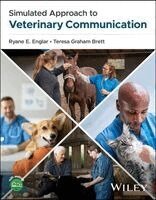
    Simulated Approach to Veterinary Communication

    AvRyane E. Englar,Teresa Graham Brett

    Häftad, Engelska, 2026

    1 072 kr

    Beställningsvara. Skickas inom 5-8 vardagar. Fri frakt över 249 kr.

    Beskrivning

    Empowers veterinary educators to design from scratch, modify, or adopt the authors’ own comprehensive, simulation-based communication curriculum, combining andragogical principles, evidence-based practice, and practical tools to enhance the delivery of relationship-centered care. Simulated Approach to Veterinary Communication tracks the evolution of communication training and relational practice in healthcare. Readers are introduced to foundational communication theories and models, as well as the growing evidence that effective communication enhances healthcare delivery and patient outcomes through improved information exchange and stronger veterinary client-healthcare provider relationships. The book translates theory into practical application exercises, offering 30 simulated client encounters for veterinary curricula. This debut of an entire curriculum provides educators with a complete, evidence-based framework for integrating communication training across all species and practice settings. This one-of-a-kind resource offers practical implementation that is unparalleled. The book presents fifteen chapters covering communication theory, models, and client communication preferences as well as strategies for simulation design. A companion website delivers all components of all 30 simulations, including preparatory materials, simulation scripts, door charts, rubrics, and post-encounter reflection prompts. In addition, the companion website offers over 150 ready-to-implement clinical case vignettes for in-class use. The modular design allows the content to be adapted to a wide variety of needs: Species-specific communication guidance for canine, feline, equine, ruminant, and exotic animal practitioners and student doctors in trainingEvidence-based frameworks for building reflective practice. This requires providers to deepen their exploration of self as they learn to integrate personal, social, and professional identities to build capacity for their own unique delivery of relationship-centered careApplication of the Calgary-Cambridge consultation model and associated communication skills to simulation experiencesComplete scripts, preparatory work, and reflection assignments for 30 simulations that span the breadth and depth of clinical practice, including wellness visits, sick and emergency visits, end-of-life, economic euthanasia, mandatory animal cruelty reporting, and conflict within the veterinary teamDesigned for anyone involved in teaching or learning communication skills in veterinary medicine, including veterinary faculty, veterinary technician educators, curriculum developers, clinical and professional skills course coordinators, and veterinary and veterinary technician students, Simulated Approach to Veterinary Communication provides the blueprint for communication curricular design. This text allows for rapid implementation of effective, reproducible training for the interpersonal demands of modern veterinary practice

    Produktinformation

    • Utgivningsdatum:2026-03-23
    • Mått:216 x 272 x 25 mm
    • Vikt:1 293 g
    • Format:Häftad
    • Språk:Engelska
    • Antal sidor:496
    • Förlag:John Wiley & Sons Inc
    • ISBN:9781394407873

    Utforska kategorier

    • Veterinärmedicin: allmänt inom Medicin

    Mer om författaren

    Ryane E. Englar, DVM, DABVP (Canine and Feline Practice), is Professor of Practice and Executive Director of Clinical and Professional Skills at the University of Arizona College of Veterinary Medicine in Oro Valley, Arizona, USA. Teresa Graham Brett, JD, is Senior Associate Dean for Student and Community Engagement at the University of Arizona College of Veterinary Medicine in Oro Valley, Arizona, USA.

    Innehållsförteckning

    • Acknowledgment vRyane E. Englar, DVM, DABVP (Canine and Feline Practice) and Teresa Graham Brett, JDDedication viiRyane E. Englar, DVM, DABVP (Canine and Feline Practice) and Teresa Graham Brett, JDAbout the Authors xxvRyane E. Englar, DVM, DABVP (Canine and Feline Practice) and Teresa Graham Brett, JDPreface xxviiRyane E. Englar, DVM, DABVP (Canine and Feline Practice) and Teresa Graham Brett, JDAbout the Companion Website xxxii[PRINTED BOOK]PART 1 BUILDING A CASE FOR COMMUNICATION SKILLS TRAINING IN VETERINARY CURRICULA1 Tracking the Perceived Need for Clinical Communication Training in Veterinary Medicine Over Time: Bridging the Gaps Between Education and Practice 31.1 The Case for Communication in Human Healthcare Curricula, 31.2 Pushback Against the Introduction of Communication Training to Veterinary Medical Education, 41.3 Turning the Tide: The Pew Report, 41.4 Acknowledging and Addressing Income Stagnation: The Brakke Study, 51.5 The State of the Veterinary Profession's Economic Health: The KPMG Study, 51.6 The Establishment of the National Commission on Veterinary Economic Issues, 61.7 Actions Taken by Other Stakeholders, 61.8 Additional Evidence for Communication Training in Veterinary Education, 91.9 The Roadmap for Veterinary Education, 101.10 The Push for Outcomes Assessment Gets Stronger, 101.11 Concerns About New Graduates' Lack of Confidence Persist: Reactions and Actions Taken, 101.12 Multiple Accrediting Bodies Accept the Evidence and Require Communication Training, 111.13 What's Next in Veterinary Medical Education?, 142 Understanding Self Before Understanding Others: Developing Awareness of Personal and Professional Identities 192.1 Relationship-centered Care in Veterinary Medicine, 202.2 Frames of Reference, 212.3 Identity as a Whole, 242.4 The Role of Professional Identity Formation in Understanding Self, 242.5 Integrating Personal, Social, and Professional Identities to Build Capacity for Culturally Responsive Care, 263 Interacting With Others in Healthcare: Mitigating Bias and Acknowledging the Effects of Expectations, Perceptions, and Assumptions on Framing Care and Forward Planning 323.1 Interpersonal Communication, Dialogic Communication, and Intergroup Interactions in Healthcare, 323.2 Adaptive Unconscious and Implicit/Explicit Learning, 423.3 Implicit Assumptions, Categorization, and Bias in Healthcare, 453.4 Malleability of Implicit Bias, 463.5 Moving From Reaction to Response, 503.6 Intent and Impact Are Not Always the Same, 513.7 Intent and Impact in Healthcare Settings, 533.8 A Brief Examination of Feedback, 543.9 Post-simulation Feedback and the Potential for Discrepancies Between the Learner's Experience and the Simulated Client's, 544 Viewing Communication Through Another's Lens: Which Communication Skills Do Canine and Feline Caregivers Prioritize? 62Ryane E. Englar, DVM, DABVP (Canine and Feline Practice)4.1 The Evolving Human–Animal Bond, 624.2 Four Foundational Communication Skills: RENO, 644.3 Expanding the Communication Toolbox: TONERR, 724.4 Towards a Deeper Understanding of Dog-owner and Cat-owner Communication Preferences, 754.5 Cost of Care-related Communication Preferences, 794.6 Communication Preferences of Cat and Dog Breeders, 814.7 Concluding Thoughts, 845 Viewing Communication Through Another's Lens: Which Communication Skills Do Equine Caregivers Prioritize? 93Ryane E. Englar, DVM, DABVP (Canine and Feline Practice)5.1 Establishing Elements That Are Foundational to Success in Equine Practice from the Client's Perspective, 935.2 Building Upon the Foundation of Successful Veterinarian–Client Relationships, 945.3 Additional Considerations on Partnership and the Need for Veterinarians to Assess Clients' Knowledge, 965.4 Expectations Surrounding Decision-making and Financing Care, 975.5 Concluding Thoughts, 986 Viewing Communication Through Another's Lens: Considerations for Communicating With Bovine Producers 101Ryane E. Englar, DVM, DABVP (Canine and Feline Practice)6.1 The Shift in Role from Reactive Expert-in-charge to Proactive Guide-on-the-side, 1016.2 Lessons from Motivational Interviewing, 1036.3 Diving Deeper into Motivation: What Drives the Dairy Farmer?, 1076.4 Beyond Motivation: Considering Differences in Learning Styles, 1096.5 The “Hard-to-reach Farmer”, 1116.6 Other Stakeholders and Associated Challenges, 1136.7 Motivations and Barriers from the Veterinarian's Perspective, 1146.8 Applications: Communication About Biosecurity, 1156.9 Applications: Communication About Antibiotic Use, 1166.10 Applications: Communication About Lameness, 1176.11 Applications: Communication About Calf-rearing, 1176.12 Concluding Thoughts, 1187 Viewing Communication Through Another's Lens: Considerations for Communicating With Exotic Animal Caregivers 124Ryane E. Englar, DVM, DABVP (Canine and Feline Practice)7.1 Communicating With Caregivers of Amphibians, 1297.2 Communicating With Caregivers of Reptiles, 1327.3 Communicating With Caregivers of Avian Species, 1467.4 Communicating With Caregivers of Exotic Companion Mammals (ECMs), 1537.5 Concluding Thoughts, 1618 Communication Models: Integrating Theory Into Practice 1668.1 The Development of Consultation Models, 1688.2 The Calgary–Cambridge Model, 1718.3 The Revised Calgary–Cambridge Model for Veterinary Patients, 1748.4 Limitations of Consultation Models, 1758.5 Englar–Brett Adaptations of the Calgary–Cambridge Consultation Model, 1779 Incorporating Communication Into Curricula: Learning Through Engaging 1829.1 The Emergence of Skills Training in Healthcare Programs, 1829.2 Where Does Communication Fit?, 1849.3 Redefining Learners, 1859.4 Optimizing Our Approach to Learning, 1879.5 Curricular Integration of Communication Training, 1909.6 Concluding Thoughts, 19310 Structuring Simulated Client Encounters 19810.1 Prior to Simulation: The Realm of Authentic Interactions, 19810.2 The Shift Toward Simulation, 20210.3 Simulation Decision-making: What Is Required to Invest in Simulations for Communication Training?, 20310.4 Simulation Decision-making: Who Is Required for Communication Simulations?, 20810.5 Simulation Decision-making: How Are Communication Simulations Structured?, 21610.6 Additional Considerations with Respect to Assessment, 22210.7 Other Simulation Options, 22311 Scripting Simulated Client Encounters 22611.1 Planning for Simulation, 22611.2 How Real Is Real?, 22811.3 Defining a Scenario, 23011.4 Selecting a Scriptwriting Team, 23311.5 Developing Overarching Goals of the Simulation, 23411.6 Formulating Learning Objectives, 23711.7 Establishing Case Logistics, 23911.8 Detailing the Client: Character Development, 23911.9 Detailing the Patient(s): Character Development, 24411.10 Establishing the Rules of the Simulation (From the Perspective of the SC), 24811.11 Establishing the Opening Statement, 24911.12 Providing Special Instructions or Prompts, 24911.13 Providing Rubrics for SC Written Feedback, 25211.14 What Learners Are Given in Advance of the Encounter?, 25311.15 SC Training, 25311.16 Piloting and Revising, 25411.17 Concluding Thoughts, 25412 Preparing the Learner for Simulated Client Encounters: Investing in Preparatory Work 25712.1 Toward a Shared Definition of Preparatory Work, 25912.2 Differing Perspectives on Prework: The Educator's Point of View, 26112.3 Differing Perspectives on Prework: The Learner's Point of View, 26312.4 Prework for Simulations at the University of Arizona College of Veterinary Medicine, 26412.5 Same-day on-site Briefing for Simulations at the University of Arizona College of Veterinary Medicine, 26912.6 Concluding Thoughts on Preparatory Work for Simulations, 27313 Becoming a Reflective Practitioner: Building Value into Post-encounter Reflections 27613.1 Toward a Working Definition of What It Means to Be Reflective, 27813.2 Reflective Practitioners Must First Become Reflective Learners, 28313.3 Reflective Practice Is a Learned Skill: Making Meaning of Learning, 28613.4 Models of Reflective Practice, 29013.5 Strategies for Incorporating Reflective Practice into Curricula, 30313.6 Our Process for Incorporating Reflective Practice into Our Simulation Program Within Professional Skills Coursework at the University of Arizona College of Veterinary Medicine, 31113.7 Concluding Thoughts, 31914 The Path Forward: Making the Simulation Experience More Inclusive 32515 Technological Advances in Communications Training: The Emergence of Veterinary DialogueTrainer as a Leading Interactive Teaching Tool 328Quintie Stoel (MSc), Saskia Nab (DVM) and Jolanda Jansen (PhD, MSc)15.1 The Relevance of Simulation-based Training (SBT), 32815.2 The Next Level of Simulation-based Training (SBT): The Veterinary DialogueTrainer (VDT), 32815.3 What Does a VDT Role-play Look Like?, 32915.4 Veterinary DialogueTrainer Dashboard and Data Collection, 33015.5 How Is Each VDT Virtual Role-play Customized?, 33115.6 Current Users of the Veterinary DialogueTrainer, 33315.7 Embedding VDT Simulations into a Comprehensive E-learning, 33315.8 Current Topics and Species Coverage in VDT Role-plays, 33415.9 Evidence for the VDT as an Innovative Tool to Improve the Efficacy of Communication Skills Training, 33515.10 The Endless Possibilities of Veterinary DialogueTrainer, 33515.11 Ready to Try a VDT Demo? Developed in Partnership with the University of Arizona College of Veterinary Medicine: Intra-team Conflict, 33615.12 Customizing the Veterinary DialogueTrainer to Meet Your Needs: Contact the Team Today!, 336Appendix A What the Current Literature Tells Us About Simulation-based Education (SBE) in Veterinary Curricula 338Appendix B The Englar–Brett Communication Consultation Models 443Index 453[COMPANION WEBSITE]PART 2 Case Vignettes for Role-play and In-class Discussion16 Clinical Case Vignettes: Canine/Feline 16-1Ryane E. Englar, DVM, DABVP (Canine and Feline Practice)17 Clinical Case Vignettes: Equine 17-1Sarah Eaton, DVM, DACT, CVA, DABVP-Equine18 Clinical Case Vignettes: Small Ruminant 18-1Skyler Bentley and Ryane E. Englar, DVM, DABVP (Canine and Feline Practice)19 Clinical Case Vignettes: Bovine 19-1Ryane E. Englar, DVM, DABVP (Canine and Feline Practice)Jennifer Koziol, DVM, MS, DACTAppendix C Integrative Assignments C-1Ryane E. Englar, DVM, DABVP (Canine and Feline Practice)Teresa Graham Brett, JDAppendix D Overview of Simulations at the University of Arizona College of Veterinary Medicine (UA-CVM) D-1Ryane E. Englar, DVM, DABVP (Canine and Feline Practice)Teresa Graham Brett, JDAppendix E Door Charts: What Information Learners Are Given Before They Enter the Simulated Exam Room E-1Ryane E. Englar, DVM, DABVP (Canine and Feline Practice)Teresa Graham Brett, JDAppendix F Pre-encounter Assignments (PreWork): What the Learner Completes Prior to Engaging in the Simulation F-1Ryane E. Englar, DVM, DABVP (Canine and Feline Practice)Teresa Graham Brett, JDAppendix G Post-encounter Reflection Assignments: What the Learner Completes After Engaging in the Simulation G-1Ryane E. Englar, DVM, DABVP (Canine and Feline Practice)Teresa Graham Brett, JDAppendix H Scripts for Simulations H-1Ryane E. Englar, DVM, DABVP (Canine and Feline Practice)Teresa Graham Brett, JDAppendix I Rubrics for Written Feedback I-1Ryane E. Englar, DVM, DABVP (Canine and Feline Practice)Teresa Graham Brett, JD