• Fri frakt över 249 kr
  • •
  • Snabba leveranser
  • •
  • Billiga böcker
Kundservice

Du är på sajten för privatpersoner.

Företag, bibliotek eller offentlig verksamhet?

Du handlar på classic.bokus.com, där alla dina funktioner finns intakta.
Till classic.bokus.com
Bokus logotyp. Gå till startsidan.
  • Erbjudanden
  • Nyheter
  • Student
  • Topplistor
  • Barn & ungdom
  • Bokus Play
  • E-böcker
  • Pocketböcker
  • Spel & pussel

10% rabatt på allt med kod NYSTART10 →

Sidfot

Mina sidor

    Hjälp

    • Kundservice
    • Vanliga frågor och svar
    • Frakt och leverans
    • Retur vid ångerrätt
    • Reklamera vara
    • Betalning
    • Köpvillkor
    • Allmänna villkor
    • Information om webbplatsens tillgänglighet

    Om Bokus

    • Om oss
    • Pressrum
    • För studenter
    • För företag
    • För bibliotek och offentlig verksamhet
    • För leverantörer
    • Hållbarhet

    Populärt

    • Aktuella erbjudanden
    • Presentkort
    • Studentlitteratur
    • Nya böcker
    • Topplistor
    • Signerade böcker
    • Engelska böcker

    Inspiration

    • Boktips
    • BookTok
    • Populära bokserier
    • Barnbokskaraktärer
    • Populära författare
    Logotyp för Bokus
    Följ oss på Facebook (extern länk)Följ oss på Instagram (extern länk)Följ oss på YouTube (extern länk)Följ oss på TikTok (extern länk)
    bokus @ CookiesAnpassa cookiesIntegritetspolicyKöpvillkor
    Till Citymail hemsida (extern länk)Till Budbee hemsida (extern länk)Till Postnord hemsida (extern länk)Till Schenker hemsida (extern länk)Till Early Bird hemsida (extern länk)Till Walleys hemsida (extern länk)
    1. Data och IT
    2. Systemvetenskap och AI

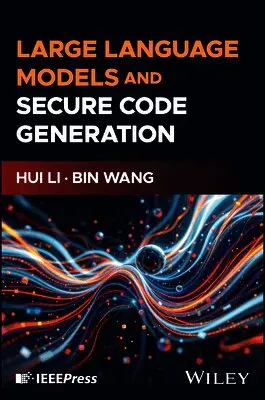
    Large Language Models and Secure Code Generation

    AvHui Li,Bin Wang

    Inbunden, Engelska, 2027

    1 604 kr

    Kommande

    Beskrivning

    Automate, harden, and validate code generation using large language models LLM-generated code introduces vulnerabilities that conventional static analysis often misses. Large Language Models and Secure Code Generation addresses this problem directly, presenting methods to produce secure, production-quality code and integrate models into modern software security workflows. The book details techniques including Prompt Engineering, Prefix-Tuning, and Retrieval-Augmented Generation for improving code security. It introduces Mechanistic AI, advocating a shift from syntactic security to semantic-pragmatic security, and examines LLM-driven agents that orchestrate security audits. Coverage extends to multimodal and on-device LLM deployment trends, with code snippets, configuration examples, and task-specific recipes throughout each chapter. Readers will also find: Real-world case studies illustrating how leading teams leverage LLMs to accelerate secure feature development across production environmentsEnd-of-chapter questions and exercises designed to reinforce core concepts in secure code generation and LLM safetyMethods for gathering high-quality code examples, setting training objectives, and fine-tuning models for security-critical applicationsDesign patterns for LLM-driven agents capable of orchestrating automated security audits and adaptive threat responseCoverage of emerging on-device LLM deployment architectures and their implications for software security in resource-constrained environmentsDesigned for AI researchers, IT security professionals, and graduate students in computer science or software engineering, this book delivers the technical depth needed to build, evaluate, and deploy LLM-based systems that generate secure code. It connects architectural foundations with actionable security workflows for real-world implementation.

    Produktinformation

    • Utgivningsdatum:2027-03-04
    • Format:Inbunden
    • Språk:Engelska
    • Antal sidor:304
    • Upplaga:27001
    • Förlag:John Wiley & Sons Inc
    • ISBN:9781394413416

    Utforska kategorier

    • Systemvetenskap och AI inom Data och IT

    Mer om författaren

    Hui Li, PhD, is an Emeritus Professor at the Shenzhen Graduate School of Peking University, Fellow of IET, and a Member of The National Academy of Artificial Intelligence, US(NAAI). Professor Li proposed the first Co-governed sovereignty network architecture ”CoG-MIN” based on blockchain and future network technology, holds 8 US granted patents and over 60 Chinese granted patents, and has first authored 6 English monographs by Top publishes in the world and more than 300 published papers. Bin Wang is a Ph.D. candidate in Computer Science at Peking University, affiliated with the Future Network Security Research Center. His research focuses on secure code generation, LLM safety, software composition analysis, and automated vulnerability discovery. He received his B.E. in Software Engineering from UESTC, where he earned multiple National Scholarships.